January. A month deemed by casuals and the well-versed alike as a dumping ground within the film industry. Most years contain a wide array of releases with poor marketing that a studio’s faith waned in throughout its production, but there’s also been plenty of pleasant surprises, quality-wise, especially within recent years. In this case, unfortunately, Mercy is very much a case of the former.
That’s not to say the central conceit of Mercy’s story isn’t intriguing; in fact, the style of filmmaking the film utilizes has been immensely innovative within other projects, but it all falls flat here. The film’s presentation is largely flat, and its visuals are oddly limited in their showcase. Matters aren’t helped when Chris Pratt’s performance is largely wooden, considering the film’s emotions largely ride on his shoulders. Even when you start to think Mercy isn’t that bad, it quite literally tips over itself in an utter mess of a climax delivering commentary that is as confused as its haphazard production, leading to a final product that will likely stand as one of the year’s worst films when all is said and done.
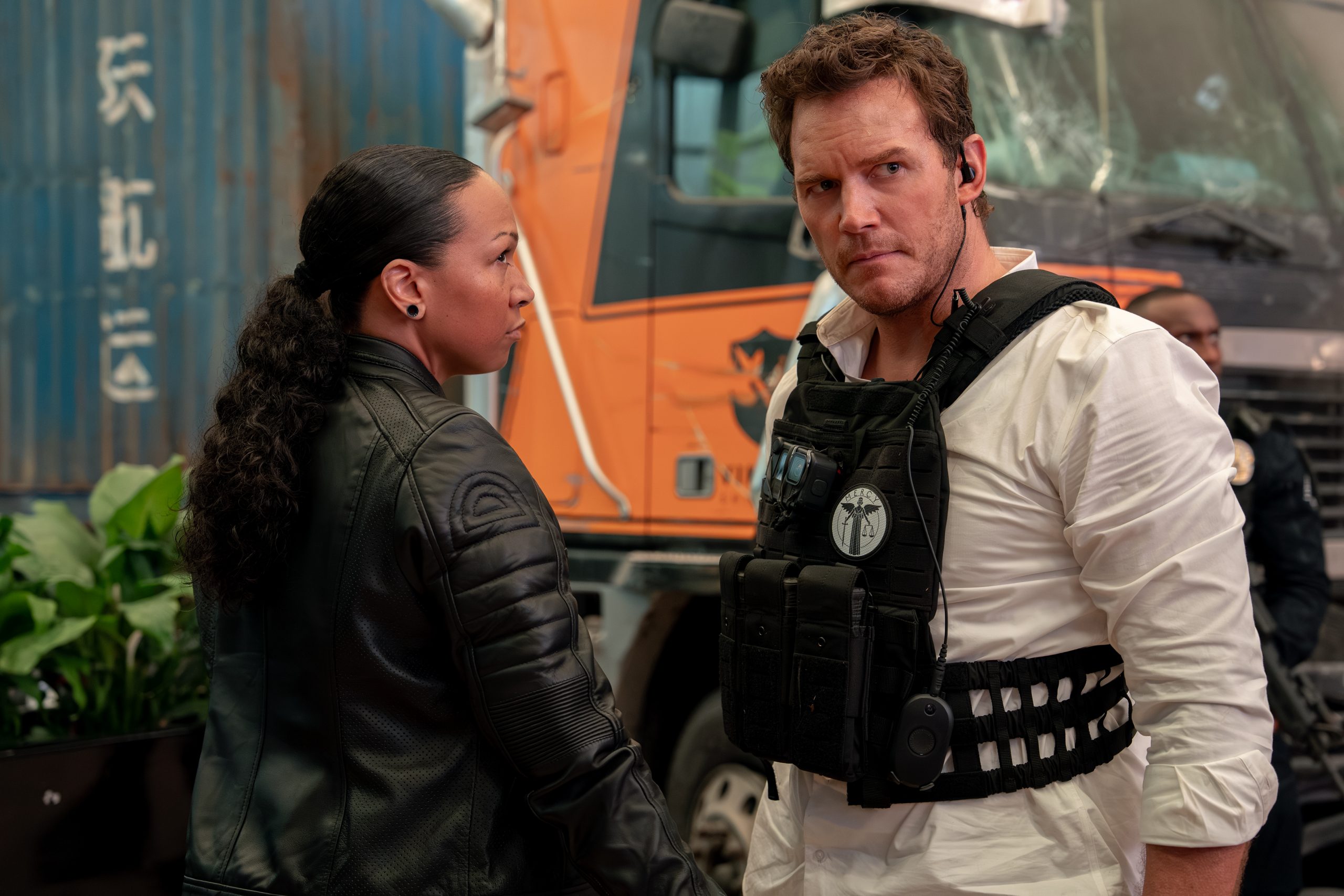
Mercy’s broad strokes are essentially a discount version of Steven Spielberg’s Minority Report, as the film starts with the introduction of an A.I. program simply known as Mercy. Mercy takes place in a near future where crime is more rampant than ever, and law enforcement seeks to enforce swift criminal justice as quickly as possible. To achieve this, they now have A.I. judges conducting trials for them. The biggest proponent for this new system is Detective Chris Raven (Pratt), who sees the new technology as the future of the judicial system.
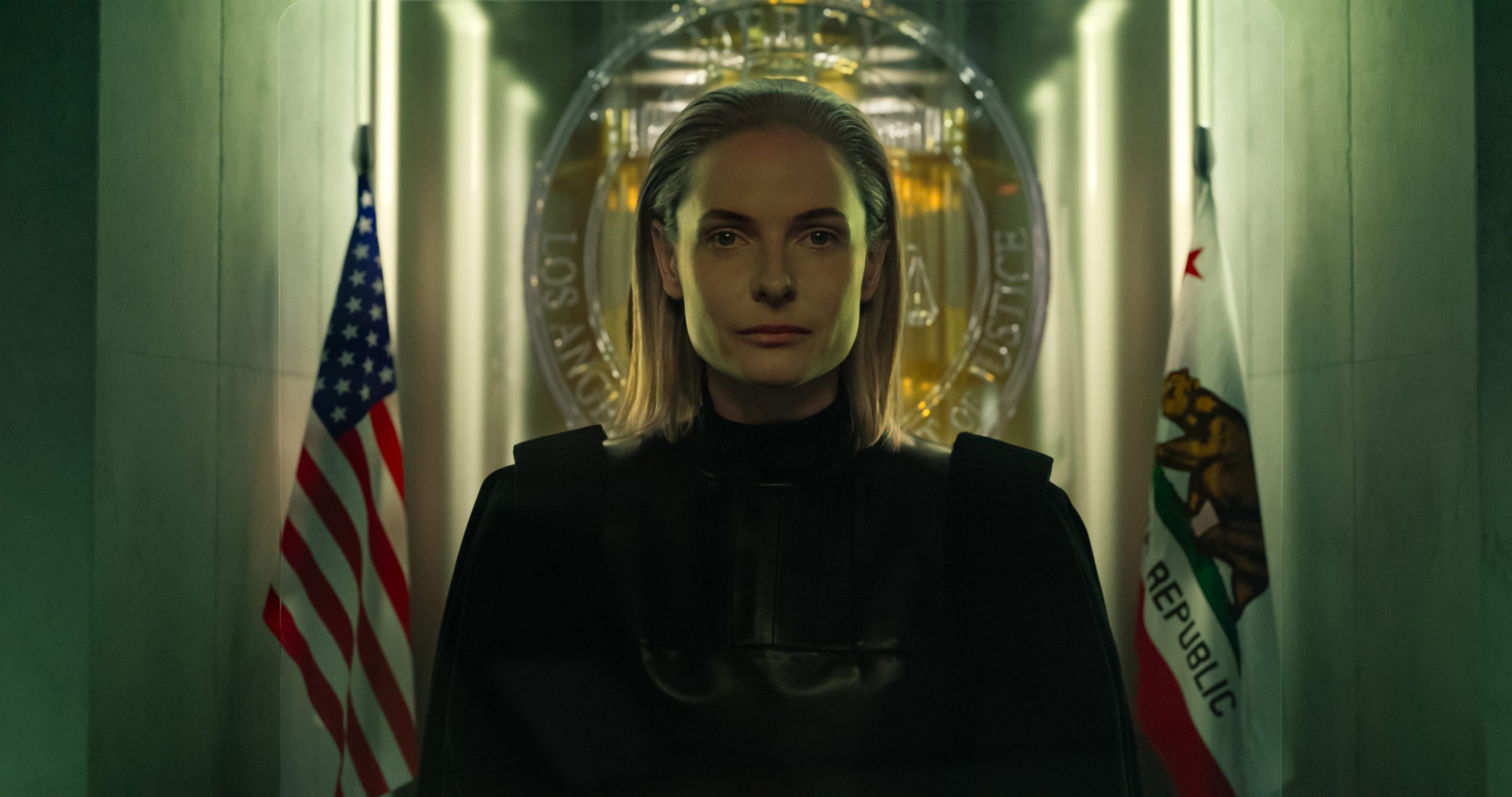
Photo Credit: Courtesy of Amazon MGM Studios
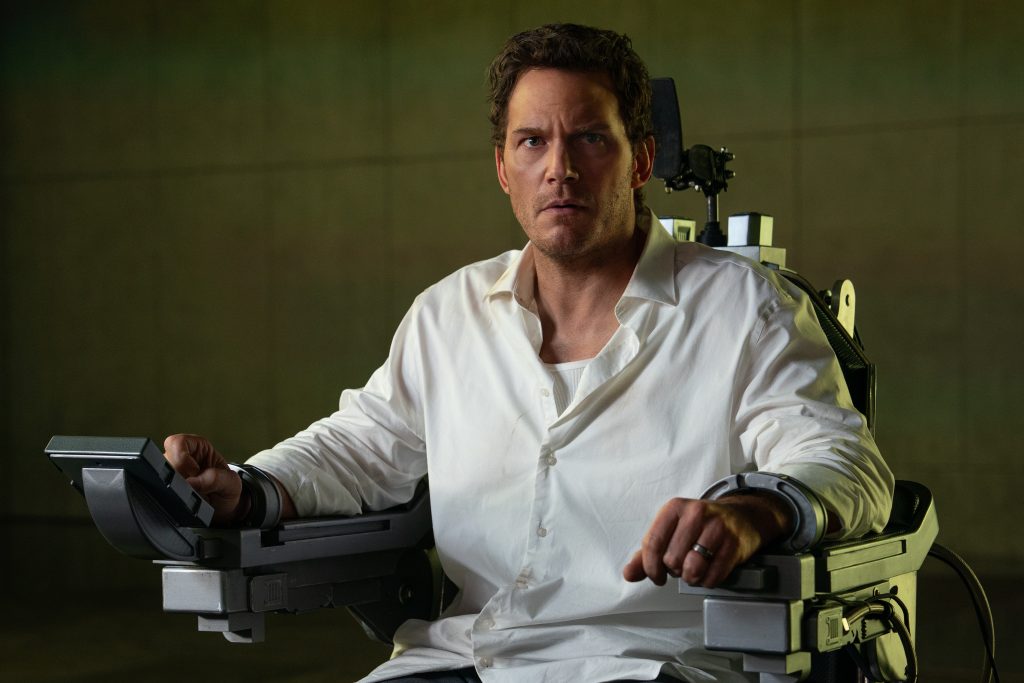
Little did Chris know that he would soon have to face the program he championed as his wife, Nicole (Annabelle Wallis), was just murdered in cold blood, and he is being charged with the murder. Chris is strapped to a metal chair, face to face with his A.I. judge, Maddox (Rebecca Ferguson), who gives Chris 90 minutes to prove his innocence in virtual court with mountains of virtual evidence against him at his disposal, or his fate will be death by execution.
The aspect of Mercy that stands out from its opening is its choice of visual presentation, which yields a plethora of issues. The film’s style of filmmaking is one that’s had great results before in films like Searching and Missing: an entire movie essentially on computers, security cameras, phones, and digital screens of all kinds. The film, for the vast majority of its runtime, takes place within the sole location of the virtual courtroom, which represents an interesting visual landscape in theory that is utterly botched in the final product.
There’s simply no cohesion to the way the screens are framed within Mercy’s cinematography at all; nearly every frame of the movie is so jumbled with screens that it ruins any tension the film wants to execute on. The style tends to be more effective with the use of more security cams and experimentation within the angles of how shots are shown. However, even those can’t be saved by the shoddy VFXs work that gives the movie an ugly sheen anytime it tries to expand the surroundings of its sole location.
© 2025 Amazon Content Services LLC. All Rights Reserved.
Even within the film’s unpleasant visuals, bland narrative beats, and a performance from Pratt that’s so stiff that the acting from Ferguson’s A.I. character is more emotive, Mercy’s poor qualities would be more tolerable if it weren’t for its disastrous final third. Not only is this when the worst aspects of the filmmaking are even more egregious as we leave the location of the courtroom, but it’s also when the film’s A.I. commentary is truly perplexing.
Throughout the film’s first two-thirds, it sets up a message about A.I. not being ideal for things like trials due to its obvious lack of human nature, or in Chris’s words, “trusting your gut.” All it has are the facts, and in many cases, there are other factors that contribute to the final solution of a case. The film however does a complete 180 on this in its resolution in a final attempt to treat A.I. and humans as one in the same and its so bizarrely mashed at the last minute that the film officially loses any sense of seriousness that was present within its stakes essentially ending on a Pro-A.I. message that is nothing more than an embarrassing addition to every other aspect within the movie.
Sure, at the end of the day, Mercy isn’t quite as poorly executed visually as, say, last year’s War of the Worlds, but the fact that it’s even remotely close to that level of quality is bad in and of itself. A combination of scattered visuals, a predictable mystery, and laughably executed commentary makes one of the only redeemable aspects of Mercy the fact that it has a timer throughout the runtime, letting you know how close the movie is to being over.
Mercy will debut exclusively in theaters on January 23, 2026, courtesy of Amazon MGM Studios.
Mercy isn't quite as poorly executed visually as, say, last year's War of the Worlds, but the fact that it’s even remotely close to that level of quality is bad in and of itself. A combination of scattered visuals, a predictable mystery, and laughably executed commentary makes one of the only redeemable aspects of Mercy the fact that it has a timer throughout the runtime, letting you know how close the movie is to being over.

Lover of film writing about film. Member of the Dallas Fort-Worth Critics Association. The more time passes, the more the medium of movies has become deeply intertwined with who I am.