TL;DR
- The Electric State sits at the top with a reported $320 million production budget, but its viewership and critical reception make it difficult to argue Netflix received proportional value.
- Red Notice is the easiest commercial success to defend, generating 230.9 million views in its first 91 days despite poor reviews.
- The Gray Man and Back in Action also attracted enormous audiences, even if neither became a cultural phenomenon proportional to its price tag.
- The Irishman is the rare movie on this list where prestige, awards attention and long-term artistic value arguably justified the enormous investment.
- Heart of Stone attracted more than 100 million views but has yet to become the major spy franchise its spending suggested Netflix wanted.
- Comparatively cheaper movies such as Damsel demonstrate why spending $200 million is not necessary to create a massive Netflix hit.
Netflix’s Most Expensive Movies By Budget
Before getting into whether Netflix actually got its money’s worth, here’s how the streamer’s 10 most expensive individual movies compare based on their reported production costs.
| Rank | Movie | Reported Budget |
|---|---|---|
| 1 | The Electric State | $320 million |
| 2 | Heart of Stone | $219.3 million |
| 3 | Back in Action | $207.2 million |
| 4 | Red Notice | $200 million |
| 5 | The Gray Man | $200 million |
| 6 | The Irishman | $159 million |
| 7 | 6 Underground | $150 million |
| 8 | Outlaw King | $120 million |
| 9 | Triple Frontier | $115 million |
| 10 | Bright | $106.2 million |
Note: Budgets are based on publicly reported production costs and should be considered approximate. Some productions received tax incentives or reimbursements that reduced Netflix’s ultimate net spending.
Netflix has spent years trying to answer a question Hollywood has wrestled with since streaming became a serious alternative to movie theaters.
What exactly does a $200 million streaming movie buy you?
There is no opening weekend to recover the budget. No billion-dollar worldwide theatrical run waiting if audiences fall in love with it. Netflix effectively pays for the entire experience upfront and then hopes the resulting movie attracts subscribers, retains existing customers and becomes important enough to justify its place inside an enormous annual content budget.
Sometimes that works.
Sometimes you spend more than $300 million and wind up with The Electric State.
The relationship between Netflix’s biggest movie budgets and their actual cultural impact is fascinating because there is almost no consistency. Red Notice received terrible reviews and became one of Netflix’s most watched films ever. The Irishman cost a fortune and became an awards-season event. 6 Underground attracted tens of millions of viewers and still failed to launch the franchise Netflix envisioned.
And then movies costing far less, including Damsel, have produced viewership numbers comparable to or better than films carrying twice their budgets.
For this ranking, we’re looking at the 10 most expensive individual Netflix original movies based on the best publicly reported production-cost information available, then asking the more interesting question.
Was the money actually worth it?
10. Bright — Approximately $90-$106 Million
It is almost quaint looking back at Bright now.
When Netflix agreed to spend roughly $90 million on David Ayer’s fantasy cop movie starring Will Smith and Joel Edgerton, the deal looked enormous. Today, that wouldn’t even get the movie halfway to The Electric State.
The concept remains one of Netflix’s stranger blockbuster experiments. Imagine modern Los Angeles exactly as we know it, except humans live alongside orcs, elves and other fantasy creatures. Smith’s LAPD officer is partnered with the department’s first orc cop before they become involved in a conspiracy surrounding an incredibly powerful magic wand.
Critics hated it.
Audiences watched anyway.
Nielsen estimated more than 11 million U.S. viewers during the first three days, while Netflix described it as its most viewed movie ever during its opening week at the time.
That response was strong enough for Netflix to announce a sequel almost immediately, although the project eventually disappeared after years of development.
Looking back, Bright feels less important as a movie than as proof of concept for Netflix’s blockbuster strategy.
The streamer learned something enormously valuable: subscribers would watch an expensive, star-driven original even if critics hated it.
Was it worth it? Yes, historically.
The movie itself did not become the franchise Netflix wanted, but its performance helped demonstrate that expensive streaming originals could attract blockbuster-sized attention.
9. Triple Frontier — Approximately $115 Million
Triple Frontier is the kind of expensive Netflix movie people occasionally rediscover and ask, “How did I forget this existed?”
That is surprising considering the cast.
Ben Affleck, Oscar Isaac, Pedro Pascal, Charlie Hunnam and Garrett Hedlund play former Special Forces soldiers who decide their skills should finally make them rich. They target the fortune of a South American drug lord, only to discover that carrying millions of dollars out of the jungle is significantly harder than stealing it.
Netflix said more than 52 million accounts watched the movie within its first month, later increasing that figure to more than 63 million.
Critical reception was also considerably stronger than many movies higher on this list. Triple Frontier currently sits at 71% on Rotten Tomatoes.
The problem is longevity.
For a movie with five recognizable stars and a budget exceeding $100 million, Triple Frontier did not become something audiences continued discussing for years afterward.
It was watched.
It was generally liked.
Then it largely disappeared into Netflix’s enormous library.
Was it worth it? Mostly.
Sixty-three million viewers and respectable reviews represent a solid outcome. It simply never became the cultural event that kind of investment ideally creates.
8. Outlaw King — Approximately $120 Million
Netflix spent blockbuster money to make a historical epic about Robert the Bruce.
That alone deserves some respect.
Chris Pine stars as the Scottish king who leads a rebellion against English occupation following the death of William Wallace. David Mackenzie’s movie features enormous battle sequences, sprawling Scottish locations and precisely the kind of production scale normally associated with a major theatrical historical drama.
The $120 million cost made Outlaw King one of the largest productions Netflix had attempted at the time.
Reviews were reasonably positive without becoming enthusiastic. The film currently holds 63% on Rotten Tomatoes.
The bigger issue is that Netflix never released enough directly comparable global viewing data to determine whether the audience matched the spending.
That creates one of the recurring problems with evaluating older Netflix movies. The company changed its reporting methodology several times, and many releases from this era simply do not have the clean 91-day “views” figure available for modern titles.
Culturally, however, Outlaw King never became Netflix’s answer to Braveheart.
Was it worth it? Probably not at $120 million.
There is plenty to admire on screen, but the lasting impact feels small compared with the investment.
7. 6 Underground — Approximately $150 Million
If you’re going to hand Michael Bay $150 million, you probably know what you’re getting.
6 Underground delivers explosions, car chases, helicopters, elaborate stunt work, extremely expensive destruction and Ryan Reynolds playing something close to the Ryan Reynolds character audiences already know.
Netflix originally envisioned the film as the beginning of another action franchise.
Viewership initially seemed to support that confidence.
The company said more than 83 million members watched the movie during its first four weeks. Netflix’s later hourly data indicated roughly 205 million hours watched during that period.
Critics were considerably less enthusiastic. The movie sits at 36% on Rotten Tomatoes.
Then something interesting happened.
Netflix didn’t make the sequel.
Former Netflix film chief Scott Stuber later acknowledged that the movie simply did not reach the creative level necessary to justify continuing.
That makes 6 Underground a useful example of why raw views cannot be the only measure of success.
Eighty-three million people watched.
Netflix still decided another $150 million wasn’t worth spending.
Was it worth it? Mixed.
As a one-time audience draw, probably. As the expensive franchise starter it was designed to become, absolutely not.
6. The Irishman — Approximately $159 Million
This is where the entire conversation changes.
The Irishman cost around $159 million, largely because Martin Scorsese wanted Robert De Niro, Al Pacino and Joe Pesci to play their characters across several decades without replacing them with younger actors.
The de-aging technology was incredibly expensive.
The movie is also three and a half hours long.
On paper, this sounds like the exact opposite of the broad audience-friendly blockbusters dominating most of this ranking.
And yet The Irishman may have justified its spending better than almost anything here.
Netflix reported that approximately 64 million households watched the movie during its first four weeks under the company’s measurement system at the time.
More importantly, critics adored it.
The Irishman currently holds 95% on Rotten Tomatoes and received 10 Academy Award nominations, including Best Picture, Best Director and acting nominations for Pacino and Pesci.
The movie also became part of a larger conversation about whether streaming platforms could finance ambitious adult filmmaking that traditional studios increasingly considered too risky.
Years later, people are still discussing the movie.
That matters.
Was it worth it? Yes.
Netflix didn’t spend $159 million to create an action franchise. It spent that money to have a Martin Scorsese crime epic starring De Niro, Pacino and Pesci permanently sitting inside its library.
There are worse things to own.
5. The Gray Man — Approximately $200 Million
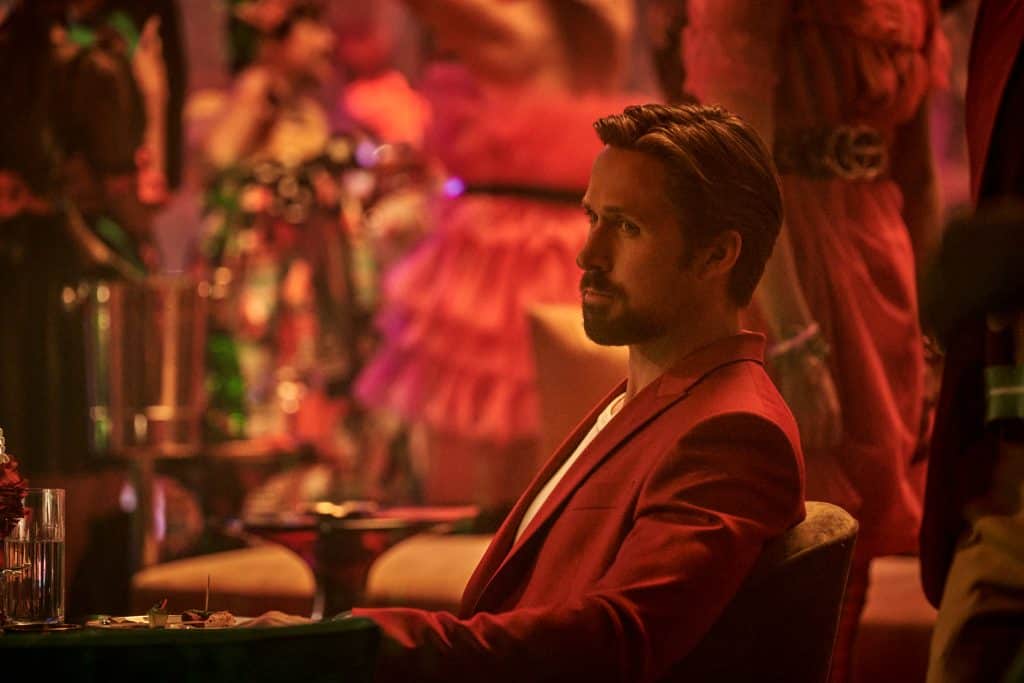
The Russo brothers’ first enormous Netflix experiment looked designed in a laboratory to create a streaming blockbuster.
Ryan Gosling.
Chris Evans.
Ana de Armas.
International locations.
Huge action sequences.
And an existing series of novels capable of supporting sequels.
Netflix spent roughly $200 million on The Gray Man, making it one of the most expensive movies the company had ever produced at the time.
The audience absolutely showed up.
The film generated 139.3 million views during its first 91 days and remains one of Netflix’s biggest English-language movies ever.
Critics were far less impressed. It currently holds 45% on Rotten Tomatoes, while audiences were significantly kinder.
That gap tells you almost everything about Netflix’s blockbuster strategy.
The Gray Man isn’t necessarily trying to become a movie critics spend the next decade writing essays about. It is trying to make someone scrolling Netflix on Friday night say, “Ryan Gosling fighting Chris Evans? Sure.”
By that metric, it worked.
The more complicated issue is the promised franchise. Netflix announced sequel plans, but the series has yet to become the dependable ongoing brand that a $200 million launch suggested was coming.
Was it worth it? Mostly.
139 million views is difficult to dismiss. But at $200 million, “people watched it” feels like the minimum requirement rather than an extraordinary victory.
4. Red Notice — Approximately $200 Million
This is probably the clearest example of critics and Netflix measuring success differently.
Red Notice has a 36% Rotten Tomatoes score.
It also generated 230.9 million views during its first 91 days.
That’s not a typo.
Dwayne Johnson, Ryan Reynolds and Gal Gadot’s globe-trotting heist comedy became one of the most watched Netflix movies ever made despite reviewers largely dismissing it as a generic collection of blockbuster ingredients.
And maybe that explains why it worked.
Netflix didn’t need audiences to decide whether Red Notice was worth purchasing a $15 ticket. Subscribers already had access to it.
Three huge stars appeared on the thumbnail.
People pressed play.
Hundreds of millions of times.
This is where discussing “cultural impact” becomes interesting. Red Notice generated gigantic viewership without leaving a footprint comparable to theatrical blockbusters like Barbie, Top Gun: Maverick or Marvel’s biggest movies.
But does Netflix care?
If 230.9 million views are the goal, probably not.
Was it worth it? Yes.
You can dislike the movie and still acknowledge that Netflix received an enormous audience for its money.
The only caveat is that planned sequels have taken far longer to materialize than the initial success suggested.
3. Back In Action — $207.2 Million Gross Production Cost
Back in Action might be the strangest budget on this entire list.
Financial filings from the production revealed that Netflix spent approximately $207.2 million before UK incentives on the Cameron Diaz and Jamie Foxx action comedy.
A government reimbursement reduced Netflix’s net production spending to roughly $158.9 million.
Either number is enormous for what ultimately looks like a relatively conventional family spy comedy.
Critics weren’t impressed. The movie holds 31% on Rotten Tomatoes.
Viewers didn’t care.
Back in Action generated 46.8 million views during its opening weekend and ultimately reached 147.2 million views during its first 91 days, enough to place among Netflix’s most popular movies ever.
That is a genuine hit.
It also demonstrates why star power still matters on streaming.
Cameron Diaz returning to movies after roughly a decade created an easy marketing hook, while Jamie Foxx gave Netflix another recognizable global star.
Did the finished movie look like something costing more than $200 million?
Not really.
Did people watch it?
Absolutely.
Was it worth it? Surprisingly, yes.
Especially after incentives reduced Netflix’s actual spend, 147 million views makes this much easier to defend than its reviews would suggest.
2. Heart Of Stone — $219.3 Million Gross Production Cost

For years, Heart of Stone was widely described as a $150 million Netflix movie.
We now know it cost considerably more.
Financial filings from Netflix’s UK production company eventually revealed a total production cost of approximately $219.3 million. Government reimbursements brought Netflix’s net spending down to roughly $198.2 million.
That puts Gal Gadot’s spy thriller above Red Notice and The Gray Man in gross production spending.
The company clearly had franchise ambitions.
Gadot plays Rachel Stone, an intelligence operative working for a secret peacekeeping organization that uses an advanced AI system known as the Heart. The concept was built to support future missions in much the same way Mission: Impossible revolves around Ethan Hunt.
Viewership wasn’t bad.
The movie reached 33.1 million views in its opening days and eventually generated 109.6 million views during the second half of 2023.
The reception was much harder to defend.
Heart of Stone currently sits at 31% on Rotten Tomatoes, with critics frequently describing it as generic despite the enormous resources behind it.
That word—generic—is the real problem.
Spending almost $220 million should ideally produce something audiences cannot get somewhere else.
Heart of Stone often feels like something assembled from pieces of several better spy franchises.
Was it worth it? Probably not.
More than 100 million views are substantial, but Netflix appears to have paid premium-franchise money for a movie that never developed premium-franchise cultural impact.
1. The Electric State — Approximately $320 Million
Then there is The Electric State.
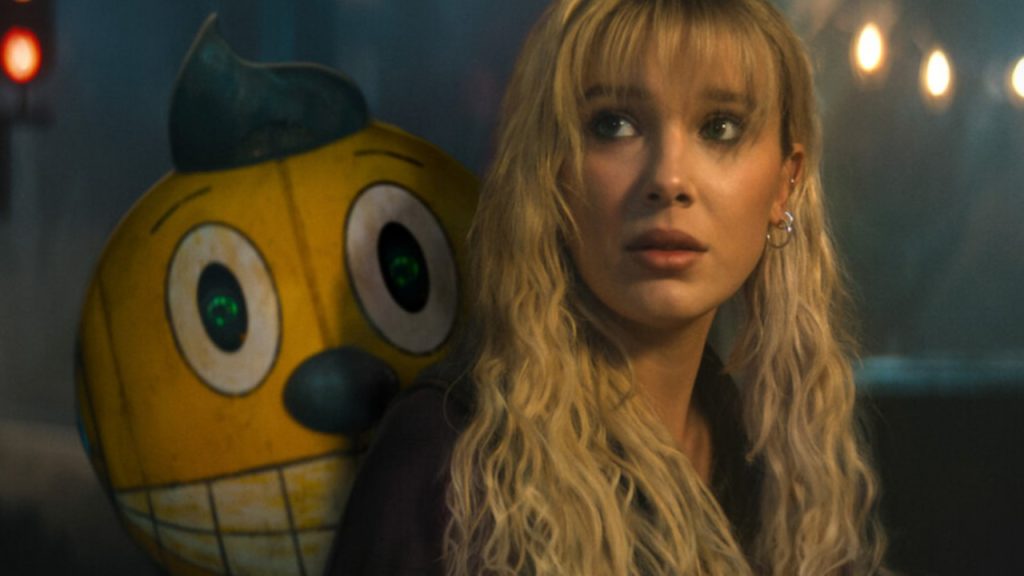
Netflix’s reported $320 million production budget puts the Russo brothers’ sci-fi adventure in territory normally occupied by the largest theatrical franchises in Hollywood.
This isn’t merely expensive for Netflix.
It’s expensive for anybody.
Millie Bobby Brown and Chris Pratt lead an enormous effects-heavy adaptation of Simon Stålenhag’s illustrated novel, surrounded by armies of digitally created robots and a voice cast featuring Anthony Mackie, Woody Harrelson, Brian Cox, Jenny Slate and others.
You can see where some of the money went.
The bigger question is whether audiences cared.
The Electric State debuted at No. 1 with 25.2 million views. It remained No. 1 during its second week with another 22.5 million before falling to 7.6 million in week three.
Netflix’s first-half 2025 engagement report ultimately recorded 74.2 million views and 158.2 million hours watched.
Those would be strong numbers for many movies.
For a $320 million movie, they become much harder to celebrate.
The critical reaction made matters worse.
The Electric State currently holds just 14% on Rotten Tomatoes.
More damaging than the score itself was the general response that something so spectacularly expensive somehow felt strangely disposable.
That’s almost the opposite of what $320 million is supposed to accomplish.
Was it worth it? No.
People watched The Electric State. It was not an invisible failure.
But Netflix spent more than many of Hollywood’s biggest theatrical blockbusters and received an audience dramatically smaller than movies it produced for far less.
What About Rebel Moon?
Zack Snyder’s Rebel Moon deserves an explanation because it frequently appears on lists of Netflix’s most expensive projects.
The complication is that the reported spending generally combines Rebel Moon – Part One: A Child of Fire and Rebel Moon – Part Two: The Scargiver.
The two movies were shot together, with reported combined production costs reaching roughly $230 million.
That makes Rebel Moon enormously expensive as a project, but dividing that figure into two individual movie budgets becomes less precise.
Since this ranking is comparing individual films, we’ve kept the combined Rebel Moon production outside the numbered list rather than pretending each part has a cleanly documented $115 million budget.
The broader verdict isn’t difficult, though.
Netflix wanted its own gigantic science-fiction universe.
Two movies, director’s cuts and extensive marketing later, Rebel Moon has not become anything resembling Netflix’s Star Wars.
Damsel Shows Why This Entire Ranking Is So Interesting
Now we get to the movie that exposes the weakness in Netflix’s blockbuster math.
Damsel isn’t one of the 10 most expensive Netflix movies.
That’s exactly why it matters.
The Millie Bobby Brown fantasy adventure reportedly cost only a fraction of something like The Electric State.
Yet Damsel generated 138 million views during its first 91 days.
Compare that with The Gray Man at 139.3 million.
One required approximately $200 million.
The other did not come remotely close to that price.
Damsel also demonstrates the value of knowing exactly what kind of streaming movie you’re making. It has a recognizable star, a simple fantasy hook, an easily marketable dragon and a story that does not require hundreds of millions of dollars in spectacle.
It doesn’t have to look like Avengers: Endgame.
It simply has to make someone stop scrolling.
Netflix’s Most Expensive Movies Vs. The Audience
The results become even stranger when the modern, directly comparable Netflix viewing numbers are placed beside one another.
- Red Notice: 230.9 million first-91-day views
- Back in Action: 147.2 million first-91-day views
- The Gray Man: 139.3 million first-91-day views
- Damsel: 138 million first-91-day views
- Heart of Stone: 109.6 million reported views during the second half of 2023
- The Electric State: 74.2 million reported views during the first half of 2025
The older movies cannot be dropped cleanly into that comparison because Netflix used different measurement systems when they were released.
That distinction matters.
Netflix once counted households that watched a certain percentage of a movie. It later shifted to counting accounts that watched at least two minutes. The current system defines a “view” by dividing total hours watched by runtime and generally uses the first 91 days for its all-time rankings.
Comparing an old “64 million households” figure for The Irishman directly with 147.2 million modern Back in Action views would therefore create a false sense of precision.
Which Netflix Movies Were Actually Worth The Money?
If we’re judging strictly by viewership, Red Notice wins.
A $200 million price tag is enormous, but 230.9 million views made it one of Netflix’s defining blockbuster successes.
Back in Action also looks better than its reviews suggest, particularly once the UK production rebate is considered.
The Gray Man performed well enough that calling it a failure would be silly, although its inability so far to become a regularly producing franchise limits the return on that initial $200 million bet.
The Irishman succeeds for entirely different reasons. Netflix received prestige, awards recognition and a major work from one of cinema’s most celebrated living filmmakers. Its value cannot be measured exclusively by whether 200 million people watched it during the first three months.
Then we reach The Electric State.
There is simply no way to look at $320 million, 74.2 million first-half views and a 14% Rotten Tomatoes score and call that an efficient use of resources.
More Money Doesn’t Mean More Netflix Impact
That’s ultimately the lesson hiding behind all these giant numbers.
Netflix does not need every movie to sell tickets, which gives the company freedom traditional studios don’t have.
That freedom can produce something like The Irishman, a three-and-a-half-hour gangster epic that probably never exists at that scale without a streaming company willing to finance it.
It can also produce The Electric State.
The fascinating part is that audiences don’t seem particularly concerned with how expensive any of these movies were.
A $60-$70 million fantasy adventure can generate almost the same 91-day audience as a $200 million spy blockbuster.
A critically destroyed action comedy can become one of Netflix’s most watched movies ever.
A $320 million visual-effects showcase can disappear from the conversation within weeks.
Netflix has said repeatedly that its business is about creating impact relative to spending.
Looking at these movies, the problem isn’t that Netflix spends too much money.
It’s that money alone has almost nothing to do with which movies people actually remember.

DC Fanboy! Superman is the greatest comic book character of all time. Favorite movies are Man of Steel, Goonies, Back To the Future