

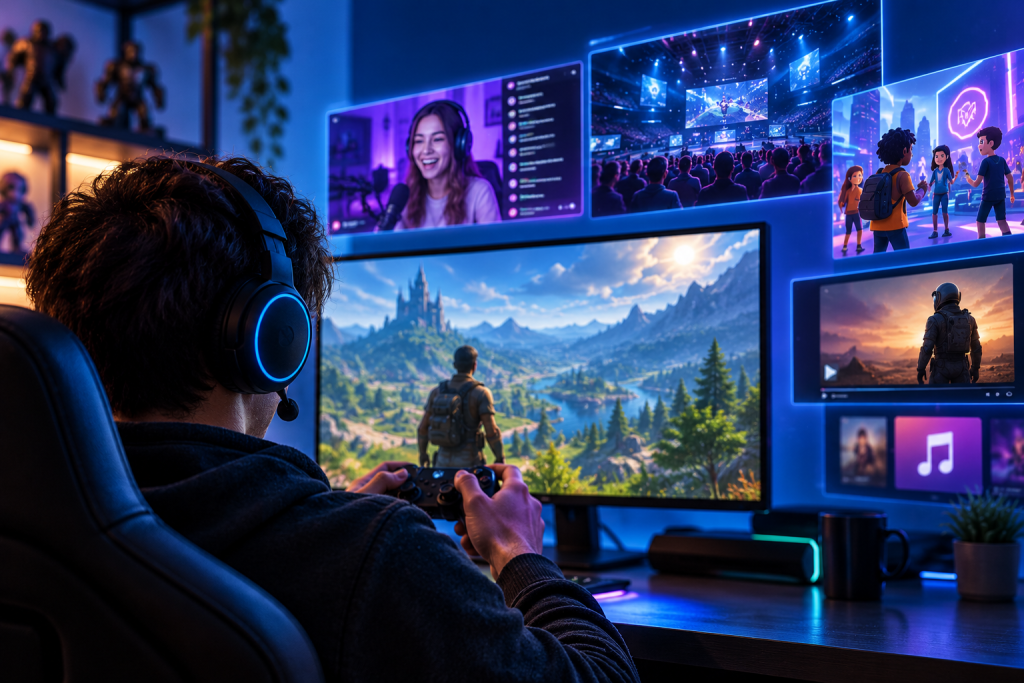
Online gaming has become an important part of modern digital entertainment, influencing how interactive content is created, presented, and accessed.
Advances in mobile technology, internet connectivity, graphics, browser systems, and interface development have helped gaming formats move far beyond basic screen-based activities.
Modern online games can combine animation, social features, responsive controls, live information, visual storytelling, and interactive systems within one digital environment.
These developments are also influencing other forms of entertainment by encouraging creators to think more carefully about participation, personalization, and real-time interaction.
Interactive Features Are Changing Digital Entertainment
Traditional digital entertainment often placed audiences in a passive role, mainly watching, reading, or listening to content.
Online gaming has introduced a stronger focus on direct interaction, allowing users to influence what appears on the screen through controls, choices, and other inputs.
User Input Creates More Active Experiences
Games respond continuously to user actions. A tap, click, movement, or menu choice can immediately change the visual information being displayed.
This interaction has influenced how many digital products communicate with audiences. Instead of presenting information in a fixed sequence, entertainment platforms can use responsive menus, changing graphics, and personalized sections.
Common interactive elements include:
- Touch-based controls
- Animated menus
- Progress indicators
- Custom interface settings
- Real-time visual feedback
- Interactive maps or content areas
These features make digital entertainment more responsive to individual input.
Visual Feedback Connects Actions With Results
Online games often use visual feedback to confirm that an action has been registered. Buttons can change appearance, menus can expand, icons can move, or short animations can indicate a completed action.
The same approach is becoming common across entertainment apps and digital services because it gives users immediate information about what is happening on the screen.
Mobile Gaming Is Expanding Access to Interactive Content
Smartphones and tablets have played a major role in the growth of online gaming.
Portable devices allow digital entertainment to fit naturally into shorter periods of free time, encouraging developers to create interfaces that work across different screen sizes.
Responsive Interfaces Support Multiple Devices
Modern online games often use responsive layouts that adjust according to the available display area.
Controls may move, graphics may resize, and menus may change position when content shifts from a desktop monitor to a smartphone screen. This flexibility has influenced other digital entertainment formats, including streaming services, interactive media, and mobile applications.
Digital gaming services associated with platforms such as sbobet88 also reflect this broader move toward mobile-friendly interfaces, organized navigation, and screen structures that adapt to different devices.
Touchscreens Have Changed Interaction Patterns
Touchscreens allow people to interact directly with digital content rather than relying on a mouse and keyboard.
This change has encouraged larger buttons, clearer icons, shorter menus, and controls positioned within comfortable reach. Entertainment developers can apply similar ideas when creating apps, media platforms, and other interactive services.
Online Gaming Is Influencing Visual Storytelling
Digital games often combine graphics, animation, sound, interface changes, and narrative elements to communicate information. This combination has expanded the ways entertainment content can be presented.
Animation Can Communicate Meaning
Animation in online games is not limited to decoration. Movement can direct attention, indicate changes, connect interface elements, or signal that an event has occurred.
For example, an icon may move toward a progress meter, a background may change after a completed stage, or an interface panel may appear when new information becomes available.
These techniques can help audiences understand screen activity without relying on long written explanations.
Interactive Environments Support Flexible Narratives
Some digital entertainment formats allow content to change according to user decisions or activity. Instead of following one fixed sequence, interactive systems can present different scenes, information, or visual states based on previous actions.
Gaming has helped popularize this approach by showing how digital narratives can respond to input while still maintaining a clear structure.
Social Features Are Creating Shared Digital Experiences
Online connectivity has also influenced entertainment by making participation more social.
Games can include communication tools, shared events, rankings, cooperative activities, and community-based features that connect users across different locations.
Real-Time Communication Adds Another Layer
Chat systems, reactions, shared activity feeds, and group features can turn digital entertainment into a more connected experience.
These tools allow participants to communicate while interacting with the same content. Similar ideas can now be found across streaming platforms, live digital events, and entertainment communities.
Shared Activities Encourage Community Interaction
Online gaming often gives groups a common activity around which communication can develop.
Community features may include:
- Group events
- Shared objectives
- Leaderboards
- User profiles
- Live discussions
- Achievement systems
These systems show how entertainment can combine individual participation with wider digital communities.
Technology Is Connecting Different Entertainment Formats
The technical systems supporting online games are increasingly shared with other types of digital media.
Browser technology, cloud systems, real-time data processing, graphics engines, and mobile development tools can support many forms of interactive entertainment.
Browser Technology Supports Rich Media
Modern web technologies such as HTML5 allow developers to combine graphics, sound, video, animation, and interactive controls within browser-based environments.
This makes it possible to create rich digital experiences without relying entirely on separate software installations.
Real-Time Systems Make Content More Dynamic
Online games often process information continuously, allowing screen content to update as events occur. Similar real-time systems can support live entertainment, interactive broadcasts, digital events, and audience participation tools.
Conclusion
Online gaming is helping shape new forms of digital entertainment by placing greater attention on interaction, mobile access, responsive interfaces, animation, social features, and real-time communication.
Its influence can be seen in the way entertainment platforms organize screens, respond to user input, present visual information, and connect people through shared activities.
As digital technology continues to progress, the boundaries between gaming, media, social interaction, and interactive entertainment are likely to become increasingly connected. The key direction is clear: digital entertainment is becoming more responsive, participatory, and adaptable to the ways people use modern devices.

Hi! I’m Bryan, and I’m a passionate & expert writer with more than five years of experience. I have written about various topics such as product descriptions, travel, cryptocurrencies, and online gaming in my writing journey.