Parasocialism is a bigger issue than I think we credit it as being.
There’s always been some form of parasocialism in art and entertainment. When a film, book, or song emotionally impacts someone, it is bound to form some type of intimate attachment to the work and its creator. There isn’t anything inherently wrong with that, but the rapid rise of social media has amplified the phenomenon’s worst impulses at an incalculable scale. Harassment, perceived positively or negatively, not only occurs more frequently, but the internet’s ability to dull our collective humanity can even reward that behavior (courtesy of the ever-present “algorithm.”)
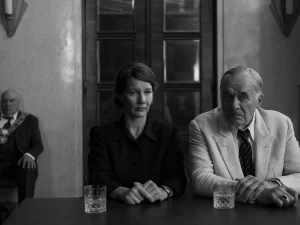
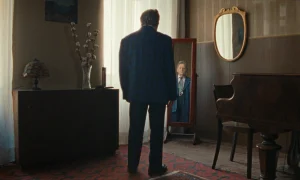
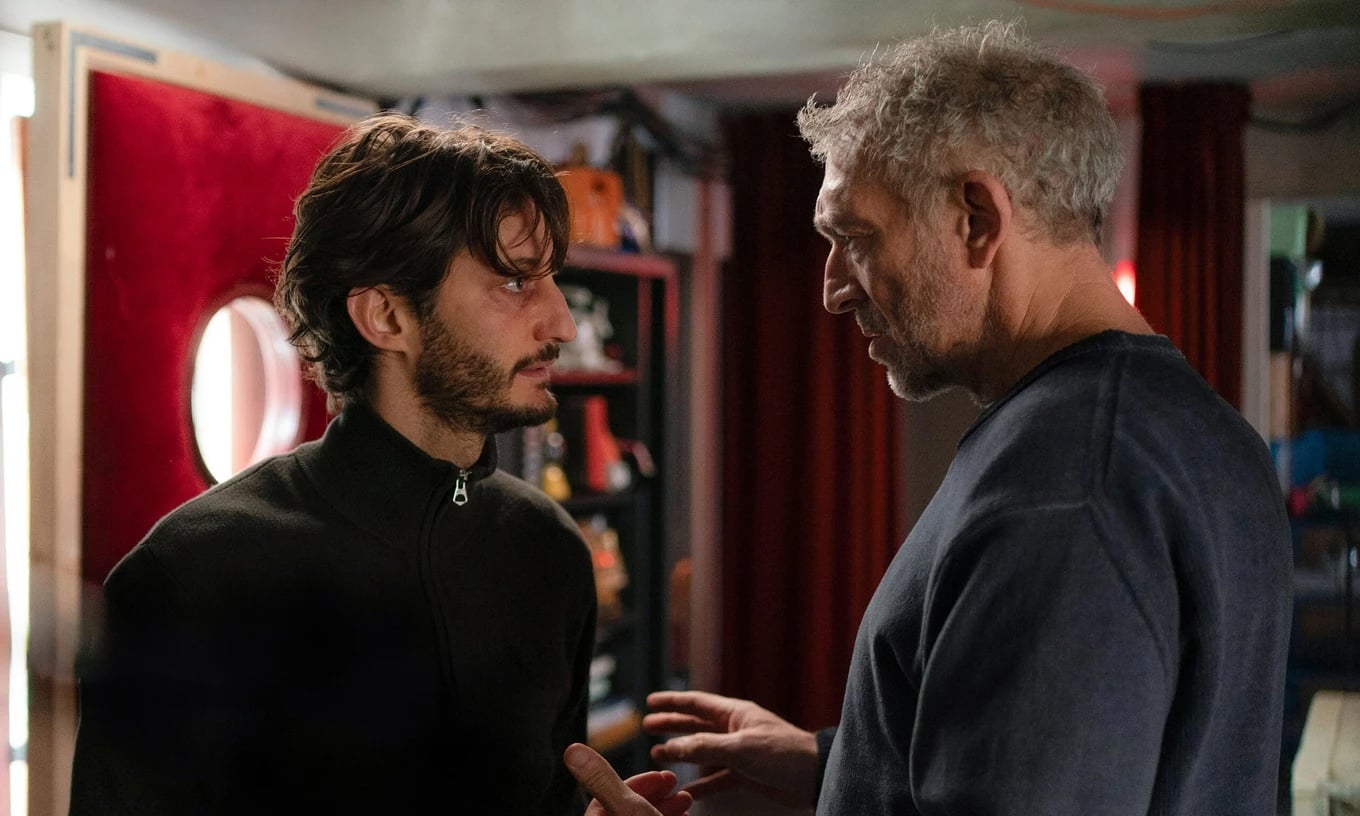
Parasocialism is one of the central themes of Parallel Tales, Asghar Farhadi’s French-language film that premiered in competition at the 79th Cannes Film Festival. In his film, writer’s block-ridden author Sylvie (Isabelle Huppert) draws inspiration for her new novel by spying on three people working together in a recording studio across the street: Nita (Virginie Efira), Theo (Pierre Niney), and Nico (Vincent Cassel). She invents characters and storylines based on what she sees through her window, which are obviously, wildly different from reality.
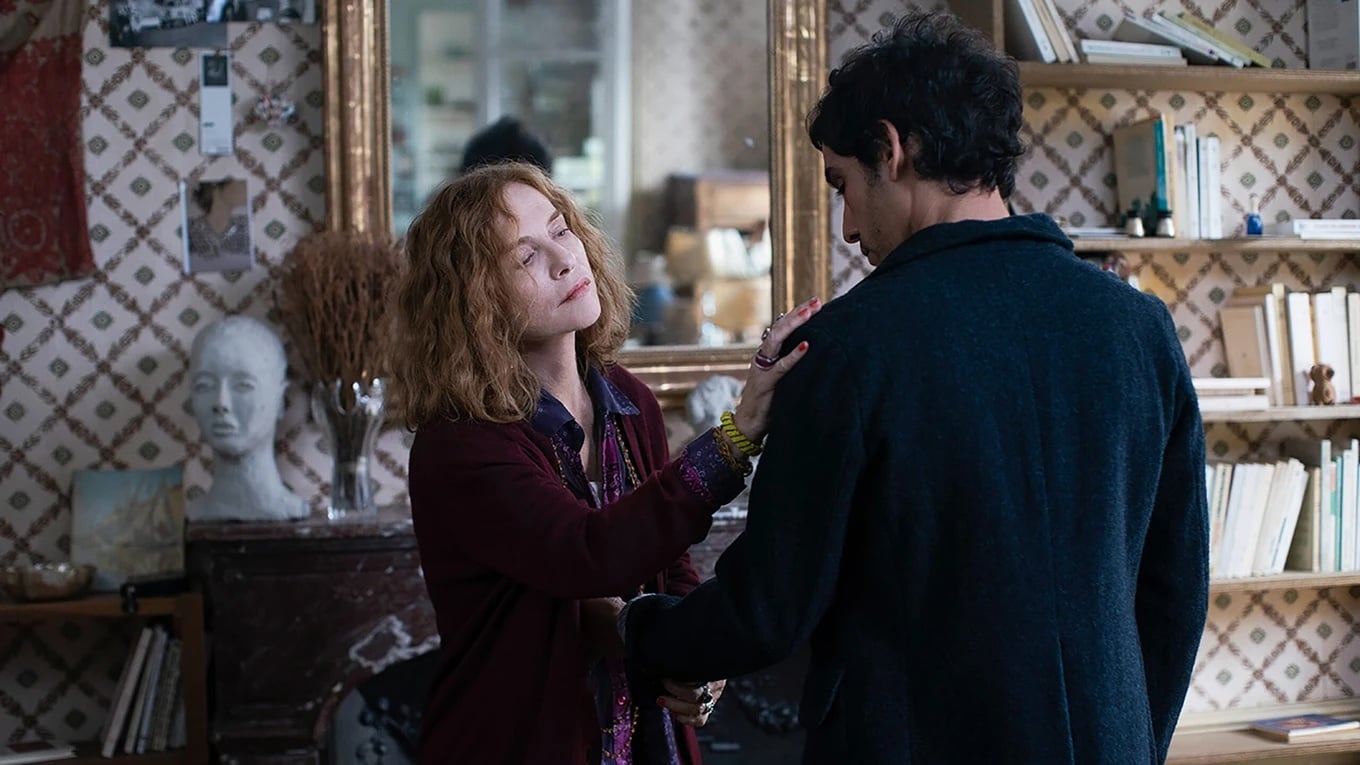
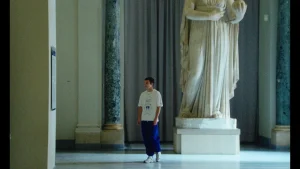
Adam (Adam Bessa), however, doesn’t know. A jobless young man living in a homeless shelter, Adam is hired by Sylvie’s pregnant niece to help Sylvie clean out her dilapidated apartment. As he spends more time with Sylvie, he picks up on Sylvie’s spying habit and discovers her in-progress manuscript. With his own life in tatters, Adam deeply identifies with Sylvie’s fictional version of the trio’s lives across the street. He soon begins making initially small but increasingly invasive interactions with Nita, which soon bleed into her life and those of Nico and Theo, with some stunning, horrifyingly destructive consequences.
The first third of Parallel Tales is split between Sylvie’s life, her begrudging connection to Adam, and a visualization of her novel, with Nita, Theo, and Nico playing the central characters. It is the film at its weakest. Farhadi struggles to thread the needle between what is Sylvie’s fiction and what is the truth of what’s happening across the street. The fictional scenes are likely meant to establish for us why Adam is so compelled by Sylvie’s work, and possibly the height of her creativity. (To be fair, Sylvie’s novel is properly melodramatic, complete with adultery and even murder.) However, the lack of context into who Nita, Theo, and Nico really are at the film’s outset muddies the intent. It makes the shift from fiction to truth harder to reconcile.

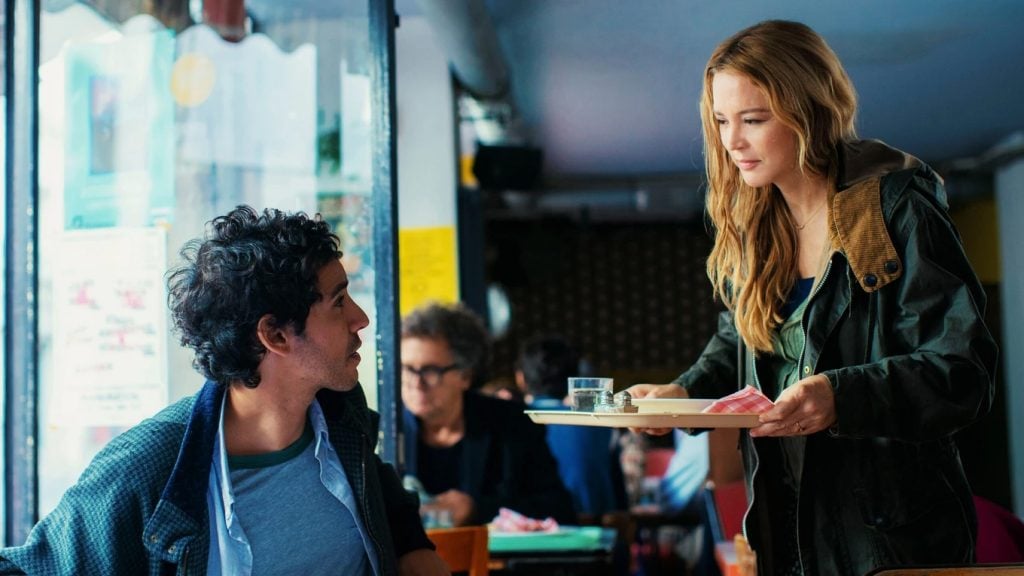
Parallel Tales hits its stride once Farhadi dispatches with the fiction and focuses on the truth, warped and otherwise. He carefully lays out breadcrumbs for us to follow as Adam becomes obsessed with Nita and Sylvie’s fictionalization of her. He pretends to bump into her at her favorite lunch spot and lies about being the author of Sylvie’s manuscript, wanting to get Nita’s reaction to what amounts to fan fiction about her. From then on, Adam gets more and more intrusive in Nita’s life, ignoring both her polite requests and forceful demands that he leave her and her friends alone.
What’s most fascinating about this dynamic is how Farhadi and Adam Bessa conceive Adam’s behavior. There’s no doubt that Adam is obsessed, but neither Farhadi nor Bessa presents him as some out-of-control, wide-eyed creep with carved-up posters on the wall. Bessa moves on screen with hesitation and shyness, but doesn’t give away any markers of psychopathy or even fledgling disturbance. Farhadi also doesn’t offer any scenes showing Adam spiraling into public or private obsession. To the untrained eye, Adam seems harmless enough to evade a first or second pass of suspicion. Together, Farhadi and Bessa emphasize how easy it is for someone to lose grip of reality when their own life is out of sorts.
We also see the potential consequences of someone making their life’s lack of purpose someone else’s problem. Adam ultimately warps the lives of Nita, Nico, and Theo as they realize they are being watched and wonder whether their stalker’s fictional observations hold some truth. The thought experiment that one of the characters undergoes leads to a horrifying act of violence. It’s easy to regard it as a hyperbolic act of melodrama that would likely never happen, but why wouldn’t it? We’ve seen how the vitriolic opinions of strangers can profoundly, negatively affect public figures. The people who drove Barry Keoghan and Meghan Markle to retreat from public life and suicidal ideation, respectively, have as much insight into them as Adam has into the trio across the street. How much of a fantastical leap is it really?
It certainly helps that the cast grounds the purported melodrama in real emotional impact. Virginie Efira, starring in two films in competition at Cannes, is very affecting as Nita, especially after the fiction-as-real-life incident. You can see in her eyes the helplessness of someone whose world has been upended by forces far beyond her control, and the simmering fury upon realizing that the people claiming to care about her are of no use. Isabelle Huppert is delightful to watch as an ornery author potentially past her prime, but she is even better playing opposite Bessa, bonding as two aimless spirits who find an anchor with each other.
Sadly, not every person with negative parasocial tendencies has a Sylvie to anchor them back to reality. Instead, they continue on and on, safe in their assumption that their actions have no consequences because they are separated from their fixation by a screen and hundreds of miles of fiber optic cables and wireless signals. That would be fine if it were true, but Parallel Tales is a solid counter-argument to the idea that harmless intent yields harmless action.
Parallel Tales held its World Premiere in the Competition section of the 2026 Cannes Film Festival.
Director: Asghar Farhadi
Screenwriters: Asghar Farhadi, Saeed Farhadi
Rated: NR
Runtime: 140m
Before we let you go, we have officially launched our merch store! Check out all of our amazing apparel when you click here and type in GVN15 at checkout for a 15% discount!
For major deals and money off on Amazon, make sure to use our affiliate link! If you are purchasing any of the latest and best in physical media at MovieZyng, you can support us using our affiliate link.
Parallel Tales is a solid counter-argument to the idea that harmless intent yields harmless action.

A late-stage millennial lover of most things related to pop culture. Becomes irrationally irritated by Oscar predictions that don’t come true.