Some movies create tension through physical danger, while others place their characters under emotional or financial pressure. The most effective thrilling movies often combine uncertainty with difficult decisions. A single mistake, delayed reaction, or reckless choice can completely change the outcome.
This selection explores several forms of risk, including a casino heist, dangerous bets, psychological manipulation, a complex mission, and a fight for survival. Although the settings are different, every film creates suspense by placing something valuable at stake.
Why Risk Creates Powerful Movie Tension
Risk works well in cinema because viewers understand that a character may lose something important. It could be money, freedom, family, reputation, or life itself. When the possible consequences are clear, even a simple decision can feel intense.
The best suspense movies also control how much information the audience receives. Viewers may know more than the characters, which creates fear about an approaching threat. In other cases, important details remain hidden, forcing everyone to question what is real.
Several elements help these stories maintain their power:
- Characters with clear but dangerous goals
- Decisions that cannot easily be reversed
- Unpredictable people or events
- Serious emotional or physical consequences
Casinos are especially useful cinematic settings because they naturally represent chance, ambition, and sudden changes of fortune. However, the same ideas can appear anywhere. A dream, a marriage, or a silent family home can become its own high-stakes arena.
Uncut Gems: A Life Controlled by the Next Risk
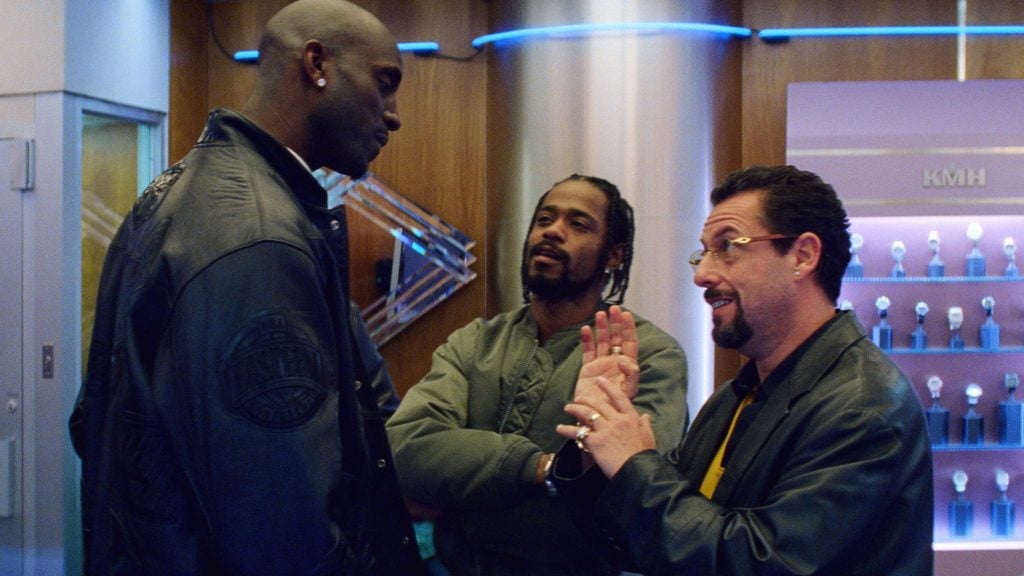
The Safdie brothers’ Uncut Gems follows Howard Ratner, a New York jeweller played by Adam Sandler. Howard owes money to several people, but instead of reducing his risks, he continues to search for one major success that could solve every problem.
Much of the film’s tension comes from Howard’s inability to stop. Each time he appears close to safety, he places another bet or makes another promise. His decisions create a chain of financial and personal crises that become increasingly difficult to control.
The film uses quick dialogue, crowded rooms, constant phone calls, and overlapping conversations to place viewers inside Howard’s stressful world. Gambling is important to the story, but the movie is mainly a character study about obsession. Howard is convinced that the next result will justify everything that came before it.
His need for quick outcomes also reflects a wider desire for speed and control. Outside fiction, resources such as the CasinosAnalyzer guide to faster withdrawals focus on the practical side of accessing funds efficiently. Howard’s situation presents the opposite extreme: he repeatedly puts any available money back at risk before it can provide security.
Uncut Gems is uncomfortable, energetic, and difficult to predict. Adam Sandler gives Howard enough charm to remain compelling, even when his choices become clearly destructive.
Ocean’s Eleven: A Casino Heist Built on Precision
Steven Soderbergh’s Ocean’s Eleven offers a lighter and more stylish form of suspense. George Clooney plays Danny Ocean, a recently released thief who plans to rob three major Las Vegas casinos at the same time.
Danny brings together a team of specialists, including Rusty Ryan, played by Brad Pitt, and Linus Caldwell, played by Matt Damon. Every member has a specific role, from surveillance and technology to deception and physical access.
The casinos provide more than a glamorous background. They are highly controlled environments with cameras, guards, secure vaults, and strict procedures. The team must understand these systems and find weaknesses without attracting attention. Their plan depends on exact timing, trust, and the ability to react when events move in an unexpected direction.
Unlike darker crime thrillers, Ocean’s Eleven balances danger with humour and confidence. The pleasure comes from watching separate parts of the plan connect. Viewers receive enough information to follow the operation, but several clever details remain hidden until the right moment.
The result is an accessible heist film in which the central excitement comes from preparation and teamwork rather than violence.
Inception: A Mission Across Several Levels of Reality
Christopher Nolan’s Inception moves the idea of high stakes into the world of dreams. Leonardo DiCaprio plays Dom Cobb, a specialist who enters the subconscious minds of other people to steal information.
Cobb receives an unusual assignment that could allow him to return to his children. Instead of taking an idea from a target, his team must place one there without making the person aware of the process.
The mission becomes more dangerous as the team enters deeper dream levels. Time moves at a different speed in each layer, and actions in one world can affect everything below it. Nolan presents these rules clearly but continues to test them through unexpected complications.
The film combines emotional conflict with impressive action scenes. Streets fold over themselves, rooms lose gravity, and familiar locations become unstable. Beneath the spectacle, Cobb’s memories create a personal threat that no amount of planning can fully control.
Inception keeps viewers engaged because the danger operates on several levels. The team could fail the mission, become trapped, or lose control of the distinction between dreams and reality.
Gone Girl: Marriage as a Psychological Contest
David Fincher’s Gone Girl replaces physical action with suspicion and manipulation. Ben Affleck plays Nick Dunne, whose wife Amy, portrayed by Rosamund Pike, disappears on their wedding anniversary.
Nick’s behaviour quickly attracts attention from the police and the media. Details about the couple’s troubled marriage become public, and every television appearance shapes how millions of people view the case.
The film gradually reveals that both partners have hidden important parts of themselves. Their marriage becomes a contest in which information, public opinion, and carefully planned actions are powerful weapons.
Fincher creates tension through controlled images, sharp dialogue, and changes in perspective. The audience must regularly reconsider earlier assumptions as new details appear. Instead of asking only what happened to Amy, the story examines how well two people can ever know each other.
Gone Girl shows that risk does not always involve money or physical escape. Reputation and identity can also become valuable stakes, especially when the public has already decided whom to trust.
A Quiet Place: Survival Through Complete Silence
John Krasinski’s A Quiet Place presents the most direct threat in this selection. A family lives in a world where deadly creatures hunt through sound. Ordinary activities must be completed in near silence, and a small accident can have fatal consequences.
Krasinski and Emily Blunt play parents who are trying to protect their children while preparing for the birth of another baby. Their home has been adapted with warning lights, marked paths, and silent methods of communication.
The film’s sound design makes viewers notice every movement. A footstep, toy, or dropped object can create immediate fear. Quiet scenes do not provide relief because the absence of sound makes the possibility of interruption even more intense.
Family relationships give the survival story emotional depth. The parents must balance safety with their children’s need for independence, while grief and guilt affect how they communicate. The danger is simple, but the human choices surrounding it are complex.
Which Film Matches Your Mood?
Each title offers a different type of suspense:
- For restless energy and reckless choices: Uncut Gems
- For style, teamwork, and a casino heist: Ocean’s Eleven
- For complex ideas and visual action: Inception
- For secrets and psychological conflict: Gone Girl
- For survival tension and emotional drama: A Quiet Place
Final Thoughts
Risk can take many forms on screen. It may involve money, a carefully planned robbery, a dangerous mission, a damaged relationship, or the survival of an entire family. These five films turn uncertainty into suspense without following the same formula. Choose Ocean’s Eleven for stylish entertainment, Gone Girl for psychological tension, or A Quiet Place for direct fear. Whatever your preference, each story proves that cinema becomes most gripping when one decision can change everything.

Matthew is a Sr. Content Writer working as a freelancer in Outreachmonks for the past 5 years. He has completed his education in Bachelor’s in Business Administration. With his articles he loves to impart information about the latest business trends and models.