Rock Springs is a film driven by anger, grief, and historical memory, and those impulses are evident from the moment it begins. Writer-director Vera Miao isn’t using horror as a decorative genre wrapper. She’s reaching for it as a way to confront something deeply American and deeply unresolved. The film follows a Chinese-American family who relocate to Rock Springs, Wyoming, after the death of the father, hoping for distance and quiet, only to encounter a presence tied to the town’s buried past. What unfolds is a story about inherited racial violence and the cost of forgetting, filtered through supernatural imagery that wants to make history impossible to ignore.
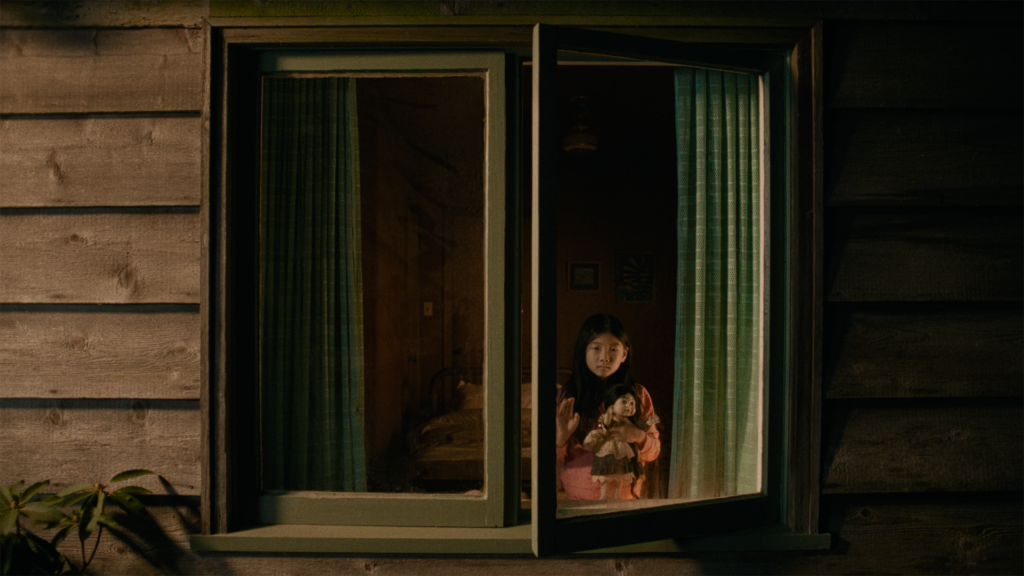
In the present-day storyline, young Gracie (Aria Kim) moves with her mother Emily (Kelly Marie Tran) and her grandmother (Fiona Fu) to their new home near the woods. The family dynamic is defined almost entirely by loss. Gracie is withdrawn, Emily is exhausted and hyper-vigilant, and the grandmother carries an older sense of endurance. Kelly Marie Tran does strong work grounding the film emotionally, especially in scenes where Emily’s fear for her daughter begins to eclipse her own grief. Tran brings urgency and sincerity to a role that could have easily drifted into abstraction, particularly once the supernatural elements start escalating.
Still, the present-day family drama never fully comes together. Miao clearly understands the emotional weight of grief, but the characters remain thinly sketched beyond that central pain. We’re told very little about who they were before the loss, or how they function as a family beyond reacting to tragedy. As a result, the modern storyline often feels like a vessel for the film’s ideas rather than a fully lived-in narrative. That imbalance becomes more noticeable as the film progresses and asks the audience to emotionally invest in stakes that haven’t been fully built.
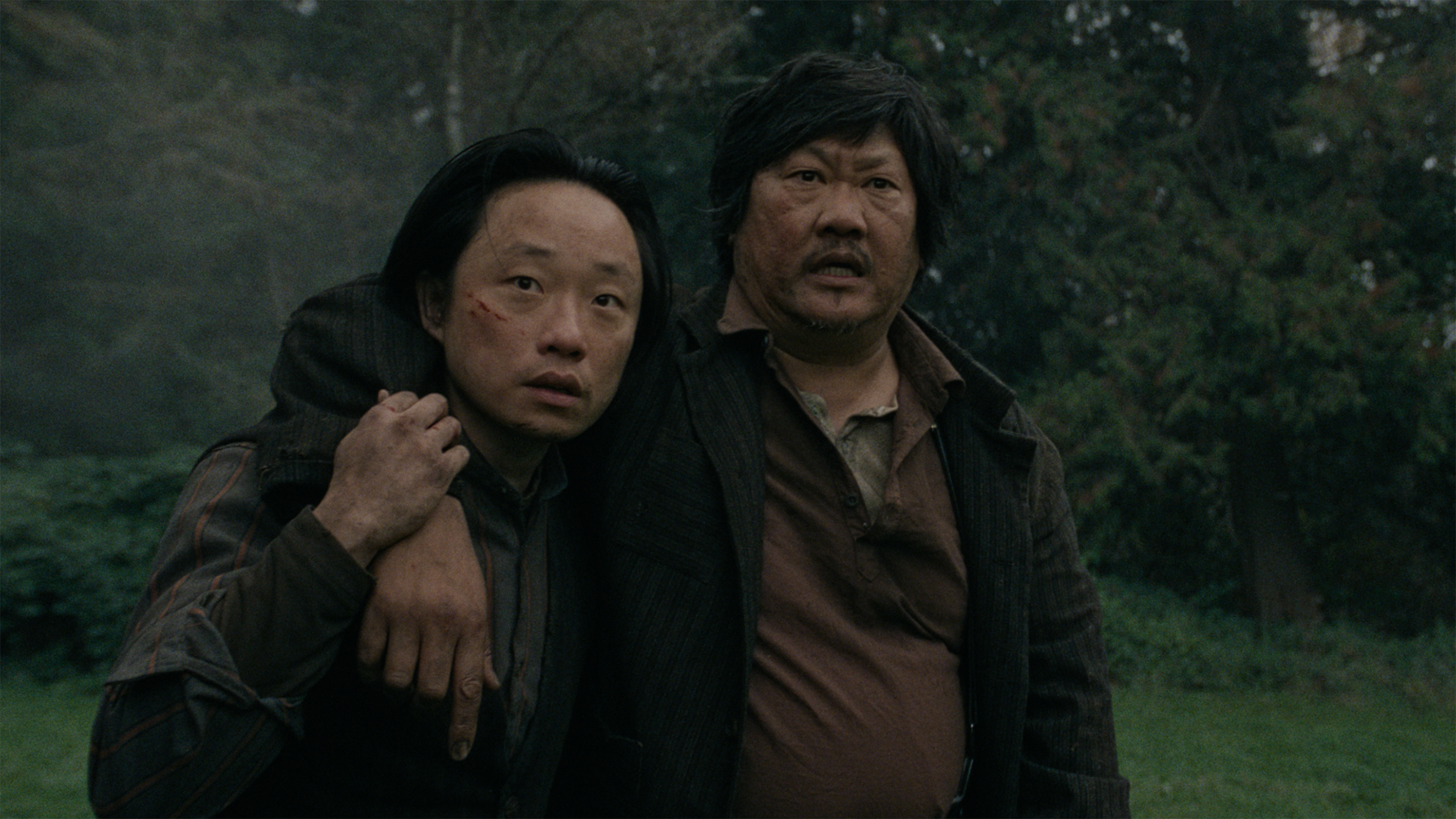
Where Rock Springs truly comes alive is in its historical material. When the film rewinds to 1885 and depicts the Rock Springs Massacre, it becomes something far more powerful and specific. These sequences are the film’s strongest by a wide margin, both emotionally and technically. Benedict Wong and Jimmy O. Yang are outstanding, anchoring the flashback with performances that feel grounded and deeply upsetting. Wong, in particular, brings a weary dignity to his role that gives the violence a devastating emotional anchor. The massacre itself is staged with clarity and restraint, never stylized for spectacle, yet still harrowing in its brutality.
Heyjin Jun’s cinematography shines during these scenes, capturing the chaos and terror without losing spatial coherence or emotional focus. The violence is ugly and unglamorous, which makes it land harder. Miao treats this history with gravity and respect, allowing the horror to emerge from the reality of what happened rather than exaggerating it through genre excess. These moments feel necessary, not exploitative, and they establish a historical weight that the rest of the film is constantly trying to live up to.
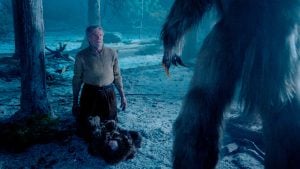
The idea of linking this real-life atrocity to a supernatural presence rooted in Chinese beliefs about the afterlife is compelling on paper, and for a while, the film makes it work. Miao’s interest in generational trauma and inherited pain is clear, and her decision to frame that trauma as something that literally haunts the present has real conceptual power. The problem is in the execution. Once the monster becomes more explicit, the film begins to lose its footing. The design and mechanics of the creature feel underdeveloped, and the symbolism becomes muddled.
This is where the film’s pacing issues come to the surface. The first half takes its time establishing mood and atmosphere, but the third act rushes toward resolution without earning it. The confrontation that is meant to tie together personal grief, historical violence, and supernatural reckoning feels strangely undercooked. Instead of deepening the film’s ideas, the final stretch simplifies them, leaning on genre beats that feel disconnected from the specificity that made the earlier sections so effective.
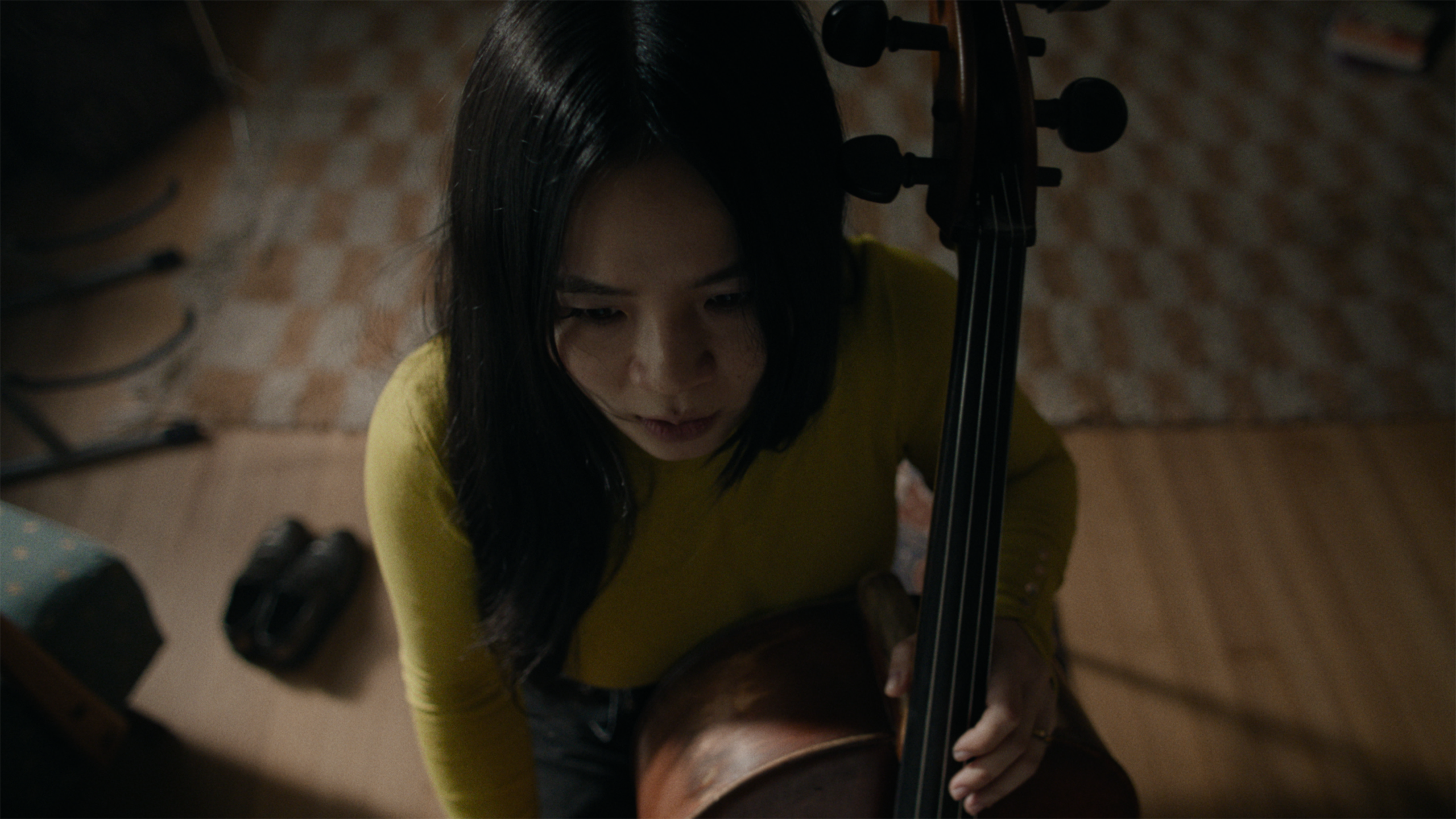
Sundance Film Festival. Courtesy of Sundance Institute | photo by Rocks Springs LLC.
What’s frustrating is that Rock Springs is clearly made with intention and care. Miao approaches trauma thoughtfully, and her desire to honor history rather than sanitize it is admirable. The film is timely in the way it draws a direct line between past racial violence and present unease, refusing to treat the massacre as something safely sealed off in history books. There is a genuine sense of anger beneath the film’s surface, and it’s an anger that feels earned.
But intention doesn’t always translate into cohesion. The present-day storyline lacks the depth needed to carry the film’s emotional weight, and the supernatural elements never reach the level of clarity or menace they need to justify the climax. As a result, the film feels uneven, with its most powerful material trapped in the past while the present struggles to sustain momentum.
Even so, Rock Springs is not a failure. It’s an ambitious debut that reaches for something meaningful, and when it succeeds, particularly in its historical sequences, it leaves a lasting impression. Miao shows a strong visual sense and a clear moral compass, and her handling of the massacre suggests a filmmaker capable of confronting difficult material without flinching. If the film ultimately falters, it’s because its ideas outpace its narrative control.
Rock Springs works best as a reminder. A reminder that history doesn’t stay buried just because a town tries to forget it, and that trauma, when ignored, finds other ways to surface. The film may stumble in bringing its horror elements to a satisfying conclusion, but its commitment to honoring real suffering and confronting inherited violence gives it a seriousness that lingers even after its missteps.
Rock Springs had its World Premiere in the Midnight section of the 2026 Sundance Film Festival.
Director: Vera Miao
Writer: Vera Miao
Rated: NR
Runtime: 97m
The film may stumble in bringing its horror elements to a satisfying conclusion, but its commitment to honoring real suffering and confronting inherited violence gives it a seriousness that lingers even after its missteps.

Roberto Tyler Ortiz is a movie and TV enthusiast with a love for literally any film. He is a writer for LoudAndClearReviews, and when he isn’t writing for them, he’s sharing his personal reviews and thoughts on Twitter, Instagram, and Letterboxd. As a member of the Austin Film Critics Association, Roberto is always ready to chat about the latest releases, dive deep into film discussions, or discover something new.