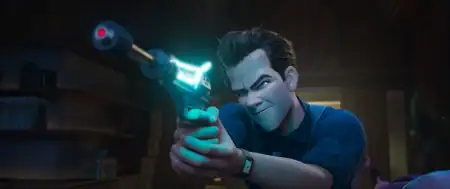


Two films, one weekend, two completely different stories. Warner Bros.’ Clayface opened to roughly $24M domestically on a reported $44M budget. A week earlier, Street Fighter had taken the No. 1 spot with about $31M, then dropped to No. 4 in its second frame. Same studio family now, same marketing machine, wildly different shapes of curve.
Both movies got full reviews on this site. The reviews covered what’s on screen. This piece covers the spreadsheet behind the screen: how the people who fund these films guess the first three days, and why they get it wrong in such a predictable way.
It isn’t magic. It’s a pile of imperfect signals, a few models, and a lot of trade-press hedging.
How the forecast actually gets built
Start with tracking. Weeks before release, research firms survey moviegoers and ask a small set of questions: are you aware of this film, do you want to see it, is it your first choice this weekend. The answers get weighted against past releases in the same genre and plugged into a regression. Out comes a range, never a single number.
Then layer on presales. Ticket platforms and big chains share early sales volume with studios, and analysts compare it against comparable titles at the same distance from opening day. Social buzz joins the stack: trailer views, search spikes, creator reactions, the volume of fans posting about a film. None of these signals is clean alone. Tracking skews toward people who answer surveys. Presales skew toward superfans who buy first. Social skews loud.
The combined output is a projection range that trade outlets publish midweek. Variety, for instance, pegged Street Fighter at about a $30M start, and it landed close to that. Clayface was the miss: the studio’s early expectation sat around $25 to 30M, and the film came in under the bottom of that band.
One analyst put it bluntly. Forecasts are built to be directionally right, not precise.
For readers who like seeing how this kind of modeling gets done across industries, regular technology news and analysis is a decent way to follow the tools and data practices that keep spilling into entertainment forecasting, from machine learning pipelines to survey methodology. It’s a rabbit hole, but a useful one.
Where the models break
The honest answer is that some films are just harder to read. Researcher Stephen Follows compared trade forecasts with actual grosses across more than a thousand wide releases, and the pattern is consistent: forecast error climbs for horror, for franchise reboots, and for anything where the audience is split between a devoted core and a shrug-and-skip majority.
Think about why those categories are so slippery. A horror film’s audience tends to decide late and in groups, so a survey taken three weeks out catches intent that hasn’t formed yet. A reboot carries the opposite problem: everyone has an opinion about the original, which inflates awareness without telling you who will actually buy a ticket. And a split audience produces an average that describes nobody. The fans might be fully committed while the casual majority never gets past “maybe later,” and a model that blends the two will land somewhere that matches neither group.
Clayface fits that profile. It’s a body-horror pitch inside a superhero universe still working out its identity. Awareness was high. Intent was soft. That gap is exactly where tracking tends to overshoot.
Budget math makes it sting. A $44M production is modest by superhero standards, so a $24M start isn’t a catastrophe on its own. Add a global figure around $43M, and the picture is a film that opened low but isn’t bleeding. Still, “fine” is not what a reboot is supposed to deliver. The miss matters less for the studio’s ledger than for its expectations, because a forecast that sits above the result shapes how a release gets judged in the first week of coverage, fairly or not.
Street Fighter had the opposite problem. Its number matched the forecast. The forecast just couldn’t tell you what happens next.
Why game adaptations front-load so hard
Here’s the pattern, and it’s been true for years. Video game films tend to open on fan energy and then fall off a ledge. The core audience shows up Friday, buys premium seats, posts about it, and is done by Sunday. General audiences, the ones who’d carry a film through weekends two and three, read the reviews and the audience scores and often pass.
That’s exactly what a second-weekend slide to No. 4 looks like. Opening-weekend forecasting captures fan intent very well. It captures word of mouth very badly, because word of mouth doesn’t exist yet when the model runs.
Three things make adaptations worse than average:
- Fan-first marketing. Trailers and promotions speak to people who already know the characters, which inflates early awareness without growing the audience.
- Premium-format skew. Fans pay more per ticket on night one, so opening revenue looks healthier than attendance really is.
- Mixed reception. When critics and casual viewers cool on the film, there’s no second wave to catch.
None of that is unique to Street Fighter. It’s the same shape that has trailed plenty of game adaptations. A strong first Friday followed by a steep Saturday-to-Sunday decay is basically a fingerprint.
What the numbers can’t tell you
Tracking can’t measure surprise. A documentary about a tech founder’s fraud climbing in its second weekend, a stop-motion fantasy taking No. 3, a studio horror film opening below its band: these are the outliers that make the Monday headlines, and they’re the ones no regression saw coming.
It also can’t measure mood. Late October is a crowded frame, Halloween is days away, and audiences have more options than a typical spring weekend. Any model trained mostly on average weeks will underweight that.
So what should you take from all this? Treat opening-weekend projections as a starting estimate, not a verdict. The second weekend tells you far more about a film’s real audience than the first ever will.
Gambling involves risk. Please play responsibly and only wager what you can afford to lose. If you feel gambling is becoming a problem, visit BeGambleAware.org.
FAQ
How accurate are opening-weekend box office forecasts? They’re usually close for big franchise titles and noticeably shakier for horror, reboots and divisive films. Trade forecasts are published as ranges, and actual results often land at the edge of them or outside. Treat them as informed estimates, not predictions you can bank on.
What is tracking data in box office forecasting? Tracking is survey research run in the weeks before release. Firms ask moviegoers about awareness and interest, then compare answers to past releases in the same genre. It feeds a model that produces a projected opening range, usually refined as presales and buzz come in.
Why do video game movies drop so fast in weekend two? Their marketing targets existing fans, who show up on opening weekend. General audiences decide mostly on reviews and word of mouth, and when those are lukewarm there’s no second wave. The result is a big first frame followed by a steep fall.
Does a low opening mean a movie is a flop? Not necessarily. Budget, global grosses and staying power all matter. A film that opens modestly on a lean budget and holds up overseas can still break even eventually. A big opening followed by a collapse can be the weaker result.
What should I watch instead of the opening number? Watch the second-weekend percentage drop. A fall under about 50 percent usually signals healthy word of mouth, while drops past 60 percent suggest a front-loaded fan crowd. That one figure reveals more than the headline opening ever does.

Elara is a dynamic writer and blogger who specializes in pop culture and movie reviews. With a background in film studies and journalism, she combines her deep knowledge of the entertainment industry with a sharp, insightful writing style that keeps readers coming back for more.