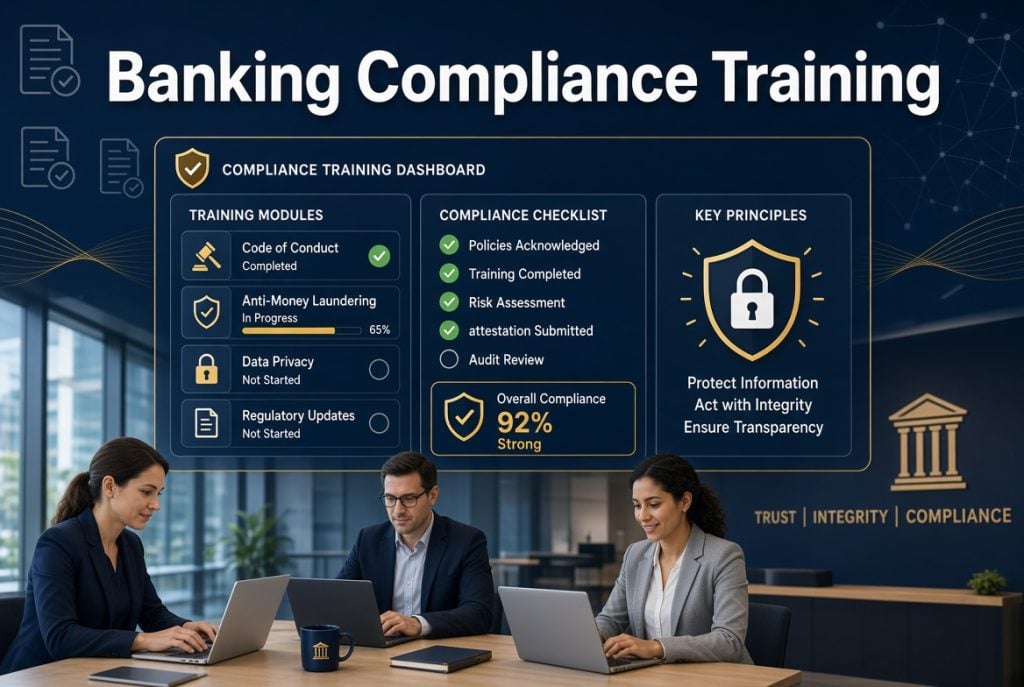
Bank compliance training now sits inside daily operations, not beside them. Staff need clear guidance on fraud controls, privacy duties, lending rules, risk reporting, and customer treatment while service continues. Digital learning gives banks a structured way to keep instruction current, traceable, and consistent across locations. It also respects how our employees work, with focused lessons that fit short windows and real branch pressure.
Training Needs
Banks handle sensitive data, regulated products, and strict audit duties every day. A banking LMS helps training leaders assign required lessons, maintain records, test knowledge, and schedule refreshers from a single, controlled platform. That structure matters when policy changes reach branches, contact centers, operations teams, and credit staff at different times during busy weeks.
Why Digital Fits
Banking roles carry different risk exposures. A teller needs practical identity checks. A loan officer needs fair lending guidance. Analysts may focus on monitoring alerts, while managers need judgment on escalation. Digital delivery can match lessons to those duties without waiting for a classroom date. Employees learn in shorter sessions and then return for review when a policy question arises.
Stronger Records
Compliance training must stand up to inspection. Paper sign-ins, shared spreadsheets, and scattered certificates leave gaps that auditors notice quickly. Digital records show course access, dates, scores, acknowledgments, and overdue items. Managers can act before missed training becomes a control weakness. Clear evidence also helps compliance officers show that policies were communicated, assessed, and reinforced.
Faster Updates
Regulatory guidance, internal reviews, and enforcement actions can all change training needs. Digital courses make it easier to distribute revisions. An updated lesson can replace outdated material across many sites at once. Alerts can prompt staff to make required changes before old habits take hold. That speed helps reduce mixed messages across departments.
Better Retention
Long annual sessions often overload memory. Smaller digital lessons give employees time to absorb one rule, scenario, or decision point at a time. Quizzes, examples, and spaced reminders help knowledge stay usable. A question about suspicious activity, fee disclosure, or customer identity becomes easier to answer when training mirrors the moment of judgment.
Role-Based Paths
Effective compliance programs connect content to job function. Branch teams may need lessons on customer identification and cash handling. Lending groups may need fair credit and disclosure modules. Operations staff may need sanctions-screening and transaction-review practices. Role-based paths make requirements visible and relevant. Employees see why each lesson matters because it reflects their own risk decisions.
Consistent Delivery
Large banks train people across branches, service centers, corporate offices, and remote roles. Consistency protects both customers and institutions. Digital courses give every learner the same core policy message, vocabulary, and required standard. Local leaders can still add examples from their market. The baseline stays firm, while practical judgment remains part of the conversation.
Better Oversight
Training leaders need more than completion percentages. They need to see weak topics, late groups, repeated errors, and confusing questions. Digital reports can reveal where scores drop or retakes rise. That evidence guides coaching and content repair. Over time, reporting turns compliance education into an active control rather than a file kept for review.
Learner Access
Access affects behavior. Employees need policies, refreshers, captions, saved progress, and searchable material without unnecessary friction. Digital platforms can support that access during onboarding, role changes, or policy updates. A new hire can review key rules before handling sensitive tasks. Experienced staff can confirm a requirement before acting, which supports steadier decisions under pressure.
Culture Impact
Compliance works best when employees connect rules with customer trust. Digital learning can make that link concrete through cases based on daily banking work. Accurate disclosures protect borrowers. Careful data handling protects families and businesses. Timely reporting helps detect harm sooner. When training reflects those outcomes, staff view compliance as part of responsible service.
Cost Control
Classroom sessions still matter for discussion, coaching, and complex judgment calls. Yet travel, scheduling, printed materials, and repeated delivery can strain training budgets. Digital delivery reduces many of those pressures. Banks can reserve live time for high-risk decisions and leadership practice. Routine requirements can move online, where tracking, updates, and refreshers are easier to manage.
Conclusion
Digital learning gives banks a practical framework for compliance training that is current, measurable, and easier to manage. It supports role-based instruction, stronger audit records, timely updates, and better access for busy employees. The value is not abstract. Staff receive guidance they can apply during real customer interactions, while leaders gain evidence that training is working. As regulatory pressure continues, this approach helps our organizations stay careful, prepared, and trusted.

Caroline is doing her graduation in IT from the University of South California but keens to work as a freelance blogger. She loves to write on the latest information about IoT, technology, and business. She has innovative ideas and shares her experience with her readers.