

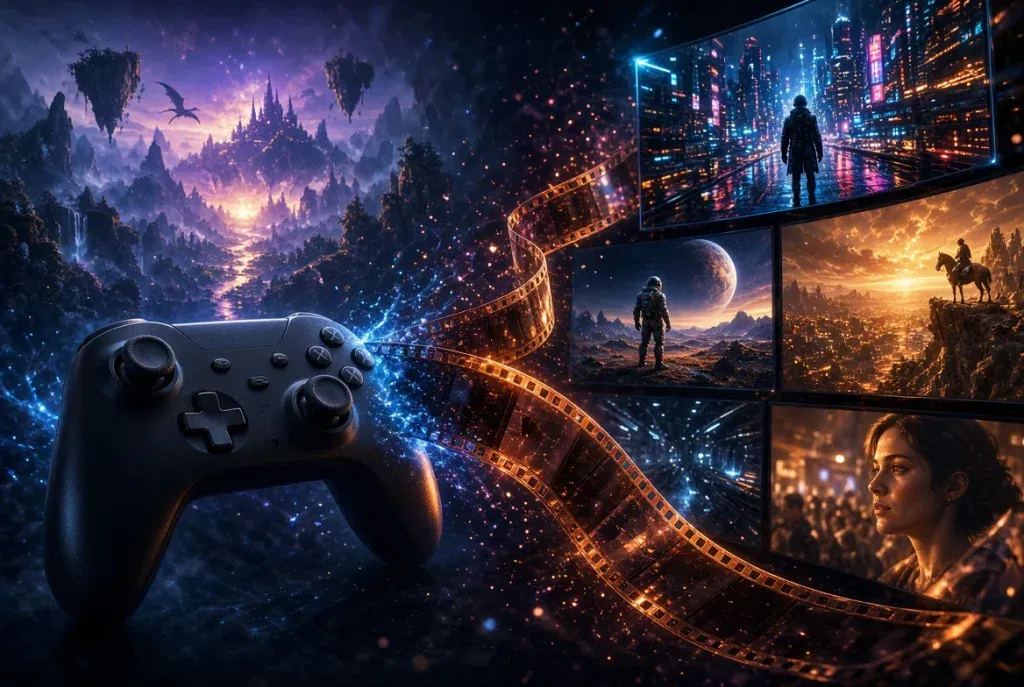
For much of their history, video game adaptations struggled to establish a strong reputation in film and television. Early productions frequently reduced complex fictional worlds to familiar action formulas, sacrificing character development and narrative depth. The results often disappointed existing fans while failing to attract audiences unfamiliar with the original games.
That perception has changed considerably. Productions such as The Last of Us, Fallout, and The Super Mario Bros. Movie have demonstrated that gaming properties can support commercially successful and critically discussed screen adaptations. Their achievements reflect more than the growing popularity of video games. They reveal how the entertainment industry is reconsidering the relationship between interactive storytelling and traditional visual media.
As streaming platforms compete for recognizable intellectual property and studios search for established audiences, video game adaptations have become increasingly important. Their influence extends beyond individual releases, affecting production strategies, narrative structures, audience expectations, and the future relationship between gaming and screen entertainment.
Why Hollywood Is Investing More Heavily in Gaming Franchises
The global gaming industry has developed into a major entertainment sector with recognizable characters, expansive fictional universes, and highly engaged communities. For film studios, these properties offer a foundation that original screen projects must often build from the beginning.
However, an established franchise does not guarantee a successful adaptation. Audiences may recognize a title while remaining dissatisfied with how its characters or themes are translated into another medium.
Gaming franchises also exist within a broader digital entertainment economy. Audiences increasingly move between streaming services, mobile applications, online communities, and specialized platforms. This interconnected environment includes everything from competitive gaming services to mobile gambling products promoted through phrases such as download 1xbet apk, although these services involve different business models, regulatory requirements, and consumer risks.
For studios, the important development is the fragmentation of digital attention. Screen adaptations must compete within an entertainment landscape where audiences have numerous alternatives.
| Industry Factor | Traditional Film Development | Video Game Adaptation |
| Intellectual property | Often developed from original concepts | Based on an existing gaming franchise |
| Audience awareness | Requires initial brand recognition | May benefit from established communities |
| Worldbuilding | Created primarily for the screen | Draws from existing fictional settings |
| Marketing | Introduces unfamiliar characters | Can reference recognizable gaming elements |
| Creative limitations | Greater narrative flexibility | Must balance adaptation and source fidelity |
The commercial appeal of established gaming properties is therefore substantial, but creative execution remains essential.
The Shift From Simple Action Movies to Character-Driven Stories
Earlier video game adaptations frequently emphasized recognizable costumes, action sequences, and visual references. Their narratives sometimes struggled because the original games depended on player participation rather than conventional storytelling.
Modern adaptations increasingly recognize that successful translation requires more than reproducing gameplay.
The Last of Us provides a useful example. Its television adaptation places considerable emphasis on relationships, grief, survival, and moral responsibility. Although the original game contains extensive interactive sequences, the series reorganizes those experiences around dramatic storytelling.
Fallout takes a different approach by using the established fictional universe to develop a largely original narrative. This strategy allows the adaptation to preserve recognizable themes without recreating a specific player’s journey.
Several principles distinguish these approaches:
- Characters need motivations that remain compelling without player interaction.
- Gameplay mechanics should be translated into meaningful dramatic situations.
- Familiar settings must be understandable to newcomers.
- Emotional conflicts require development beyond visual references.
- Changes to the source material should serve a clear narrative purpose.
These principles help explain why adaptations increasingly resemble carefully developed dramas rather than extended demonstrations of game mechanics.
How Streaming Platforms Have Changed Adaptation Strategies
Television offers structural advantages for adapting games with extensive narratives. A film generally has limited time to establish characters, explain fictional worlds, and resolve central conflicts.
A television season can distribute these responsibilities across multiple episodes.
This flexibility is particularly useful for role-playing games, survival adventures, and franchises featuring large casts or complicated political systems.
| Adaptation Format | Main Strength | Potential Limitation |
| Feature film | Concentrated narrative and theatrical spectacle | Limited time for worldbuilding |
| Limited series | Focused storytelling across several episodes | Restricted space for additional storylines |
| Multi-season series | Extended character and world development | Long-term production commitments |
| Animation | Greater freedom for stylized worlds | Requires a suitable visual approach |
| Anthology | Multiple perspectives within one universe | Less continuity between stories |
Streaming services also allow audiences to discover adaptations independently of theatrical release schedules.
However, television introduces its own challenges. Expensive visual effects, lengthy production cycles, and uncertain renewal decisions can complicate adaptations of ambitious gaming properties.
Consequently, choosing the appropriate format has become a major creative and commercial decision.
The Growing Importance of Authentic Worldbuilding
Video games often establish fictional worlds through exploration. Players discover environmental details, documents, dialogue, and optional stories at their own pace.
Film and television cannot reproduce this experience directly because viewers do not control the camera or decide which locations to investigate.
Instead, adaptations must communicate essential information through cinematography, production design, dialogue, and character behavior.
Successful worldbuilding depends on selecting details that contribute to the story rather than including references solely for recognition.
The Fallout television series demonstrates how recognizable architecture, technology, costumes, and social institutions can establish continuity with a gaming universe while supporting new characters.
Arcane offers another example of worldbuilding through distinctive visual design and social conflict, drawing from the League of Legends universe without requiring viewers to understand the original game’s competitive mechanics.
Effective adaptation generally involves three stages:
- Identifying the fictional world’s essential rules, history, and themes.
- Selecting visual and narrative elements that communicate those foundations.
- Introducing unfamiliar audiences to the setting without excessive exposition.
This process requires creative interpretation rather than literal reproduction.
Why Fan Communities Have Become Influential
Video game adaptations arrive with audiences who may have spent years exploring their fictional worlds. These communities often possess detailed knowledge of characters, environments, and established narratives.
Their expectations can influence public discussion before production begins.
Casting announcements, costume designs, trailers, and changes to familiar storylines frequently generate extensive debate across social media and gaming forums.
| Audience Group | Primary Interest | Adaptation Challenge |
| Longtime players | Fidelity to established characters and themes | Managing expectations |
| Casual players | Recognizable entertainment elements | Providing sufficient context |
| New viewers | Strong independent storytelling | Avoiding excessive references |
| Critics | Narrative quality and artistic execution | Evaluating the work beyond brand recognition |
| Franchise creators | Long-term identity and consistency | Balancing creative freedom and continuity |
Fan involvement can contribute valuable enthusiasm and publicity. Nevertheless, treating every fan preference as a creative requirement may produce fragmented storytelling.
A strong adaptation must function as an independent screen production, even when its source material is widely recognized.
The most effective approach respects the original game’s identity without assuming that every mechanic, location, or storyline must appear on screen.
Animation Is Expanding the Possibilities of Game Adaptations
Live-action production is not always the most suitable format for fictional worlds built around exaggerated movement, unusual character designs, or highly stylized environments.
Animation provides alternatives that can preserve these distinctive qualities.
Arcane demonstrates how sophisticated animation can combine expressive character performances with visually ambitious action and dramatic storytelling.
Cyberpunk: Edgerunners similarly illustrates how an animated series can expand an established gaming universe through an original story while retaining its atmosphere and central themes.
Animation also offers greater flexibility when portraying environments that would require extensive digital effects in live action.
However, animated adaptations are not inherently less expensive or easier to produce. High-quality animation requires substantial artistic labor, coordination, and production time.
The growing range of visual approaches suggests that future adaptations will be selected according to the creative requirements of each franchise rather than a single preferred format.
What Video Game Adaptations Mean for the Future of Entertainment
The increasing prominence of gaming properties is encouraging closer collaboration between game developers, television producers, filmmakers, and streaming platforms.
Studios may involve original creators earlier in development to preserve important aspects of a franchise’s identity. Meanwhile, game publishers can use screen adaptations to introduce their fictional worlds to audiences who have never played the original titles.
Future productions are also likely to explore more varied genres. Beyond action and fantasy, gaming properties offer opportunities for psychological thrillers, historical dramas, science fiction, mysteries, and character-focused stories.
Nevertheless, several challenges will remain significant:
- Maintaining narrative quality despite commercial pressure to expand franchises.
- Avoiding excessive dependence on recognizable intellectual property.
- Choosing appropriate formats for different kinds of games.
- Preserving creative independence while respecting established fictional worlds.
- Developing stories that appeal to both existing fans and new audiences.
The industry’s long-term success will depend on whether adaptations continue to improve as independent works of cinema and television.
Video game adaptations are changing screen entertainment because they offer access to established fictional universes while challenging conventional approaches to storytelling. Their strongest examples demonstrate that interactive experiences can inspire compelling narratives without being reproduced exactly.
The relationship between gaming and screen media is also becoming more collaborative. Rather than treating games simply as sources of recognizable characters, producers increasingly recognize their potential for complex themes, distinctive visual identities, and emotionally developed stories.
Ultimately, the future of video game adaptations will be determined less by the popularity of individual franchises than by the quality of their creative interpretation. When filmmakers understand what makes a game’s world meaningful and adapt those qualities to the strengths of cinema or television, the result can appeal far beyond the original gaming community.

Amanda Lancaster is a PR manager who works with 1resumewritingservice. She is also known as a content creator. Amanda has been providing resume writing services since 2014.