Spain has a strange habit of looking familiar even when you have never been there. Seville has doubled for Naboo in Star Wars and Dorne in Game of Thrones. Girona has stood in for Braavos and King’s Landing, while the Canary Islands helped shape the landscapes of The Witcher. For some fans, eventually visiting those places is not enough. The fantasy shifts from “I want to see Naboo” to “I could actually live somewhere that feels like this” — and that is when the practical side of establishing a life in Spain starts to matter.
That contrast is part of Spain’s appeal.
It is a place where a weekend can begin with a film location you recognize instantly and end at a comic convention, genre festival or gaming event. Pop culture is not confined to one city or one type of fan, and the country’s geography has repeatedly allowed real places to stand in for fictional worlds.
Spain has spent decades pretending to be somewhere else
Long before streaming series turned location tourism into its own travel category, Spain was already playing other countries — and other planets — on screen.
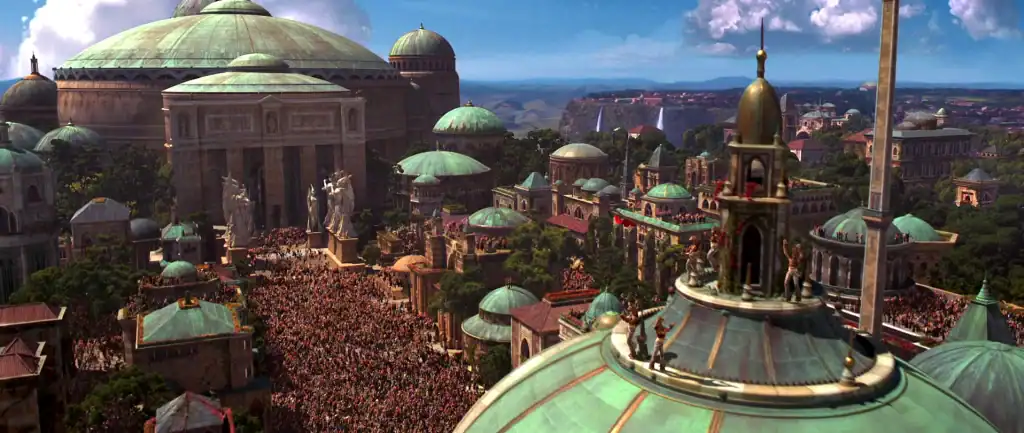
The Plaza de España in Seville became part of Naboo in Star Wars: Episode II – Attack of the Clones. The same city later became one of the most recognizable Spanish filming bases for Game of Thrones, with the Real Alcázar transformed into the Water Gardens of Dorne and the ruins of Itálica used for key scenes in the series.
The appeal becomes obvious once you see the locations in person.
Spain has the kind of architectural range production designers normally have to manufacture: medieval streets, Islamic palaces, Roman ruins, monumental plazas, deserts, volcanic landscapes and dense historic city centers.
Move north and the visual language changes again.
Girona became Braavos, parts of King’s Landing and Oldtown during Game of Thrones. San Juan de Gaztelugatxe, on the Basque coast, became part of Dragonstone. Navarra’s Bardenas Reales provides the kind of landscape that looks as though it should have been digitally invented despite existing perfectly well on its own.
For fantasy fans, visiting Spain can feel less like standard sightseeing and more like walking through a production archive.
Sometimes visiting the fictional world is not enough
Location tourism usually starts with recognition.
You arrive at the Plaza de España and know exactly where Anakin and Padmé walked. You enter the Alcázar already seeing Dorne rather than Seville. In Girona, an ordinary staircase can suddenly become part of a scene you have watched multiple times.
That first encounter is about the fictional world.
But something interesting can happen once the novelty wears off.
You stop looking only at the camera angle and start noticing the real city around it. The place where you had lunch becomes as memorable as the filming location. You wander into neighborhoods that were never on screen. You find a bar, market or street you want to return to for reasons that have absolutely nothing to do with the franchise that brought you there.
Then the fantasy changes.
Instead of wanting to visit Naboo, you start thinking about what it would be like to wake up somewhere that looks a little like it.
Instead of spending an afternoon in Dorne, you begin wondering what an ordinary year in Seville might feel like.
The fictional world becomes the introduction. Spain starts making its own case.
The Canary Islands bring another kind of fantasy to life
The Canary Islands offer a completely different visual vocabulary.
Volcanic terrain, dunes, forests and dramatic coastlines have repeatedly attracted productions looking for landscapes that do not immediately resemble mainland Europe.
Parts of the archipelago helped create the world of The Witcher, where locations in Gran Canaria, La Palma and La Gomera were transformed into settings across the Continent.
That kind of location has a particular effect on fans because so little needs to be mentally removed.
The landscape already looks fictional.
A sweeping fantasy environment becomes a hiking route. A location associated with monsters, magic or adventure turns out to be somewhere people actually live, shop, drive to work and spend weekends.
There is something appealing about that collision.
The screen promises escape, but the real place offers something potentially more interesting: the possibility that extraordinary surroundings can become ordinary.
Spain’s geek appeal extends beyond filming locations
Of course, not every pop culture fan wants to build an itinerary around identifying stone walls from screenshots.
Spain also has a strong calendar of film festivals, conventions, gaming events and fan gatherings that creates reasons to return after the filming locations have been checked off.
Barcelona and Madrid are natural starting points.
Both have large entertainment ecosystems, international screenings, conventions, exhibitions and events spanning film, comics, gaming and television. Their scale also means fandom can exist alongside a much broader cultural calendar rather than depend on one major annual event.
Then there is Sitges.
For horror, fantasy and science-fiction fans, the Sitges International Fantastic Film Festival gives the Catalan coastal town an identity that feels almost purpose-built for genre audiences. For a period each year, horror, speculative fiction and cult cinema become central to the rhythm of the place.
That creates a different relationship with Spain than a one-off filming-location trip.
There is always another excuse to return.
Repeat visits are how a destination starts becoming familiar
The first trip usually has a checklist.
See the location. Take the picture. Attend the convention. Find the recognizable street.
The second trip is already different.
You know how to get around. You remember which neighborhood you liked. You deliberately return to a restaurant that had nothing to do with the reason you originally booked the flight.
By the fourth or fifth visit, the destination can begin feeling strangely routine.
That is often where the idea of spending more time somewhere starts.
For one person, that might simply mean extending a holiday. Another may start working remotely for part of the year. Someone else may look at property, explore professional opportunities or begin thinking seriously about relocating.
The shift is subtle.
You are no longer trying to recreate a fictional experience.
You are imagining your own life in the real place.
Living in Spain means meeting the part that never appears on screen
Unfortunately, even Naboo would probably have paperwork if anyone tried to establish tax residency there.
Once Spain becomes more than a holiday destination, the administrative reality begins to matter.
Foreigners can encounter Spanish identification requirements, digital government systems, property procedures, tax administration and other formalities depending on what they intend to do in the country.
A person buying property may need a different set of practical steps from someone moving permanently. An entrepreneur establishing business interests has different needs again. Even someone who continues living elsewhere can require Spanish documentation when their economic or administrative connection to the country becomes significant enough.
Gestoraz helps foreign individuals and businesses navigate Spanish bureaucracy when that relationship with Spain becomes more concrete, including NIE and NIF applications, digital certificates and administrative procedures that can often be managed from abroad.
That makes the service relevant well beyond conventional relocation.
Someone does not necessarily need to decide that Spain is their permanent home before Spanish administration enters the picture. The practical side can begin with property, investment, work or another formal connection long before the moving boxes appear.
The city still has to work when there are no dragons
There is one important limitation to choosing where to live because you fell in love with it through fiction.
The cameras eventually leave.
Seville is not permanently Dorne. Girona does not organize itself around Game of Thrones. The Plaza de España has far more tourists than droids.
And that is exactly why spending more time in these places before making a larger commitment matters.
The version of a city that works as a film set is not necessarily the version that suits your everyday life.
Housing, public transport, climate, employment, healthcare, airport access and the pace of a particular neighborhood matter far more once there is no flight home booked for Sunday evening.
Even within Spain, the experiences are dramatically different.
Living in central Madrid gives access to one of the country’s biggest cultural calendars but comes with the realities of a major capital. Barcelona mixes international entertainment with coastal life but has its own housing pressures and urban rhythms. Seville provides another scale entirely, while the Canary Islands create a very different relationship with geography, connectivity and island life.
The fantasy can start the conversation.
It cannot make the decision.
The best fandom destinations become something else entirely
Pop culture has a peculiar ability to create emotional attachments to places we have never visited.
A fictional kingdom can make a palace halfway across Europe feel familiar. A science-fiction planet can turn a public square into somewhere recognizable before you know anything about the city surrounding it.
Spain benefits from that effect more than most countries.
Its architecture can become fantasy. Its historic centers can become medieval kingdoms. Its islands can convincingly suggest worlds that do not exist.
But the most interesting transformation may happen after the fan visits.
Eventually, the location stops being exciting because it appeared on screen.
It becomes exciting because you know where to eat nearby. Because you understand the neighborhood. Because you have returned enough times to see the place outside the frame.
And sometimes that familiarity creates a much bigger fantasy.
Not “I want to visit Dorne.”
“I wonder what it would be like to live here.”

Ashley Rosa is a freelance writer and blogger. As writing is her passion that why she loves to write articles related to the latest trends in technology and sometimes on health-tech as well. She is crazy about chocolates. You can find her at twitter: @ashrosa2.