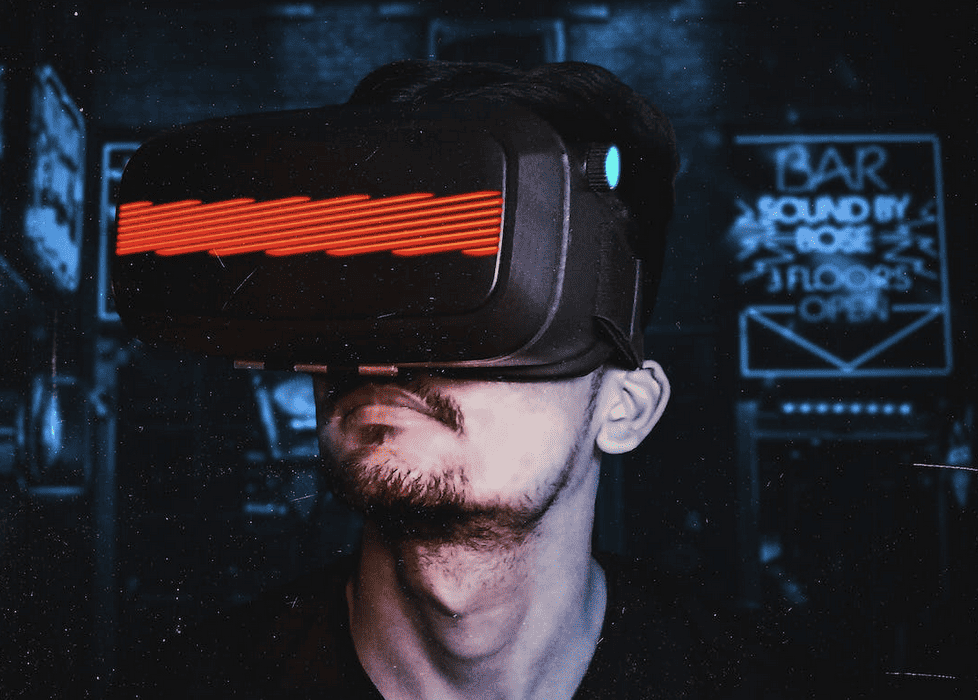
The journey from dull, flat surfaces to photorealistic digital environments didn’t happen by accident. Game developers and visual effects artists spent decades studying how light behaves in the real world, and one of their most valuable teachers came in the form of crystalline carbon structures that scatter light in extraordinary ways.
The Challenge of Digital Realism
Early computer graphics faced a fundamental problem: making virtual objects look like they existed in three-dimensional space. Programmers could create shapes and add colors, but something crucial was missing. Objects appeared lifeless because they didn’t interact with light the way real materials do. The screen showed flat images that your brain immediately recognized as fake.
This challenge became especially apparent when artists tried to render transparent or reflective materials. Glass looked like colored plastic. Water resembled blue paint. Gemstones appeared as solid blocks with a shiny coating. The digital world lacked the subtle complexity that makes physical materials captivating to the human eye.
Learning From Nature’s Light Show
The breakthrough came from careful observation of how rare minerals interact with photons. When light enters a transparent crystalline structure, it doesn’t simply pass through or bounce off. Instead, it bends at specific angles, splits into component wavelengths, and creates internal reflections that generate stunning visual effects.
A blue diamond became a particularly useful reference point because of its unique optical properties. The intense color doesn’t come from surface pigmentation but from how the atomic structure absorbs and transmits specific wavelengths of light. This created a perfect case study for programmers trying to simulate realistic material behavior in virtual spaces.
Building Better Rendering Engines
Armed with this knowledge, graphics engineers developed algorithms that could calculate light paths through transparent objects. Instead of simply coloring pixels, these programs tracked individual light rays as they entered materials, bent according to refractive indices, bounced off internal surfaces, and emerged in new directions.
This mathematical approach transformed digital artistry. Suddenly, virtual gemstones sparkled with inner fire. Water surfaces rippled with convincing reflections and refractions. Glass objects displayed the subtle distortions that signal transparency to our visual system. The digital world gained depth and believability.
The Gaming Revolution
These advances changed what was possible in interactive entertainment. Earlier games relied on pre-rendered backgrounds or simple texture mapping to suggest material properties. Modern games calculate light behavior in real time, adjusting reflections and refractions based on camera position and lighting conditions.
Players now explore underwater grottos where sunlight filters through the surface in shimmering caustic patterns. They discover treasure chambers where gemstones catch torchlight and throw colored reflections across stone walls. They navigate ice caves where frozen surfaces show the world beyond in distorted reflection.
Beyond Entertainment
The same technology that makes games visually stunning also serves practical purposes. Medical visualization software uses these rendering techniques to help surgeons understand complex anatomical structures. Automotive designers evaluate how light reflects off curved surfaces before building physical prototypes. Product photographers create catalog images without expensive studio setups.
The influence extends into film production, where digital effects must blend seamlessly with live action footage. Understanding how light behaves in crystalline structures helps artists create convincing digital jewelry, magical effects, and environmental details that enhance storytelling without drawing attention to themselves.
The Continuing Evolution
Today’s graphics processors contain specialized circuits designed specifically for calculating light paths through complex materials. What once required supercomputers now happens millions of times per second on consumer hardware. Yet developers continue finding inspiration in natural phenomena, always seeking new ways to close the gap between virtual and physical reality.
The lessons learned from studying how light dances through transparent minerals continue shaping the digital landscapes we explore, proving that sometimes the best technological advances come from simply paying attention to the world around us.