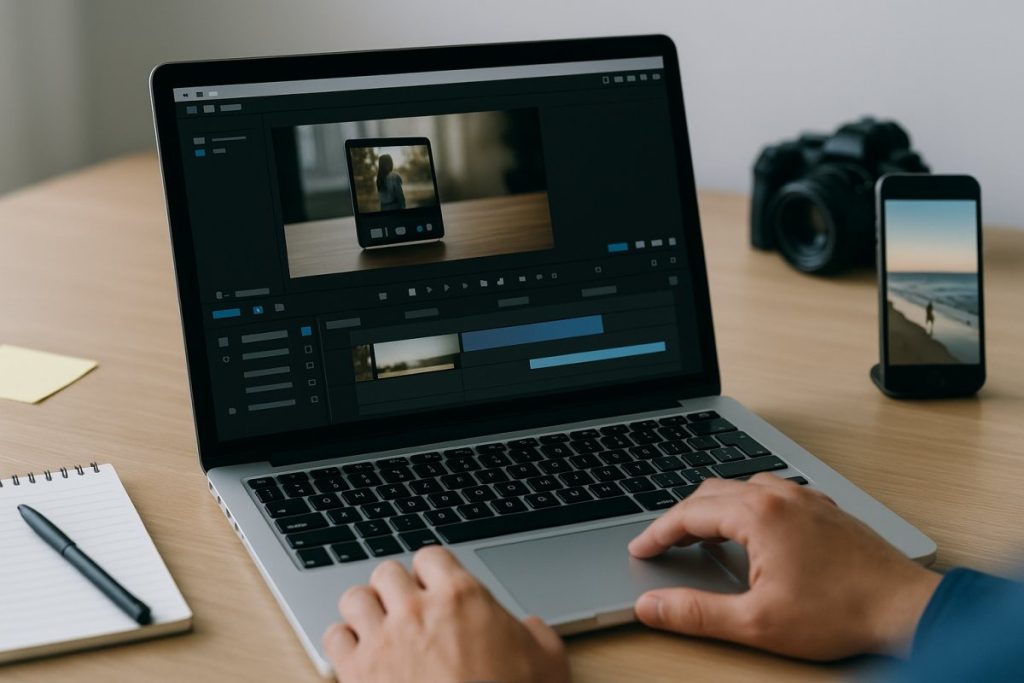
If you’ve been creating videos for a while, you already know the pain. You pour hours into scripting, filming, and editing a piece of content — and then realize your potential audience is split across a dozen languages. Hiring voice actors for each one is expensive, slow, and honestly impractical for most independent creators or small marketing teams. That’s where a free AI video dubbing tool comes in, and it’s changing the game faster than most people expected.
I want to be upfront here: I’m not a futurist hype machine. I’ve spent years in SEO and content strategy, and I only get excited about tools that actually move the needle. AI video dubbing is one of them.
The Real Problem With Multilingual Video Content
Let’s skip the fluff and get honest about what most creators face.
You shoot a tutorial, a product demo, or a brand story. It performs well with your existing audience. Then someone in the comments writes in Spanish. Or Portuguese. Or Japanese. And you realize there’s an entirely untapped market that would genuinely love your content — if only they could understand it.
Subtitles help, but they’re not the same. Studies consistently show that viewers engage longer and convert better when content is delivered in their native language with a matching voice. Reading text at the bottom of a screen while watching someone speak in a foreign language creates friction. Dubbing removes that friction entirely.
The traditional solution? Hire a translation agency, find native-language voice actors, sync the audio manually, and repeat for every single language you want to target. The cost adds up fast. A professionally dubbed 5-minute video can run anywhere from a few hundred to several thousand dollars per language.
For most creators, that math simply doesn’t work.
What AI Video Dubbing Actually Does
Modern dubbing platforms do something that felt like science fiction just a few years ago: they analyze your video, transcribe the speech, translate it into your chosen language, generate a natural-sounding voice, and sync the audio to the speaker’s lip movements — all automatically.
The result isn’t a robotic voice-over slapped onto your original footage. The best tools today produce voices that sound genuinely human, with natural rhythm, inflection, and pacing. Some even offer voice cloning, meaning the dubbed version sounds like you — just speaking fluent French or Korean.
The key capabilities to look for in any solid platform:
- Automatic speech detection and transcription — the tool identifies who is speaking and what they’re saying without manual input
- Lip-sync technology — dubbed audio is matched to mouth movements so the video doesn’t look “off”
- Voice cloning — the speaker’s original vocal identity is preserved across languages
- Multi-speaker support — useful for interviews, panel discussions, or any video with more than one person talking
- Subtitle generation — auto-generated subtitles that can be toggled on or off
These aren’t optional nice-to-haves anymore. They’re the baseline for a professional result.
Who Actually Benefits From This Technology?
The short answer: almost anyone who makes video content with a global or aspirational-global audience.
YouTubers and independent creators are probably the most obvious use case. If you’re producing educational content, tutorials, vlogs, or commentary, expanding into other languages can dramatically grow your subscriber base. Channels that have localized content into Spanish, Portuguese, or Hindi have reported significant spikes in watch time and subscriptions from those regions.
E-commerce brands are using automated dubbing to localize product videos and ad creatives for different markets. Instead of shooting entirely new videos for each region, they translate video once and deploy it globally. The cost savings are significant, and the consistency across markets is actually better than with human production teams working in silos.
Online educators and course creators have a particularly compelling use case. A well-structured course has enormous value regardless of language — and with AI dubbing, a course recorded in English can be made accessible to learners in Latin America, East Asia, or the Middle East without the creator ever stepping back in front of a camera.
Corporate and training teams are using these tools to localize internal communications, compliance training videos, and onboarding materials for global workforces. It’s far more effective than asking employees to read translated transcripts.
How to Use AI Dubbing Without Wasting Time
The workflow with a good AI video dubbing platform is genuinely simple, which is part of what makes it appealing.
- Upload your video. Most tools accept standard formats and handle file processing automatically. The AI detects the source language on its own.
- Choose your target language. Quality platforms support 20 or more languages, covering the major global markets — Spanish, French, German, Portuguese, Japanese, Korean, Mandarin, Arabic, Hindi, and more.
- Select or clone a voice. You can pick from a library of professional AI voices, or use voice cloning to match the original speaker’s tone and personality.
- Add subtitles if needed. Auto-generated subtitles can be included with the dubbed video, which also helps with accessibility and platform discoverability.
- Preview and download. The final video is ready to publish across platforms.
The entire process takes minutes, not days. For creators publishing on a regular schedule, that kind of turnaround is transformative.
A Note on Quality (Because That’s What Actually Matters)
I want to address the elephant in the room: AI-generated voices have historically had a reputation for sounding unnatural. That reputation is increasingly outdated.
The newer generation of AI voice models — the kind powering today’s best dubbing platforms — produce output that most viewers genuinely cannot distinguish from a human voice actor in casual viewing conditions. The rhythm is natural. The emotional tone is appropriate. The pacing matches how a real person would deliver that content.
Is it perfect in every case? Not always. Complex emotional scenes, culturally specific humor, or very regional dialects can still present challenges. But for the vast majority of content — educational videos, product demos, tutorials, marketing content, corporate communications — the quality is more than adequate. The tradeoff between cost, speed, and quality strongly favors AI for most practical applications.
The SEO Angle You’re Probably Not Thinking About
Here’s something that doesn’t get talked about enough in the creator community: multilingual video content isn’t just a viewer experience play. It’s an SEO play.
YouTube is the second largest search engine in the world, and it indexes video content in local languages. A video that’s been properly dubbed into Spanish and uploaded with Spanish metadata isn’t just reaching Spanish speakers through your existing channel — it’s being surfaced in Spanish-language search results that you weren’t previously competing for at all.
The same logic applies to video content embedded on websites. When you translate video content and pair it with localized landing pages, you’re creating entirely new organic entry points into your funnel. The content investment you’ve already made starts working much harder.
Final Thoughts
The barriers to reaching a global audience with video content have genuinely collapsed. What used to require a team of translators, voice actors, and audio engineers can now be accomplished by a single creator with the right tool and an internet connection.
If you haven’t experimented with multilingual video yet, now is a good time to start. The competitive advantage of being an early mover in non-English markets is still real — search results in many languages are far less saturated than English, and audiences in those markets are often hungry for quality content.
Whether you’re a solo YouTuber trying to grow past your current ceiling, a brand looking to expand into new regions, or an educator who wants their work to reach learners regardless of language, AI dubbing removes the last major technical obstacle standing between your content and a global audience.
Give it a try with an AI video translator and see how far your content can actually travel.

Caroline is doing her graduation in IT from the University of South California but keens to work as a freelance blogger. She loves to write on the latest information about IoT, technology, and business. She has innovative ideas and shares her experience with her readers.