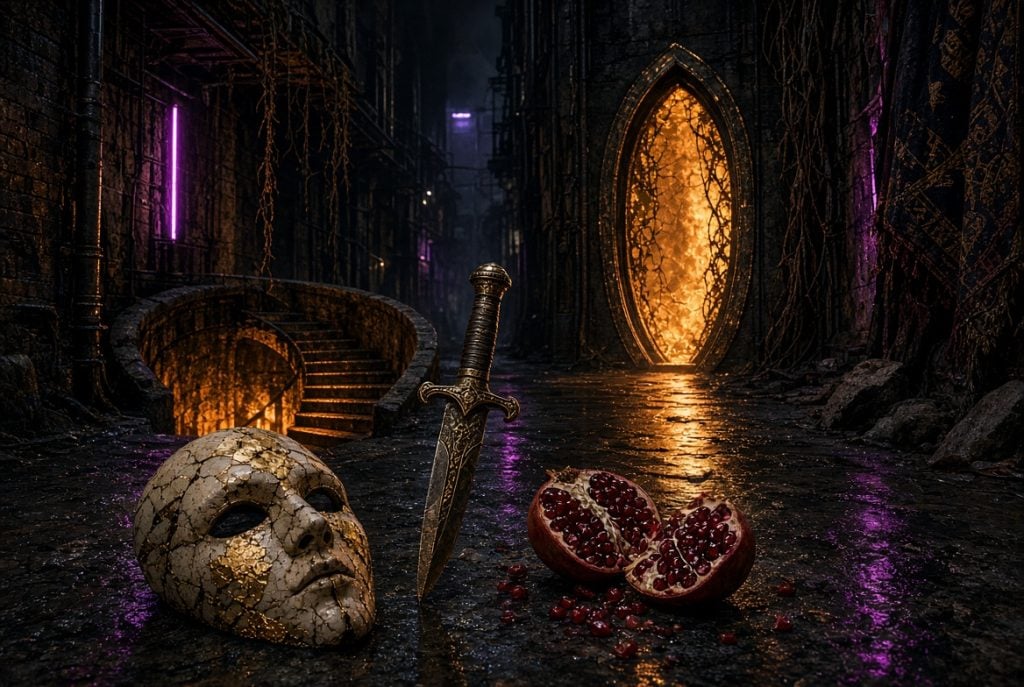
A dragon curling through clouds. A flash of lacquer red. Gold coins, glowing lanterns and a bold, brush-stroke title. Before a character has spoken, most of us already understand the mood: this is a world of celebration, power, old stories and possibility.
That immediate recognition is why fortune-and-dragon iconography remains such a dependable part of pop culture. It can make a poster feel grand, give a fantasy city a memorable silhouette, or turn a comic cover into something that catches the eye from across a convention hall.
Yet it’s worth being precise about what we’re looking at. Dragons, red-and-gold combinations, lanterns and fortune imagery have deep roots in Chinese traditions, but Chinese culture is not one fixed visual package. Meanings vary across regions, communities, historical periods and diaspora experiences. A thoughtful piece of entertainment can borrow visual inspiration while still treating the cultures behind it as living, varied and specific.
Why the shorthand is so instantly readable
Visual symbols survive because they do a lot of work very quickly. A dragon is movement, scale and mystery in one silhouette. Its long, coiling body fills a frame in a way that a castle or a sword simply can’t. Gold reflects light and signals ceremony. Red holds the eye. Lanterns add warmth, rhythm and a sense that people actually live in the imagined place.
Chinese dragons are especially influential because they are not simply versions of the fire-breathing monster common in European fantasy. They have long been associated with authority, rain, water and auspicious symbolism, among other meanings. The British Museum’s collection shows just how broad the artistic history is, from ceramics and textiles to ritual objects.
That history matters. When a production treats every Asian-inspired reference as interchangeable decoration, the result can feel vague. When it pays attention to particular traditions, materials, places and stories, those familiar motifs become richer rather than flatter.
The appeal is not difficult to understand. These are symbols with strong graphic bones:
- Dragons create an immediate sense of scale and myth.
- Red and gold establish a ceremonial, heightened atmosphere.
- Coins and ingots suggest prosperity, exchange and ritual giving.
- Lanterns turn a street, market or palace into a place with texture.
- Clouds, waves and calligraphic forms give motion to a still image.
Used well, they don’t merely say “fantasy”. They hint at a particular emotional register: abundance, renewal, family gathering, spectacle and history.
Film and television know the value of a grand entrance
Cinema has always loved dragons because they solve a visual problem. How do you show a world is larger than its human characters? You let a creature cross the sky, curl around a tower, or emerge from mist with enough weight and personality to reshape the scene around it.
In western fantasy, productions such as House of the Dragon use dragons as instruments of dynastic power and catastrophe. Their rough hides, heavy wingbeats and imposing scale fit a story built around inheritance and control. The dragon is a political fact as much as a creature.
Elsewhere, Chinese fantasy and historical storytelling frequently draw from different mythic lineages, including dragon kings, heavenly realms, spirit creatures and tales shaped by classical literature. The distinction is important. “Dragon” is not a single global idea with a shared meaning. Creature design changes when the source material, setting and worldview change.
Production design carries much of that work. A palace lit by red lanterns can feel celebratory, but it can also feel mournful, formal or tense depending on the scene. Gold might appear as imperial ornament, temple detail, festive decoration or the glint of a treasured object. Context decides the meaning.
The same applies to sound. Deep percussion, a rising string line and the clatter of ceremonial objects can build anticipation, but vague “Eastern” musical cues are a tired shortcut. Specific instruments, composers and cultural advisers make a difference. Audiences may not always name the research behind a scene, but they can often sense when a setting has been built with care.
For more genre discussion, Geek Vibes Nation readers can keep an eye on the site’s Film & TV coverage, where spectacle, casting and world-building are often part of the conversation.
In games and animation, symbols become places you can explore
Interactive fantasy has a particular advantage: it can turn iconography into environment. You are not just looking at a lantern-lit street, you are moving through it. You notice the market signs, the tiled roofs, the festival banners, the river reflections and the dragon motif worked into a gate or temple ceiling.
That’s why fortune imagery is so common in quest-driven worlds. It communicates celebration and significance without needing a long explanation. A chamber covered in coin imagery may point to a royal treasury. A dragon-carved doorway signals an important encounter. A lantern festival can create a natural gathering point for characters, stories and side activities.
Animation works in a similarly direct way. A coiling dragon offers superb motion, whether it is gliding above rooftops or spiralling through painted clouds. Red and gold are equally useful because they remain legible in quick action, dense crowd scenes and promotional artwork.
Still, visual efficiency should not replace research. Creators developing a fictional setting should ask a few practical questions:
- What tradition or era is informing this image?
- Who has been involved in shaping the world?
- Does the story understand the symbol beyond its appearance?
- Are characters allowed to be people rather than symbols?
These questions don’t limit imagination. They give it more to work with. The strongest fictional locations feel inhabited because their visual language connects to story, character and history.
Geek Vibes Nation’s Gaming section is a useful starting point for readers who enjoy looking at how big worlds, genre conventions and new releases shape one another.
Comics, collectibles and the pleasure of a powerful silhouette
Comics understand the value of a strong symbol better than almost any medium. A cover has seconds to make its case. A dragon’s sweeping body can direct the reader’s gaze across a page. A gold emblem against a red field can identify a faction at a glance. Even one lantern in the corner of a panel can establish time, place and mood.
Character design uses the same visual economy. Flowing robes, scales, cloud motifs and circular coin forms can be brought together to suggest authority, magic or a connection to an imagined dynasty. The most successful designs usually leave room for surprise, though. A character should not be reduced to a handful of familiar motifs.
Then there’s the physical side of fandom. Art prints, enamel pins, statues, convention banners and handmade costumes all carry these visual ideas beyond the screen or page. They work because they’re bold enough to reproduce at many sizes. A small pin can still read as a dragon; a large wall print can make the most of its curves and colour.
For wider comics conversation, browse Geek Vibes Nation’s Comics coverage. It’s the sort of space where cover art, adaptations and character design deserve more than a passing mention.
The visual-language toolkit behind the spectacle
Fortune-and-dragon imagery is powerful because several design tools reinforce one another.
- Colour: Red and gold produce instant contrast and ceremony, while jade greens, blue-white porcelain tones and black ink can add balance.
- Motion: Coils, smoke, clouds, water and fluttering banners stop a composition from feeling static.
- Sound: Bells, percussion, strings and crowd ambience can set a scene, provided they come from genuine creative choices rather than a generic shortcut.
- Typography: Calligraphy-inspired shapes can look striking, but text should remain readable and culturally considered. Decorative imitation of a writing system is not the same thing as meaningful typography.
- Scale: A tiny figure beside a vast dragon, gate or lantern display makes the setting feel mythic.
The responsible approach is simple, if not always easy: research the references, credit the influences, hire informed collaborators and avoid treating symbols as an interchangeable exotic layer. Specificity is more interesting anyway.
An adults-only digital adaptation of the motif
The same visual vocabulary also appears in adult-oriented digital entertainment. 88 fortunes is a Virgin Games online slot/casino product whose dragon-and-fortune presentation illustrates how established themed visual language travels into another digital format, not a measure of cultural authenticity; access is for UK adults aged 18+ only, and gambling should be approached responsibly.
Why these symbols keep returning
Mythic images last because they can be recognised and reinterpreted at the same time. A dragon may represent a ruler, a guardian, a force of nature or a family inheritance. A lantern might mean festivity in one scene and remembrance in another. Red and gold can feel joyous, formal, dangerous or defiant depending on the story around them.
That flexibility explains why fortune-and-dragon iconography continues to appear across film, television, games, animation, comics and collectibles. It offers immediate visual drama, but it also carries real cultural weight. Pop culture is at its best when it recognises both facts.
The next time a dragon fills a cinema screen or a lantern-lit skyline appears on a cover, it’s worth looking beyond the obvious spectacle. What story is the image telling? Where has it come from? And has the creator given it the attention it deserves?

Amanda Dudley is a lecturer and writer with a Ph.D. in History from Stanford University. After earning her doctorate in 2001, she decided to pursue a fulfilling career in the educational sector. So far, she has made giant strides by working as an essay writer for EssayUSA, where she delivers high-quality academic papers to students who need them.