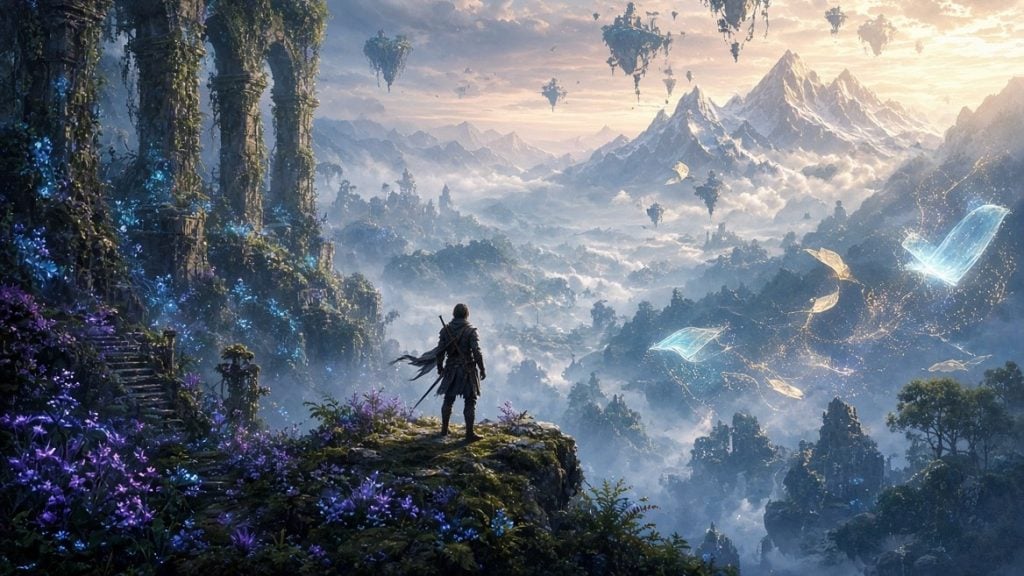
Players forget the duke’s name. They remember the bridge where rain hissed on copper roofs, the locked pharmacy near the train yard, and the cave with blue fungus that made every footstep feel rude. A plot gives games a line. A world gives them a place to stand.
This is why a plain village in Pokémon or a half-lit corridor in BioShock sticks longer than a neat twist ending. Memory likes routes, colors, sounds, and small tasks. It also likes choice. The same habit appears in quieter corners of play, far away from dragons or ray guns. A player comparing online casinos like onlinekaszinooldalak.com/ in Hungary still scans rooms, tables, buttons, and rituals before caring about any brand story. The layout tells the hands what to expect. One sentence later, live-dealer games on www.najboljsispletnicasinoji.si/casino-v-zivo bring the live casino feeling through faces, chips, and camera angles. Setting does the heavy lifting. Story arrives after.
Places carry memory better than plot points
Psychologists call it spatial memory, but players know the feeling without the term. In Skyrim, a fan may not recall the political reason for a dungeon crawl, yet they can still point toward Bleak Falls Barrow from Riverwood. The mountain shape, the snowy steps, the bandit tower, the first giant spider. It all sits in the mind like a rough map.
Stories run forward. Places spread out.
A game world asks the player to rehearse movement. Turn left after the broken statue. Jump twice before the red pipe. Save before the boss fog. Repetition pins these details down, and the player feels smart for remembering them. A cutscene asks for attention once; a world asks for attention twenty times, sometimes with coins, ammo, or a shortcut as payment.
Sensory cues beat exposition
A story twist lives mostly in language. It needs names, motives, and timing. A world has extra hooks. Wind in The Legend of Zelda: Breath of the Wild tells the player about height before any tutorial box speaks. The radio hiss in Silent Hill says danger faster than a diary page.
Sound is sticky.
Visual design does similar work. Dark Souls uses locked gates, elevators, and distant castles to make Lordran feel like a folded machine. The player remembers the lift back to Firelink Shrine because surprise joins the layout. That little click in the brain matters. It creates ownership, as if the player found the place rather than received it.
Agency turns geography into autobiography
No two memories of Hyrule Field match. One player crossed it at night with three hearts and no arrows. Another chased a shiny beetle, missed the bridge, and got knocked flat by a skeleton. The map is shared, but the memory feels private.
That is the trick.
Stories belong to the writer. Worlds are partly co-authored by the player, because hesitation, mistakes, and lucky guesses leave marks. In Red Dead Redemption 2, the same muddy road near Valentine can mean a bar fight, a lost horse, or a quiet ride at dawn. The script did not need to change. The place absorbed the player’s timing.
This is why open hubs linger. Even small hubs do it. The Normandy in Mass Effect works because people know where Garrus stands, where the galaxy map glows, and where Shepard pauses before the next mess.
Lore survives when it has an address
Players rarely store lore as clean paragraphs. They attach it to rooms. The plague in Dishonored becomes sharper near whale-oil tanks and flooded alleys. The fall of Rapture feels clearer while staring through glass at the black Atlantic, with a leaking ceiling above.
Place gives facts a shelf.
This also explains why tiny environmental jokes travel so well. A skeleton on a toilet, a burned teddy bear, a pizza box in a spaceship locker: each one is a story seed with coordinates. The player does not need a narrator to label it. They saw it. They stood there.
Developers who want memorable stories should treat the map as the first draft. Put the grief in a bedroom, the argument in a kitchen, the secret behind a door that sticks. Then let the player walk to it.
Small worlds can hit hardest
A huge map is not required. Gone Home has one house. Papers, Please has a booth. Inside has factories, farms, and water tanks, but the player remembers them as pressure, not lore. Size matters less than contact.
Make the player touch things.
A remembered world has friction. Doors take a second. Signs use a local font. The safe room music drops the shoulders. If a designer places one odd chair beside a dead vending machine, someone will remember it for ten years. What object would they notice first if the build started today right now?