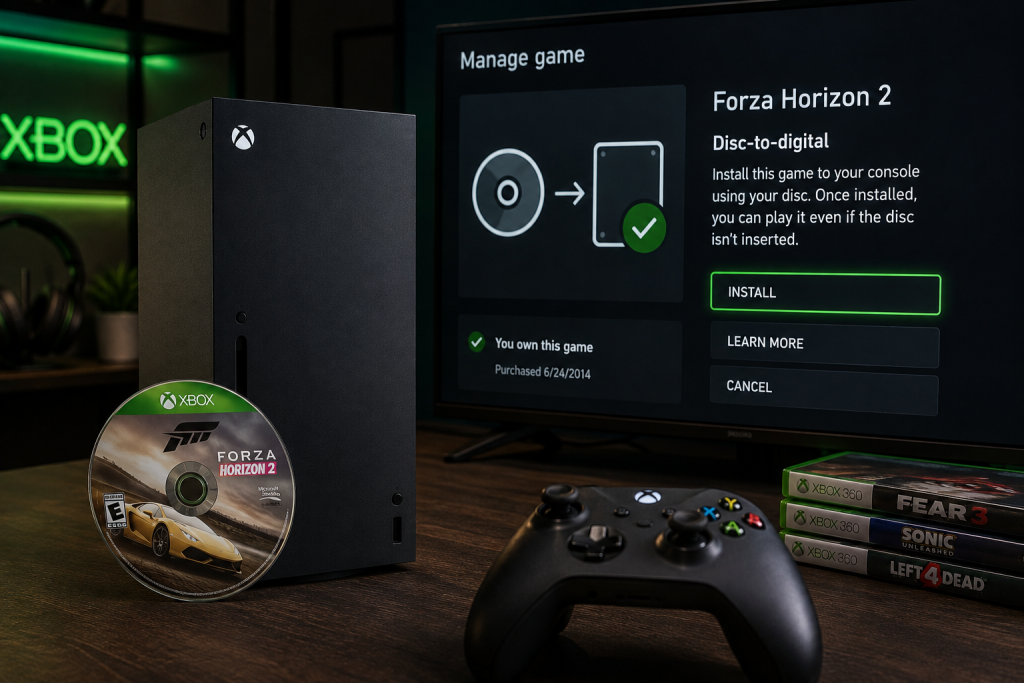
Something unexpected is emerging from Microsoft’s disc-to-digital initiative. Players enrolled in the Xbox Insider Program are discovering that the feature doesn’t just convert mainstream physical libraries into digital licenses — it’s resurrecting cult titles that vanished from storefronts years ago. Activision’s 2014 Deadpool game, Rock Band 4, and Platinum Games’ Transformers: Devastation are among the discs quietly granting working digital licenses through the program, as GamesRadar+ reported.
The editorial team at Playripcity, covering this as at-home gaming enthusiasts, notes that what players consider their home rotation in 2026 is more varied than a simple disc stack or digital library. Resurrected console games occupy one corner of it. Another is the browser — when a disc isn’t loaded and the download queue is empty, a free RIP City slot game is the kind of instant, no-install option some players keep open for a low-friction burst between longer sessions.
Microsoft’s Disc-to-Digital Initiative and Its Preservation Promise
Microsoft announced the disc-to-digital initiative as part of what the company called its “commitment to game preservation” — a program that converts physical game collections into permanent digital licenses. The feature is currently live for users through the Xbox Insider Program, giving a subset of players early access before any broader rollout.
The promise is significant on paper. Physical game ownership has always carried a durability that digital storefronts can’t guarantee. When a title is delisted, anyone without the disc loses access entirely. Microsoft’s feature, in theory, bridges that gap — letting a disc function as proof of entitlement even after the storefront listing disappears.
There is, however, a caveat built into the announcement. Microsoft has stated that “most” games will be supported, not all. That single qualifier does real work. Licensing constraints, expired publishing agreements, and rights disputes can make it legally impossible to convert certain physical titles into digital licenses regardless of how the technology functions. Whether “most” eventually becomes “nearly all” will depend on negotiations that may have no clean resolution.
Community Discovery Puts the Feature’s Real Value on Display
The preservation angle moved from abstract to concrete when Twitter user Flaass discovered that Activision’s Deadpool game, delisted from digital storefronts after its original run, grants a digital license through the disc-to-digital system. The 2013 game, which became a collector’s item in part because its licensing with Marvel lapsed, was gone from stores before digital libraries became central to how most players manage their collections.
Flaass’s discovery opened the door for wider testing. Other Xbox Insider users confirmed additional delisted titles working through the feature, and the list is striking for how specifically it targets the licensing-casualty category. Platinum Games’ Transformers: Devastation, once pulled after Activision’s Transformers license expired, converts successfully. So does Teenage Mutant Ninja Turtles: Mutants in Manhattan, Ghostbusters, Lego Dimensions, and Rock Band 4, the latter a particular point of interest given the complexity of music licensing that contributed to its disappearance from storefronts.
These are not fringe titles. They are games with active fan communities and no legal path to purchase for anyone without a physical copy. The disc-to-digital conversion, in these cases, functions less like a convenience feature and more like a rescue mechanism.
Titles That Still Fall Outside the Feature’s Reach
Not every delisted game clears the system. Transformers: Rise of the Dark Spark and The Amazing Spider-Man 2 have both been confirmed as currently non-functional with the disc-to-digital feature. That matters, because both sit in roughly the same licensing-casualty category as the titles that do work, suggesting the barrier isn’t purely technical.
Microsoft’s “most games at launch” framing leaves the door open on titles currently excluded. The company’s language implies the supported catalog will expand over time — games absent from the initial list may be added as agreements are resolved or technical issues addressed. That’s a reasonable interpretation of the qualifier, and it’s the one most players seem to be holding onto.
Still, “may be added later” is not a guarantee. For titles where the underlying rights are genuinely contested or held by parties unwilling to participate, the feature’s launch window matters less than the longer negotiation landscape behind it. The gap between “most” and “all” may be narrow in practice, or it may contain some of the most-wanted titles on players’ lists.
Xbox’s Approach Draws Contrast with PlayStation’s All-Digital Direction
The feature’s reception has been broadly positive, and much of that warmth is comparative. PS5 has moved toward an all-digital approach that abandons physical media as a durable ownership mechanism. Under that model, players hold a digital license that can be revoked — a fundamentally weaker form of ownership than a disc that works regardless of what happens to a storefront.
Xbox’s disc-to-digital initiative reads, in that context, as a deliberate counter-positioning. Physical media becomes not a legacy format to deprecate but an asset worth honoring, one that carries legal entitlement the platform will convert rather than abandon. Whether that stance holds as hardware cycles continue is a separate question, but for now it represents a meaningful difference in philosophy.
One significant gap remains. The feature currently covers Xbox One and Xbox Series X physical games. Support for Xbox 360 titles has not been confirmed, leaving a substantial back catalog in an ambiguous position. Xbox 360 represented a generation of games that never made the full transition to modern storefronts, and some of those titles have no current legal purchase path at all.
The community’s cautious optimism rests on one word in Microsoft’s announcement. If “most” titles will be supported at launch, the implicit promise is that the list will grow. For Xbox 360 owners holding discs from a generation that defined many players’ relationship with the platform, the question of whether that word eventually comes to include their library is the one still waiting for an answer.

Taylor Wynn is an esports betting columnist and digital wagering expert focused on emerging online gambling markets. Tracking esports odds across major leagues—from CS2 to League of Legends—Taylor offers insight into odds movement, bookmaker trends, and new player bonuses. Their work highlights the rapid evolution of online sportsbooks and the future of digital wagering experiences.