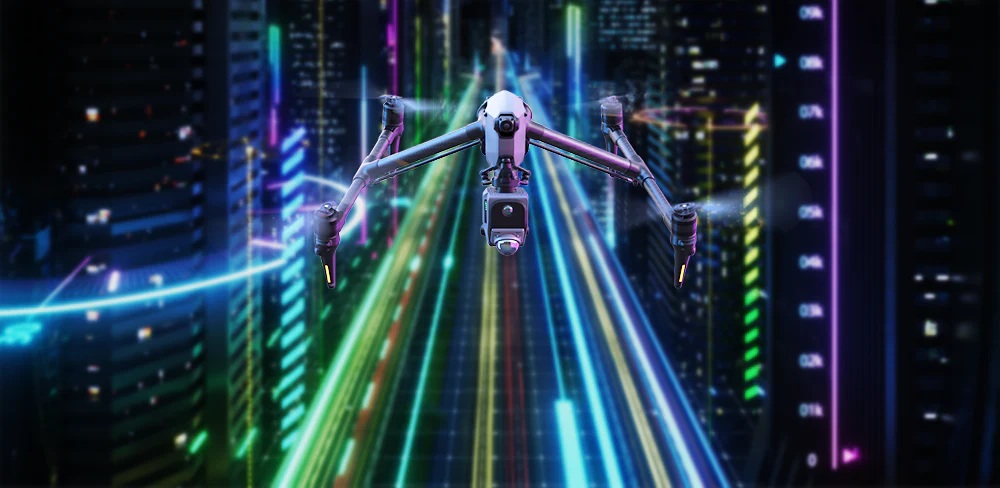
The flight controller system is the primary processing unit of a UAV, responsible for stability and navigation logic. While the controller manages internal flight parameters, the LiDAR sensor is used to collect external spatial data.
A significant technical challenge in drone development is that not all sensors are compatible with different flight control hardware. If a developer switches the flight controller, the UAV sensor often must be replaced, resulting in increased research and development costs.
This article analyzes 4 mainstream flight control systems and evaluates how Benewake LiDAR provides hardware and software compatibility across these platforms.

Key Differences in Mainstream Flight Controllers
Selecting a drone LiDAR sensor requires matching the host controller’s communication protocols and electrical interfaces. Among the many flight controllers on the market, this section focuses on four representative platforms, each with different hardware, firmware, and interface requirements.
1. Pixhawk 1
The Pixhawk 1 is an FMUv2 reference design based on the STM32F427VI processor, originally developed through collaboration between 3DR and the PX4 team.
Although this model has been discontinued by its original manufacturers, its extensive documentation, large community knowledge base, and dual compatibility with ArduPilot and PX4 firmware maintain its status as a foundational platform for learning autonomous flight systems.
However, the STM32F4-generation processor has limited computational headroom compared to modern standards. This can constrain the execution of resource-intensive tasks, such as high-frequency LiDAR data fusion, advanced path planning, or synchronized real-time data logging.
For applications requiring intensive sensor processing, offloading these tasks to a companion computer is a common practice when using this flight controller.
2. Pixhawk Cube Series (CubePilot)
The Cube series features a modular design where the core computation module is independent of the carrier board. It is the preferred choice for industrial UAVs due to its hardware redundancy and integrated vibration isolation.
As one of the most widely adopted platforms within the ArduPilot ecosystem, the Cube benefits from a highly mature driver library and a large community of commercial integrators, ensuring robust support for integrating high-performance LiDAR in complex autonomous missions.
3. Holybro Series
Holybro is an officially recommended hardware partner for PX4 firmware. Its product line ranges from the entry-level Pixhawk 6C to high-end units.
Some models are engineered to connect directly to companion computers such as Raspberry Pi or Jetson. For a UAV LiDAR to function here, it must be supported within the PX4 driver layer and uORB messaging framework.
4. CUAV Series
CUAV is a Chinese manufacturer that focuses on industrial-grade flight controllers with an emphasis on customization and reliability.
High-end models like the X7+ Pro integrate professional-grade IMUs, temperature compensation, and redundant power inputs, making them suitable for demanding commercial UAV operations.
The primary communication interfaces across CUAV flight controllers include CAN and UART, both of which are widely adopted in industrial environments for their data integrity and noise immunity.
On specific carrier board configurations, RS-485 is also available for long-distance or multi-device communication. These industrial bus interfaces make CUAV platforms well-suited for integrating external sensors such as LiDAR in multi-device or long-range configurations.
Comprehensive Compatibility of Benewake LiDAR
Many LiDAR manufacturers require specific hardware variants for different FCUs, and their driver support often lags behind firmware updates. A developer switching from Pixhawk (UART) to CUAV (CAN/RS-485) may need to purchase a different sensor model to maintain functionality.
Benewake eliminates this friction by providing comprehensive compatibility at both the hardware and ecosystem levels.
1. Hardware Level
Benewake offers multi-interface support within a single product line. For instance:
-
The Benewake TF03 integrates UART, CAN, RS-232, and RS-485 interfaces, enabling developers to switch flight control architectures without replacing hardware.
-
The TFA300 series uses industry-standard JST GH connectors for direct connection to flight control platforms without adapters, and features a CAN interface for next-gen flight control architectures.
2. Ecosystem Level
-
ArduPilot Ecosystem: Mature drivers and documented use cases are available for the CubePilot and Holybro platforms, ensuring reliable performance in diverse flight modes.
-
PX4 Ecosystem: Benewake provides comprehensive integration documentation and pre-configured parameters for PX4-native systems, reducing setup time for developers.
-
Industrial Bus Environments: For platforms like CUAV that prioritize CAN or RS-485 communication, Benewake products offer native support, eliminating the need for external protocol adapters.
-
Developer Community Support: Benewake provides extensive SDKs and example code, facilitating rapid integration for developers using embedded development boards or custom flight stacks.
3. Selection Recommendations
Benewake LiDAR product line boasts a versatile range, from ultra-lightweight modules to high-frequency units.
(1) Long-Range Inspection: Benewake TF03

The TF03 features an aluminum alloy housing with infrared band-pass glass and an IP67 protection rating, making it suitable for long-term, stable deployment in complex environments.
Its range covers 0.1 to 180 meters, with a maximum frame rate of 9,800 Hz. The sensor integrates UART, CAN, RS-232, and RS-485 interfaces, allowing adaptation to different flight controller platforms without hardware replacement.
(2) Ultra-Lightweight Applications: Benewake TFmini-Plus

The TFmini-Plus maintains a compact form factor (35 × 18.5 × 21 mm) while passing drone-grade vibration testing.
It consumes as little as 85 mW and weighs approximately 11 g, ideal for small drone platforms with strict payload and endurance limits.
The sensor supports standard UART, I/O, and I²C interfaces, and can also be configured with custom protocols for easy integration into various flight control systems.
(3) High-Frequency Anti-Vibration: Benewake TFA300

The TFA300 series is specifically designed for high-dynamic drone scenarios, reaching a frame rate of up to 10,000 Hz for real-time obstacle avoidance and altitude hold during high-speed flight.
This series has been fully optimized for demanding drone applications, including operation under extreme temperatures, 100 klux ambient light, and harsh outdoor conditions such as rain, fog, and dust.
It resolves common false detection issues found in traditional LiDAR systems. To date, the TFA300 has already supported over 400,000 delivery drone flights.
Conclusion
Integrating a LiDAR sensor with a flight controller is not merely a hardware connection; it requires alignment of communication protocols, driver support, and ecosystem compatibility.
Benewake LiDAR eliminates compatibility barriers through multi-interface hardware (UART, CAN, RS-232, RS-485) and ecosystem-level support for ArduPilot, PX4, and industrial bus environments.
Ready to simplify your UAV integration workflow? Contact Benewake today to find a suitable LiDAR solution for your flight control platform.

Sandra Larson is a writer with the personal blog at ElizabethanAuthor and an academic coach for students. Her main sphere of professional interest is the connection between AI and modern study techniques. Sandra believes that digital tools are a way to a better future in the education system.



![‘Fucktoys’ Review – Annapurna Sriram Brings Style And Sex To Instant Cult Classic [Milwaukee Film Festival 2026]](https://cdn.geekvibesnation.com/wp-media-folder-geek-vibes-nation/wp-content/uploads/2026/05/Fucktoys-SXSW-Horizontal-Still-Hi-Res-Approved-300x125.png "‘Fucktoys’ Review – Annapurna Sriram Brings Style And Sex To Instant Cult Classic [Milwaukee Film Festival 2026]")