
Spend enough time watching football across East Africa and you develop a sense for which stories are real and which ones are just press releases. Somalia has produced a lot of press releases over the years. Ambitious five-year plans. Youth tournament launches that quietly went nowhere. Restructuring announcements that dissolved in the gap between intention and infrastructure. Most of it didn’t stick. But something has been different lately, and if you follow the Somali Premier League with any regularity, you can feel it – not in the results, which are still modest, but in the texture of how things are actually being run.
The Somali Football Federation (SFF) has been building something without much fanfare. Clubs are registering players. Coaches are sitting for licensing exams. The national team – the Ocean Stars – is showing up to AFCON qualifiers organized in ways it wasn’t a few years ago. That last part might sound like a low bar. In context, it isn’t.
Betting markets are unsentimental about football they don’t think people are watching. So it’s worth paying attention to the fact that platforms operating across East Africa have started including Somali fixtures in ways that weren’t happening three or four years ago. For supporters who want live odds alongside the action, options like 1xBet have become part of that landscape – anyone interested can Download 1xbet apk and track Somali and East African fixtures on mobile from one place. That commercial interest now exists at all says something about where the federation’s credibility currently sits.
The Past’s Influences on the SFF’s Current Structure
It’s important to understand what precedes the current structure of Somali football to ascertain how we arrived here. In the late 2000s and early 2010s, Somali football was not just limited by financial capabilities but rather by a lack of basic organization. There were many regional tournaments but they were governed by informal and constantly-changing rules based on what type of organization was putting on the tournament. Most players were not registered. The vast majority of referees were not developed. While Somalia’s football federation continued to be officially recognized by FIFA, it did little more than provide a name on a map; the formal structure did not support activity on the field.
Certainly, the numerous and diverse conflicts were a major contributing factor to these conditions, however, the Somali football federation was also plagued by organizational instability and its fragmentation was perpetuated beyond the worst periods of violence within the country.
The first significant changes occurred as a result of internal governance improvements in each federation and increased focus from FIFA and CAF on grass-roots development in Africa. The Somalia National Premier League (SNPL) was established and intentionally adopted a calendar much in line with other African leagues. The national team is now participating in the African Cup of Nations qualification process; while they are developing competitive experience, many will argue that such a vast majority of the experience gained as a result of not performing well should not be discounted. There is also an argument supporting the relationship between development and winning as a result of competitive matches, but this ignores the reality that a competitive match presents learning opportunities to all teams regardless of their outcome.
Five Pillars, One Direction
The SFF’s current reform approach isn’t one big project. It’s five parallel tracks that depend on each other – and the federation seems to genuinely understand that interdependence, which is more than you can say for a lot of development programs on the continent.
-
Coach and referee licensing – Moving Somali officials toward CAF-recognized qualification levels. Not optional if you want to compete continentally. It’s a baseline requirement, and it’s been treated like one.
-
Youth infrastructure – Getting U-17 and U-20 squads operational and building pathways that connect community-level football to registered clubs.
-
League standardization – Giving the Premier League actual administrative structure: consistent scheduling, proper club registration, financial accountability that goes beyond handshake agreements.
-
Physical infrastructure – Working with FIFA and CAF on playing surfaces and venue conditions. Unglamorous and foundational in equal measure.
-
Diaspora recruitment – Bringing players of Somali heritage from Scandinavia and the UK into the national team picture. One of the smarter things the federation has done.
The pillars reinforce each other. A functioning league with licensed coaches produces better national team players. Better national team players attract diaspora prospects who might otherwise commit to the country they grew up in. The cycle, once it starts turning, has its own energy.
Street Football Has Always Been There. The Structure Wasn’t.
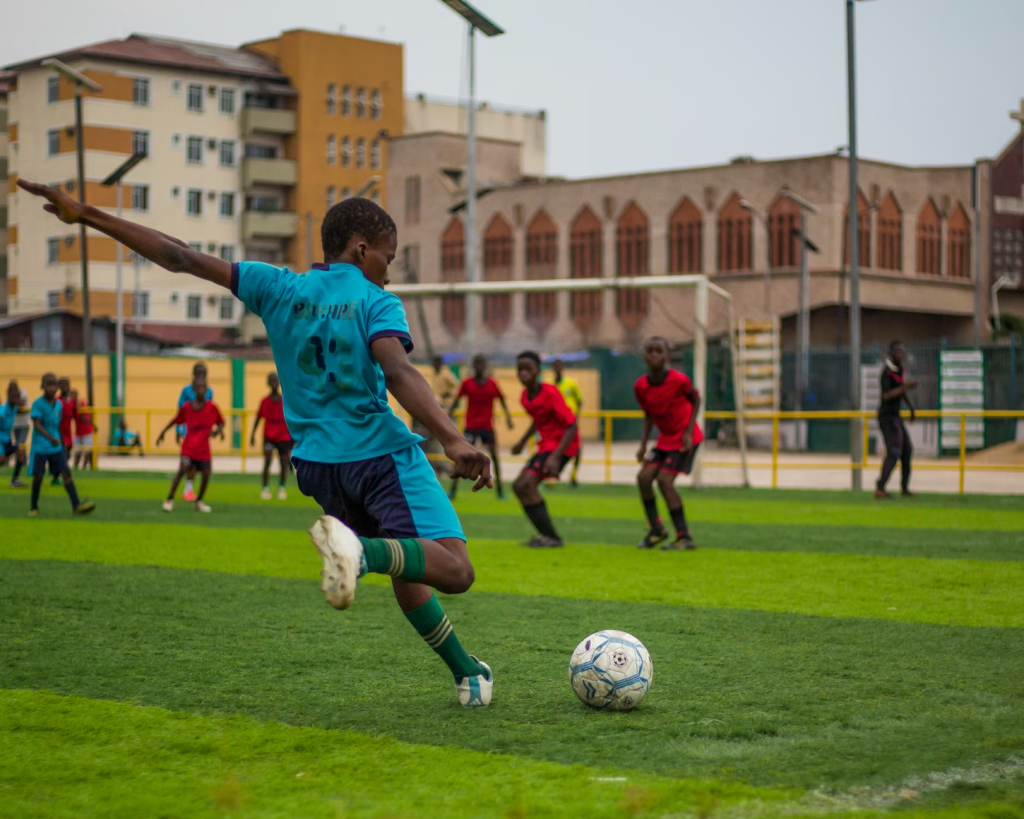
When you speak with folks who grew up in Mogadishu, all will agree that there was plenty of football to be found. The streets, schoolyards and in between buildings; football was everywhere. However the culture was not to blame as to why we did not have anything more organized and long lasting than just the culture.
The SFF has addressed this gap through their grassroots work which is illustrated through the following current activities:
-
Regional youth tournaments to bring informal talent into official competition (many of whom did not have ever played any recognized matches)
-
Coaching materials and training resources being dispatched to community coaches outside of Mogadishu
- Educating players on doping and fair play via FIFA’s global grassroots framework
-
Providing extensive outreach to Somali diaspora residing in Sweden, Finland, Netherlands, and the UK
-
Developing a women’s football program that has begun to attract additional CAF (Confederation of African Football) attention.
Recognition on Paper, or the Real Thing?
There’s a version of “international attention” that’s just institutional politeness – development grants, a few advisory visits, being included in continental frameworks nobody outside the sport pays attention to. Somalia has had that for years. What’s actually changed is the kind of credibility that comes from showing up consistently. That’s what starts moving the needle on scouting interest, media coverage, and commercial platform inclusion.
FIFA’s development programming has brought real resources into Somali football – technical advisors, infrastructure funding, coaching education. CAF has added competition access and administrative support the federation couldn’t have reached independently. None of it generates headlines. All of it builds the foundation that headlines eventually sit on.
A plain look at where things stand across each key area:
|
Development Area |
Where Things Stood |
Where They Are Now |
What Still Needs Work |
|---|---|---|---|
|
Domestic league |
Fragmented, no consistent scheduling |
Standardized Premier League calendar running |
Club finances and broadcast access still weak |
|
Coach licensing |
Almost no formal certification anywhere |
CAF licensing programs active |
Reach outside Mogadishu remains thin |
|
Youth setup |
Informal, unregistered, untracked |
U-17 and U-20 national teams operational |
Pipeline from grassroots to elite still fragile |
|
International fixtures |
Rare, disorganized |
Regular AFCON qualification cycles |
Competitive results still limited |
|
Diaspora integration |
Ad hoc at best |
Structured eligibility and active recruitment |
Long-term player retention a challenge |
|
Women’s football |
Barely existed at formal level |
Separate track, CAF visibility growing |
Infrastructure and funding well behind men’s |
|
Stadiums and venues |
Unreliable, safety concerns in several cities |
Targeted upgrades with international support |
Usable facilities still missing in several regions |
Every row shows movement. None of them is fully resolved. That’s where things actually are.
The Wall the Federation Keeps Running Into
Three problems sit outside the SFF’s ability to fix through better administration, and they’re worth naming plainly.
Security conditions in parts of the country still limit where matches can be held and whether foreign opponents are willing to travel. No structural reform changes that. It’s the context the sport operates inside.
Money is the second wall. Club budgets are thin, wages don’t compete with neighboring leagues, and good players leave because the financial logic pushes them to. The federation can’t manufacture broadcast revenue or sponsorship that isn’t there yet.
Then there’s institutional capacity – the legal, financial, and operational expertise that a real federation needs and that takes years to build regardless of how much goodwill exists. As BBC Sport Africa has noted in covering East African football broadly, federations that navigated similar rebuilds – Rwanda and Tanzania get cited most often – needed a decade or more before results showed consistently at international level. Somalia is somewhere in the middle of that arc, not the end.
Strategy Requires Patience
(Fed) has converted from being a dysfunctional organization to one that is not functioning well: this is a truthful statement and is thus not flashy enough to be exciting writing. This type of incremental progress creates compounding interest.
What we need today is not a major event (such as a championship etc.) but additional seasons of the league being consistently functional, and several tuning into an additional two years of youth development, etc., without losing continuity, maintaining the ‘diaspora pipeline’ open during the lapse of time when no-one is really looking (which is generally the case).
There are many examples of small signs accumulating that indicate something is happening: e.g., the appearance of Somali fixtures for international gambling purposes; the growing amount of coverage about soccer from Swedish and Finnish sources; and even countries, who previously did not spend time thinking or talking about Somalia, are now contacting us asking about our roster and national team members. Although none of these signals can clearly represent any turning points, collectively, they indicate a clear trend in one direction.

Tyler Harrison is a huge horror movie fan always on the hunt for the next big scare. His reviews offer deep insights into classic slashers and the latest releases, exploring themes and innovative techniques. Tyler’s passion for horror makes his perspective essential for any enthusiast.