For Los Angeles-based director Alisa Kobyliatskaia, fantasy is not an escape from reality. It is a way of making reality visible.
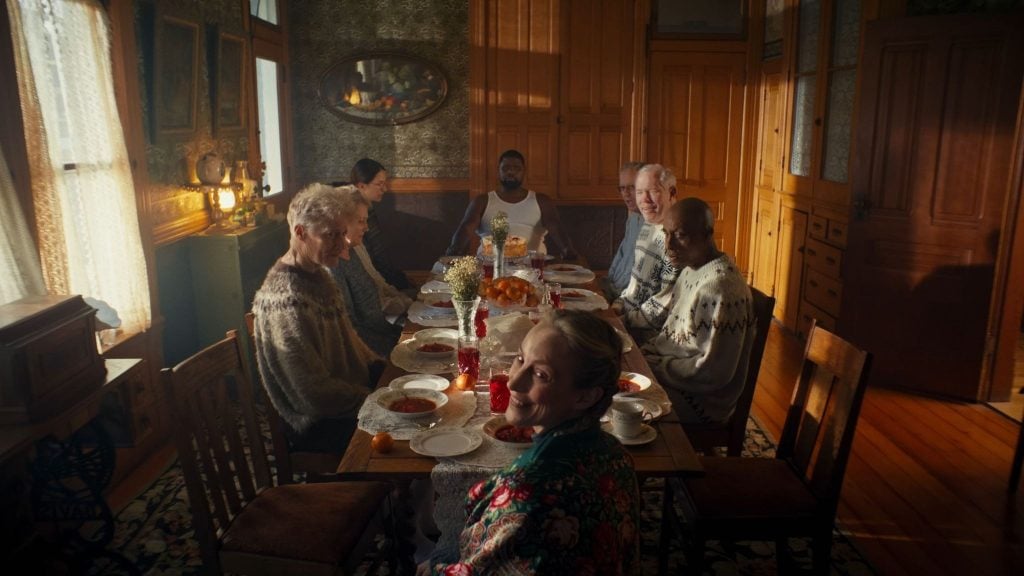
Her short film Boloto, currently being prepared for release, marks her American directorial debut. The project combines dark fantasy, psychological pressure, political unease, and a personal visual language shaped by emigration, memory, and the collision of two worlds. Born in Kazakhstan, raised in Russia, and now working in Los Angeles, Kobyliatskaia built Boloto out of images that feel both familiar and displaced: a 1940s American house, Soviet lenses, lace curtains, floral blankets, porcelain, fields, farms, fear, and ritual.
The result is a film that does not sit comfortably in one tradition. It is not fully American, not fully Russian, not purely fantasy, and not purely realism. Instead, Boloto exists in the in-between space where much of Kobyliatskaia’s work begins.
“I think I’m always trying to connect two worlds that do not naturally belong together,” she says. “That is probably where my visual language comes from. I am interested in things that look beautiful and uncomfortable at the same time.”

A Dark Fantasy Born From Displacement
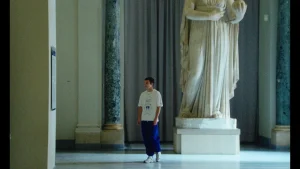
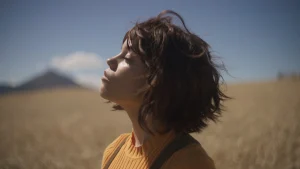
Boloto follows a young person caught in a world where pressure, fear, and conformity become almost physical forces. For Kobyliatskaia, the film was never meant to be a direct political statement. Instead, it came from a more internal place: the feeling of being watched, pushed, and expected to choose the “right” side before fully understanding what choice even means.
“After leaving the place where I grew up, I had a lot of emotions that I did not know how to explain directly,” Kobyliatskaia says. “I did not want to make a film that simply says what I think. I wanted to create a world where the feeling itself becomes clear.”
That world became Boloto, a fantasy drama built around atmosphere rather than exposition. The film uses genre as a pressure chamber. Its ritualistic energy allows personal and political fear to become something symbolic, cinematic, and haunting.
For viewers who respond to dark fairytales, psychological fantasy, and stories about young people trapped inside systems larger than themselves, Boloto feels like a natural extension of the genre. Underneath its fantasy language is the emotional aftershock of leaving home and trying to understand what parts of the past still live inside you.
Soviet Lenses Inside an Americana House
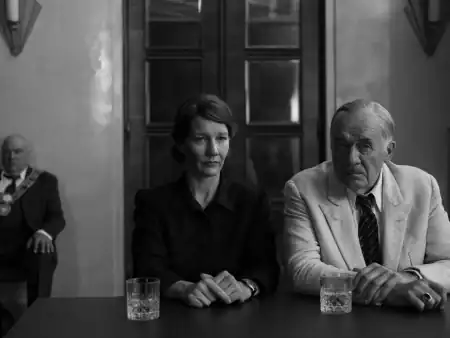
One of the most striking elements of Boloto is its visual contrast. The film was shot in a historic 1940s house located in a valley surrounded by fields and farms. From the outside, the location carried a distinctly American feeling: open land, old wood, rural quiet, and a sense of California history.
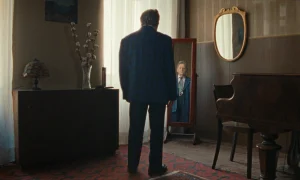
Inside, Kobyliatskaia and her team transformed the space into something else. The interiors were filled with lace curtains, floral blankets, porcelain, daisies, and textures that evoked Slavic domestic memory. The film was also shot on real Soviet lenses, giving the image a softness and imperfection that became central to the atmosphere.
“It was important to me that the house did not feel like one place,” Kobyliatskaia says. “The outside was very American, but inside it became closer to the world I remembered. I liked that contradiction. It felt honest to me.”
That contradiction gives Boloto much of its identity. The film lets two aesthetics clash and merge. Soviet optics bend an American landscape. Familiar domestic objects become strange in a new country. A house becomes a psychological space. A memory becomes a genre world.
A Film Between Cultures
The hybridity of Boloto extended beyond the image. Many of the key creative positions on the film were held by young Russian-speaking filmmakers who had emigrated in recent years. At the same time, the film was made in the United States, within the practical realities of independent production in Los Angeles.
“There was something very emotional about making this film with people who understood both sides of it,” Kobyliatskaia says. “We were making an American short film, but there was this other cultural memory inside the process.”
Kobyliatskaia moved to the United States at 18 and has spent the last several years working in independent film, music videos, and visual storytelling. In Los Angeles, she began developing a voice shaped by both commercial production and personal cinema. Boloto became the first project where those interests fully came together.
“I learned a lot from music videos because they teach you how to build a world quickly,” she says. “You do not always have time to explain everything, so the image has to carry emotion. I brought that into Boloto.”
From Boloto to Honey
While Boloto is preparing for release, Kobyliatskaia is already developing her next project, Honey. If Boloto is about pressure, fear, and the emotional residue of leaving home, Honey expands those ideas into a larger fantasy world.
The project is envisioned as a story about immigration, loneliness, chosen family, and the search for safety in a place where a person may always remain slightly foreign. Kobyliatskaia describes it as a fairytale, but not the kind that hides from pain.
“I am interested in fairytales because they can be beautiful and cruel at the same time,” she says. “They allow you to talk about trauma, love, fear, and survival without making everything literal.”
With Honey, Kobyliatskaia wants to move further into a visual language that is emotional, genre-driven, and accessible without losing its personal core. She is drawn to stories where the world feels heightened, but the wound underneath it feels real.
“I do not want to make something cold,” she says. “Even when the story is strange, I want the audience to care about the characters. I want them to fall in love with the world before it starts breaking.”
Building a Personal Genre Language
For Kobyliatskaia, genre is not a box. It is a tool. Dark fantasy, fairytale, psychological drama, and coming-of-age elements all allow her to speak about identity, fear, and belonging in a way that feels more emotionally accurate than realism alone.
That may be why Boloto feels difficult to categorize. It is a short film, but it points toward a larger cinematic identity. It is a fantasy, but its emotional source is real. It is rooted in emigration, but it is not only an immigrant story.
At the center of it is a director trying to turn displacement into visual form.
“I think my work comes from the feeling of being between places,” Kobyliatskaia says. “At some point, you stop trying to choose one world and start building your own.”
With Boloto, Alisa Kobyliatskaia is doing exactly that. She is not simply presenting a short film. She is introducing a cinematic world built from memory, fear, fantasy, and the strange beauty of not fully belonging anywhere.

Elara is a dynamic writer and blogger who specializes in pop culture and movie reviews. With a background in film studies and journalism, she combines her deep knowledge of the entertainment industry with a sharp, insightful writing style that keeps readers coming back for more.