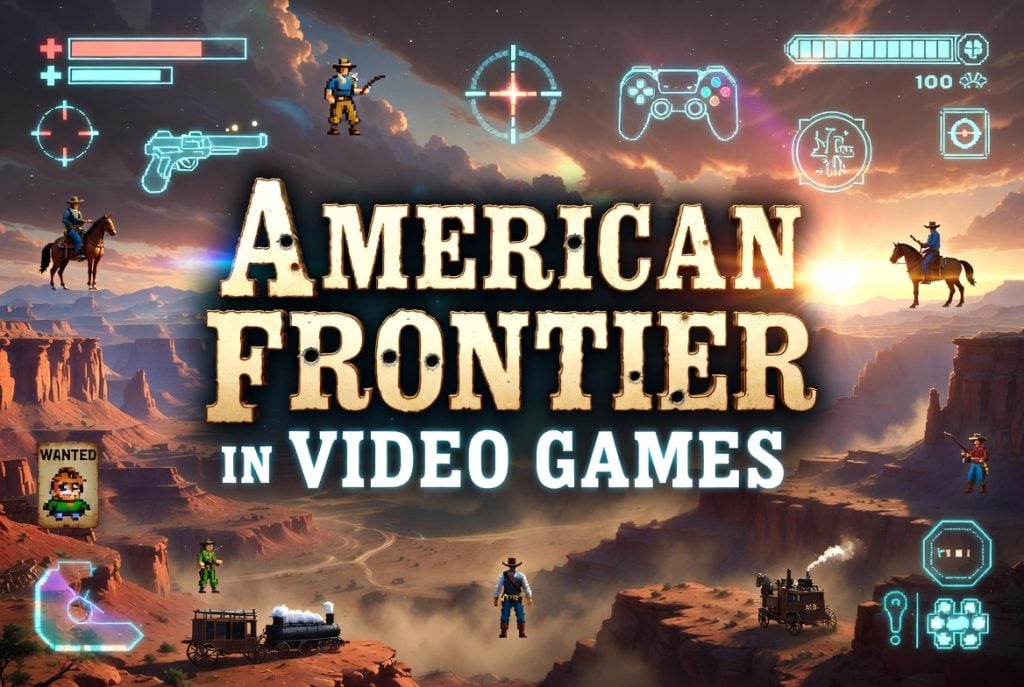
The American West has been a source of visual and thematic material for game designers since the medium was young enough to have a history. There is something about the specific combination of vast open landscape, iconic wildlife, and the mythology of the frontier that translates naturally into interactive experiences. It works in survival games, it works in RPGs, it works in open world sandboxes, and it has developed a particularly devoted following in gaming formats built around visual design and satisfying mechanical loops. The animals of the American wilderness, specifically the ones that carry the weight of cultural symbolism (bison, eagles, wolves, mountain lions), keep coming back because they work on multiple levels simultaneously.
Part of what makes American wildlife such a durable design choice is that these animals already carry fully formed narratives. The bison does not need introductory text. Any player who has spent time in North American culture already has a framework: the scale, the historical weight, the plains, the sense of something ancient and massive. Game designers are essentially inheriting a ready-built emotional context and then doing interesting things with it. That inheritance explains why a well-executed bison motif in a game feels immediately grounded in a way that a fictional creature designed from scratch would need to work harder to achieve.
The visual grammar of American frontier wildlife has become its own genre shorthand. Turquoise, gold, earthy reds, feathers, carved wood, and the specific silhouette of a bull bison against an open sky: these elements have been combined and recombined enough that they now function as a coherent design language. When players encounter them, they know roughly what kind of experience they are entering. That legibility is valuable in gaming contexts where first impressions determine whether someone engages further or moves on.
This is most visible in social casino gaming, where the buffalo theme specifically has developed into one of the most consistently popular design territories in the genre. If you want a sense of just how much variation is possible within a single wildlife theme, the popular types of buffalo slots available to play online for free at platforms like PlayFame make a strong case. Different titles in that space approach the same source material in genuinely distinct ways: some lean into realism and dramatic landscape photography, others go stylized and graphic, some add layered bonus mechanics tied to the thematic elements, and others keep the visual language simple and let the core spinning experience carry the session. The buffalo has become a design platform in its own right.
What the Bison Actually Represents in Game Design
It would be easy to look at the popularity of buffalo-themed games and conclude it is just aesthetics, that people like the look. The reality is more layered. The bison in American cultural memory is a symbol of something that was almost lost and then recovered, a story of abundance, near-extinction, and partial return. That narrative arc gives the animal a specific emotional resonance that purely decorative choices cannot match. When game designers tap into it, they are accessing a genuine cultural current rather than just a visual style.
For players who grew up with American wildlife media, the bison also carries a strong association with scale and power. Open-world games have used this effectively for years. The moment in Red Dead Redemption 2 when you first encounter a full bison herd on the plains is one of the game’s most discussed sequences, not because of any mechanical achievement but because the visual and audio design communicates exactly what that animal symbolizes. That is design literacy at work: using wildlife to carry thematic meaning that words and explicit narrative cannot deliver as efficiently.
Eagles, Wolves, and the Supporting Cast
The bison gets most of the cultural attention, but the broader cast of American frontier wildlife contributes to the same design ecosystem. Eagles operate as a visual shorthand for scope, freedom, and a particular kind of American symbolism that cuts across a wide demographic range. Wolves bring complexity, functioning as both threat and companion depending on the game context, which makes them useful design elements when a title wants to signal that its world has moral texture.
Mountain lions, bears, and even specific bird species like hawks and owls have each developed their own design associations across enough games and gaming formats that players process them almost semi-consciously. The hawk signals alertness and hunting. The owl signals night and knowledge. The bear signals raw power and territory. Game designers working in American wildlife themes are drawing on a visual vocabulary that players already speak, which compresses the amount of work needed to establish tone and context.
This is one reason why the frontier aesthetic transfers so cleanly across different gaming genres. A survival game and a social casino title and an open-world RPG can all use the same source material and feel appropriate to their respective formats because the underlying design grammar is stable enough to support different mechanical applications.
When Nostalgia Meets Pixel Density
What has changed in recent years is the quality of execution available to designers working in this space. The difference between how a bison was rendered in a game from fifteen years ago and how it looks now, in terms of coat detail, movement physics, environmental interaction, and lighting, represents an enormous leap. That fidelity has deepened the emotional impact of wildlife encounters in games that take the visual side seriously.
In social gaming specifically, the improvement in animation quality and sound design has made frontier-themed experiences more immersive than they were in earlier generations of the format. The classic buffalo spin is still recognizable as a genre, but the execution ceiling has risen considerably. Players who came to the theme through older titles and returned to newer ones encounter something that feels familiar in its bones but significantly richer in its presentation.
The Plains Are Still Loading
American frontier wildlife is not finished as a game design resource, not even close. What is interesting is how designers continue to find new approaches to material that has been used extensively. The constraints of a well-established theme can be generative rather than limiting: knowing what players expect from a buffalo-themed game gives skilled designers a baseline to work from and a defined set of expectations to either fulfill precisely or subvert interestingly. The frontier stays relevant because it is specific enough to carry meaning and flexible enough to carry almost any genre.

Robert Griffith is a content and essay writer. He is collaborating with local magazines and newspapers. Robert is interested in topics such as marketing and history.