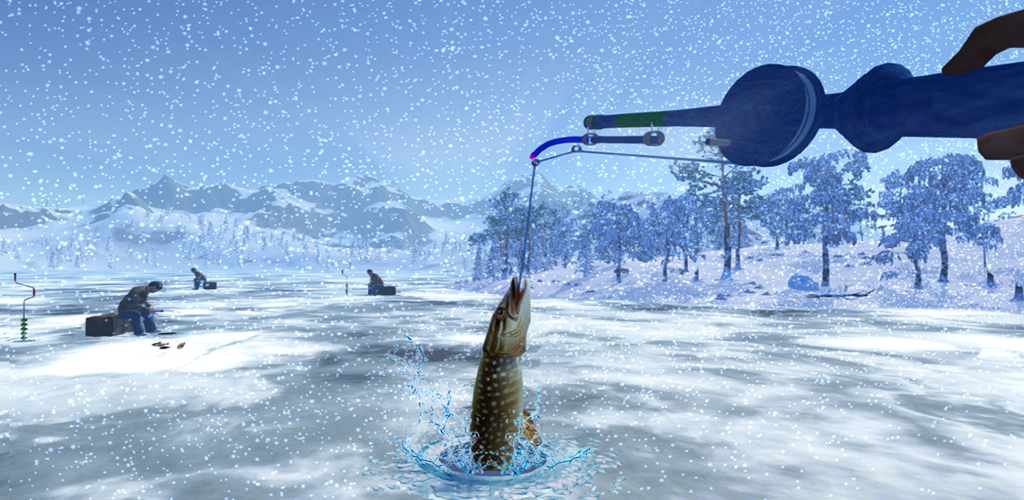
There is a quiet intensity to ice fishing that sets it apart from most other gaming experiences. At first glance, it may seem slow or even uneventful, but beneath the surface lies a carefully crafted system built around anticipation. This is especially true in digital adaptations, where mechanics are designed to keep players engaged through subtle tension rather than constant action. Moments leading up to Ice Fishing big win results are rarely loud or flashy – instead, they are built on patience, timing, and the ability to read small but meaningful signals.
In many ways, ice fishing games are less about catching fish and more about waiting for the right moment. That waiting becomes an art form. Players learn to interpret the environment, understand patterns, and stay focused even when nothing appears to be happening. It’s this quiet build-up that transforms a simple mechanic into a deeply engaging experience.
The Core of Anticipation
Anticipation in ice fishing games is not accidental – it’s deliberately designed. Developers understand that tension doesn’t always come from speed or complexity. Sometimes, it comes from stillness. When a player drops a line into the water, the game begins a subtle psychological process.
Nothing happens immediately. Seconds pass. Then more. The player starts to wonder: Is something coming? Did I choose the right spot? Should I move? These questions create mental engagement even in the absence of visible action.
This is the foundation of anticipation. It turns inactivity into expectation.
The Role of Uncertainty
A major factor that enhances anticipation is uncertainty. Players never know exactly when a fish will bite or how strong the catch will be. This unpredictability keeps the experience fresh and prevents it from becoming routine.
Uncertainty works on multiple levels:
-
Timing uncertainty: You don’t know when the bite will occur.
-
Outcome uncertainty: You don’t know what kind of fish you’ll catch.
-
Performance uncertainty: You’re not always sure if you’ll react correctly in time.
These layers combine to create a constant sense of possibility. Every second could lead to a breakthrough moment.
Micro-Signals and Player Awareness
Ice fishing mechanics rely heavily on subtle cues. Unlike fast-paced games that provide obvious signals, ice fishing requires players to pay attention to small details.
A slight movement of the line. A faint sound. A brief vibration. These micro-signals are easy to miss, but they are essential to success.
This design encourages heightened awareness. Players become more attentive, more focused, and more connected to the game. Over time, they learn to recognize patterns and react more effectively.
This process is deeply satisfying because it rewards observation and patience rather than quick reflexes alone.
The Build-Up to Reward
The most powerful moments in ice fishing games come from the build-up. Catching a fish is not just about the result – it’s about everything that happens before it.
The longer the wait, the greater the tension. And when the moment finally arrives, it feels earned. This is especially true when players achieve significant outcomes, such as landing rare catches or reaching Ice Fishing big win results.
The reward is amplified by the anticipation that precedes it. Without that build-up, the same outcome would feel far less meaningful.
Emotional Engagement Through Waiting
Waiting is often seen as a negative experience in gaming, but ice fishing turns it into a strength. The key lies in how that waiting is framed.
Instead of feeling empty, the waiting period is filled with expectation. Players are not idle – they are engaged in a mental process of prediction and preparation.
This creates a unique emotional dynamic:
-
Hope: The belief that something exciting is about to happen.
-
Tension: The uncertainty of when and how it will happen.
-
Relief: The release that comes when the moment finally arrives.
These emotions work together to create a compelling experience that keeps players invested.
The Balance Between Control and Chance
Another important aspect of anticipation is the balance between player control and randomness. Ice fishing games are designed so that players have some influence over outcomes, but not complete control.
You can choose your location, select your bait, and decide when to react – but you cannot fully predict what will happen. This balance ensures that every moment feels meaningful without becoming predictable.
Anticipation thrives in this space between control and chance. If everything were predictable, there would be no tension. If everything were random, there would be no engagement. Ice fishing mechanics find the perfect middle ground.
Learning Through Experience
As players spend more time with the game, their understanding of anticipation deepens. They begin to recognize patterns, develop instincts, and refine their timing.
This learning process enhances the experience in several ways:
-
Players become more confident in their decisions.
-
They start to anticipate events more accurately.
-
Each success feels like a result of skill, not just luck.
This progression keeps the gameplay fresh and rewarding over time.
The Power of Minimalism
One of the reasons anticipation works so well in ice fishing games is their minimalist design. There are no unnecessary distractions – no overwhelming visuals or constant action pulling attention away from the core experience.
This simplicity allows players to focus entirely on the moment. Every small detail becomes important, and every action carries weight.
Minimalism enhances anticipation by removing noise and emphasizing what truly matters.
Why Anticipation Keeps Players Hooked
At its core, anticipation is what keeps players coming back. It creates a loop of expectation and reward that feels both natural and satisfying.
Players are not just chasing outcomes – they are chasing the feeling that comes before the outcome. That moment when anything could happen.
This is what makes ice fishing mechanics so compelling. They tap into a fundamental aspect of human psychology: the desire to anticipate, to predict, and to experience the unknown.
The Future of Anticipation in Gaming
As game design continues to evolve, the principles behind ice fishing mechanics are likely to influence other genres. Developers are increasingly recognizing the value of slower, more deliberate gameplay.
Anticipation is not limited to fishing – it can be applied to exploration, strategy, and even storytelling. The success of ice fishing mechanics shows that players are willing to embrace quieter, more thoughtful experiences.
This opens the door to new possibilities in game design.
Final Thoughts
Beneath the surface of every ice fishing game lies a carefully crafted system of anticipation. It transforms simple actions into meaningful experiences and turns waiting into a source of excitement.
From subtle signals to emotional build-up, every element works together to create tension and reward. Whether it’s the thrill of a sudden bite or the satisfaction of achieving Ice Fishing big win results, the journey is just as important as the destination.
In the end, it’s not just about catching fish – it’s about mastering the art of waiting, reading the moment, and embracing the unknown.

Robert Griffith is a content and essay writer. He is collaborating with local magazines and newspapers. Robert is interested in topics such as marketing and history.