The artificial intelligence image space has entered a strange and fascinating phase. We have moved past the era of simply being impressed that a machine can draw anything at all. Today, the conversation has shifted toward control, precision, and the ability to direct a model with the same nuance as a human art director. The problem is that while many tools can generate a stunning single image, very few can generate a hundred images of the same subject without that subject slowly morphing into a stranger. This is the specific friction point that ai clothes changer addresses, and it does so by tackling the industry’s most stubborn creative bottleneck: keeping a character recognizably itself across infinite variations.

The market is flooded with models that produce gorgeous, cinematic frames, but they often treat each prompt as an isolated event. If you ask for a character in a coffee shop, you get one face; if you ask for that same character in a cyberpunk alley, you get a completely different person. For anyone building a brand, a comic, a game, or a marketing campaign, this inconsistency is a dealbreaker. It forces creators into a painful loop of generating dozens of images, cherry-picking the few that look vaguely similar, and then spending hours in post-production trying to force them into a cohesive set. The workflow is inefficient, frustrating, and expensive. It is against this backdrop that Nana Banana Pro has positioned itself, not as another general-purpose image generator, but as a specialized tool built from the ground up for the specific challenge of character fidelity.
The Consistency Problem: Why Most AI Tools Fail the Character Test
To understand why this platform feels different, it helps to look at how most AI image models operate. They are essentially massive pattern recognizers. When you feed them a prompt, they scan their training data for visual elements that match your description and stitch them together into a plausible image. The process is probabilistic. There is no inherent memory of the previous image you generated. Each new prompt is a roll of the dice. If you want the same character, you have to rely on the model’s training data containing a person who looks exactly like your character, which is statistically unlikely.
This creates a fundamental tension. The more specific your character design, the harder it is for a general-purpose model to replicate it consistently. You might get the hair color right in one image, but the eye shape shifts in the next. The jawline changes. The distinctive scar on the cheek disappears. This is not a bug in the technology; it is a feature of how diffusion models work. They are designed for variation, not repetition.
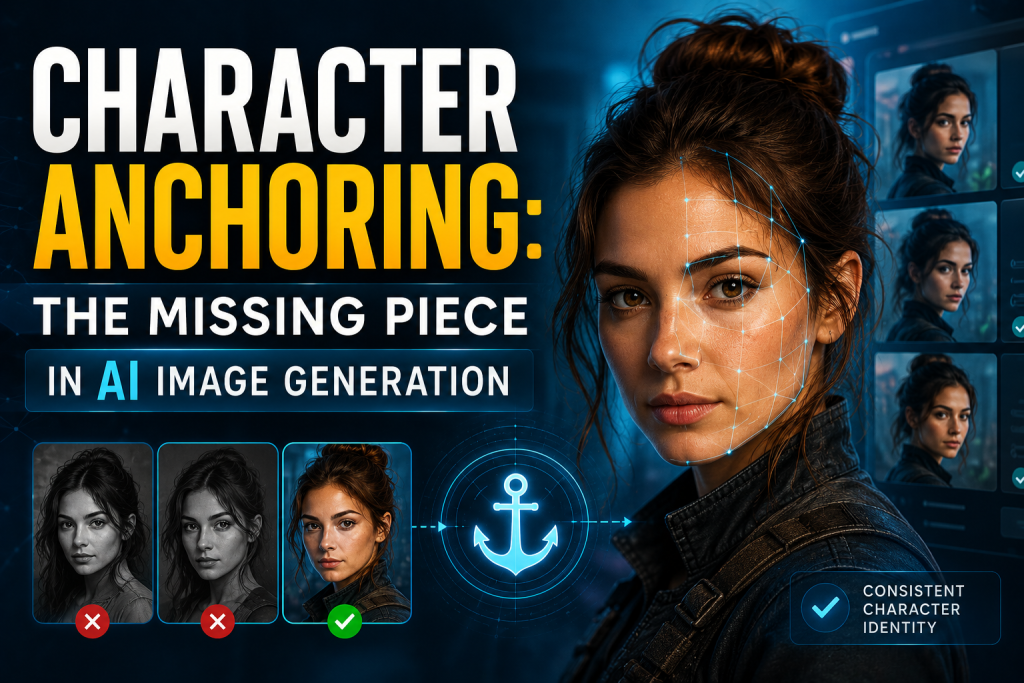
Nana Banana Pro approaches this problem from a different angle. Instead of treating each prompt as a standalone request, it anchors the generation process to a reference image. The platform uses what it calls a Character Consistency Engine, which is designed to lock onto the specific facial features, expressions, and physical characteristics of a provided character reference and carry them through every subsequent edit. The goal is not to prevent the model from being creative but to ensure that creativity is applied to the background, the pose, the lighting, and the style, while the character itself remains stable.
How the Platform Actually Works: A Four-Step Workflow
The interface and workflow are remarkably straightforward, which is often a red flag in the AI space. Complicated tools usually hide complicated problems. But in this case, the simplicity appears to be intentional, designed to lower the barrier to entry for creators who do not have a background in machine learning.
Step 1: Upload Your Character Reference
The process begins with a single image. This is the anchor. It does not need to be a professional headshot or a high-fashion photograph. A clear, well-lit image of your character’s face is sufficient. The platform’s multimodal AI analyzes this reference to build a digital fingerprint of the character’s features, mapping the relationships between eyes, nose, mouth, and bone structure.
The Reference Image Matters More Than You Think
In testing, the quality of the output was heavily dependent on the quality of the input. A reference image with good lighting and a neutral expression produced more stable results than a blurry or heavily shadowed photo. The AI appears to be particularly sensitive to the eyes and the mouth, as these are the areas where most of the expression and identity reside. If the reference image has the character looking directly at the camera, the generated images tend to maintain that forward-facing consistency even when the character is shown in profile.
Step 2: Describe Your Desired Scene
Once the reference is locked in, the next step is to describe what you want. This is where the text-to-image component comes into play. You type a plain-language description of the scene, the pose, the environment, and the mood. There is no need for complex negative prompts or arcane syntax. The platform is designed to understand natural language.
The Power of Multimodal Understanding
The platform leverages multimodal AI technology that processes both the visual data from the reference image and the semantic data from your text prompt simultaneously. This is a critical distinction. Many tools process the text and the image separately, which often leads to conflicts. The text says “sitting on a park bench,” but the image reference shows a standing figure. The AI has to guess which instruction to prioritize. By processing them together, the platform can reconcile these inputs more gracefully, resulting in an image that features your character in the described setting without awkward anatomical compromises.
Step 3: AI Generation
With the reference and the prompt in hand, the AI gets to work. The processing time is fast, with most images being generated in under 30 seconds. This speed is important because it allows for rapid iteration. If the first result is not quite right, you can tweak the prompt and try again without losing momentum. The platform’s infrastructure is optimized for speed, which suggests a focus on practical, production-oriented workflows rather than academic experimentation.
Balancing Speed and Quality
There is always a trade-off between speed and quality. In this case, the platform prioritizes speed without sacrificing the core consistency feature. The images are high-resolution and suitable for commercial use, which means they are not just quick thumbnails but finished assets that can be dropped directly into a marketing campaign or a game prototype.
Step 4: Review and Iterate
The final step is simply reviewing the output and deciding if it meets your needs. If it does, you can download it and use it immediately. If it does not, you can adjust your prompt and generate a new version. The process is iterative by design, encouraging experimentation.
The Learning Curve Is Gentle
The platform is designed for creators of all skill levels. There is no requirement to understand how diffusion models work or to tweak technical parameters. The focus is entirely on the creative input and the visual output. This makes it accessible to writers, marketers, and game designers who may not have a technical background but have a clear vision of what they want their characters to look like.

Testing the Consistency Engine: A Practical Evaluation
To evaluate the platform’s core promise of character consistency, it is useful to run a series of practical tests that mimic real-world creative tasks. The goal is not to generate a single perfect image but to generate a series of images that feel like they belong to the same character in different scenarios. This includes testing features such as an ai clothes changer, where the character’s appearance can be adapted with different outfits while maintaining recognizable facial features, body details, and overall identity consistency across multiple generated images.
Test 1: The Pose and Expression Variation
The first test involves taking a single character reference and generating images in three different poses: a close-up portrait, a full-body shot walking down a street, and a medium shot sitting at a desk. The challenge here is that each pose requires the AI to extrapolate different parts of the character’s body and clothing that may not have been visible in the original reference.
The results were consistent. The facial features remained stable across all three images. The eyes, nose, and mouth maintained their proportions and relative positions. The hair color and style stayed the same. Even the subtle details, like the shape of the eyebrows and the curve of the lips, were preserved. This level of fidelity is difficult to achieve with standard diffusion models, which often struggle to maintain consistency when the pose changes dramatically.
Test 2: The Style Transfer Challenge
The second test pushes the platform into more creative territory. The goal is to take the same character and render them in three different artistic styles: a photorealistic style, a comic book style, and a watercolor illustration style. The challenge here is that each style has different conventions for rendering faces, shadows, and details.
The platform handled this remarkably well. The character remained recognizable across all three styles. The photorealistic version looked like a photograph of the character. The comic book version used bold lines and flat colors but kept the character’s facial structure intact. The watercolor version was softer and more abstract, but the character’s identity was still clear. The Style Transfer Engine appears to be sophisticated enough to understand the underlying geometry of the face and preserve it even as the rendering technique changes.
Test 3: The Complex Scene Integration
The third test involves placing the character into a complex, crowded scene. The prompt specifies a busy marketplace with dozens of other people, animals, and objects. The challenge here is that the AI has to generate a lot of visual information while keeping the main character distinct and consistent.
In this test, the results were mixed but generally positive. The main character was rendered correctly and remained consistent with the reference image. However, the background characters and objects were less detailed and sometimes had artifacts, which is a common issue with AI image generation. This suggests that the platform prioritizes the main character’s consistency over the background detail, which is a reasonable trade-off for most commercial applications.
A Side-by-Side Look at the Creative Workflow
To provide a clearer perspective on how this platform fits into a broader creative workflow, it is useful to compare it to the traditional alternatives. The following table outlines the key differences between using a general-purpose AI image generator, a manual design process, and this specialized consistency platform.
| Aspect | General-Purpose AI | Manual Design | Nana Banana Pro |
| Character Consistency | Inconsistent across generations | High, but time-consuming | High, automated across generations |
| Learning Curve | Moderate to steep | Steep | Gentle, prompt-based |
| Creative Control | High, but unpredictable | Absolute | High, with predictable character fidelity |
| Speed of Production | Fast | Slow | Fast |
| Best Use Case | One-off concept art | Final polished assets | Branded content, comics, games |
The table highlights that the platform occupies a specific niche. It is not a replacement for a skilled artist who can paint a character from scratch with absolute control. Nor is it a replacement for a general-purpose AI that can generate wild, unexpected concepts. Instead, it is a tool for creators who need to produce a high volume of consistent character images quickly.
Real-World Applications: Where This Tool Shines
The true value of a tool like this becomes apparent when you consider the specific workflows it enables.
Marketing and Advertising Campaigns
Brands are increasingly using AI-generated imagery in their campaigns. The challenge is maintaining brand identity across a campaign that might include dozens of images. If the brand’s mascot or spokesperson looks different in every ad, it undermines the brand’s credibility. This platform allows marketers to generate a consistent face for their campaigns without the cost and time of a traditional photoshoot.
Game Development and Concept Art
Game developers often need to create hundreds of concept art pieces for characters, environments, and items. Keeping a character consistent across all these pieces is essential for maintaining the game’s visual identity. This platform can generate consistent character art for different poses, expressions, and outfits, speeding up the pre-production process significantly.
Comic and Graphic Novel Creation
Creating a comic book is a labor-intensive process. Each panel requires the artist to draw the characters from different angles and in different scenes. This platform can generate background panels or reference images that maintain character consistency, allowing the artist to focus on the more critical and expressive panels.
Social Media Content
Influencers and content creators often need to generate a large volume of visual content. Maintaining a consistent aesthetic across all posts is key to building a recognizable personal brand. This platform can generate images that feature the same character or avatar in different settings, creating a cohesive feed.
A Note on Limitations and Realistic Expectations
No AI tool is perfect, and it is important to approach this platform with realistic expectations. The consistency engine is powerful, but it is not magic. The results depend heavily on the quality of the reference image and the clarity of the prompt. A blurry reference image or a vague prompt will produce inconsistent or low-quality results.
Complex scenes with multiple characters or intricate backgrounds can sometimes overwhelm the AI, leading to artifacts or reduced detail in the background. In these cases, it may be necessary to generate the character separately and composite them into the scene using traditional editing software. The platform is a tool that enhances a creative workflow; it does not replace the need for human judgment and refinement.
The processing speed of under 30 seconds is impressive, but it can vary depending on server load and the complexity of the request. Batch processing or generating very high-resolution images may take slightly longer. For most standard use cases, however, the speed is more than adequate.

Final Considerations for the Modern Creator
The AI image generation space is evolving rapidly, and tools that solve specific, painful problems are the ones that will endure. The problem of character consistency has been a thorn in the side of creators since the first diffusion models went public. Nana Banana Pro offers a focused, practical solution to that problem.
The platform’s strength lies in its specialization. It does not try to be everything to everyone. It focuses on keeping a character recognizable across different poses, scenes, and styles. For creators who need this capability, it is a valuable addition to their toolkit. It streamlines the workflow, reduces the need for manual corrections, and allows for rapid iteration.
The rise of multimodal AI is making these kinds of specialized tools possible. By understanding both images and text, the platform can interpret complex instructions and deliver precise results. This is a glimpse into the future of creative AI, where tools are not just powerful but also intuitive and focused on specific creative needs.
In a landscape filled with tools that promise to generate anything, it is refreshing to find one that promises to generate the same thing, consistently, every single time. That is the real value proposition here: not just creativity, but reliable, repeatable, and predictable creativity. For anyone building a world, a brand, or a story, that reliability is worth more than a thousand one-off masterpieces.

Sandra Larson is a writer with the personal blog at ElizabethanAuthor and an academic coach for students. Her main sphere of professional interest is the connection between AI and modern study techniques. Sandra believes that digital tools are a way to a better future in the education system.