The Criterion Collection has officially announced that The Complete Kubrick will be available on 4K UHD Blu-Ray on October 20, 2026. This is an unprecedented box set bringing together Stanley Kubrick’s entire directorial output for the first time and includes thirteen features and three shorts restored in 4K, with Kubrick’s original soundtracks alongside the 5.1 mixes, restored and remastered; over twenty-five hours of interviews, documentaries, and behind-the-scenes materials; and deluxe packaging illustrated with rare photographs, artwork, and documents annotated by Kubrick himself, all housed in a singular box inspired by the director’s legendary archive.
The titles in this collection include Killer’s Kiss, The Killing, Paths of Glory, Spartacus, Lolita, Dr. Strangelove, or: How I Learned to Stop Worrying and Love the Bomb,2001: A Space Odyssey, A Clockwork Orange, Barry Lyndon, The Shining, Full Metal Jacket, and Eyes Wide Shut. Get all of the details on this impressive set below!

THE COMPLETE KUBRICK
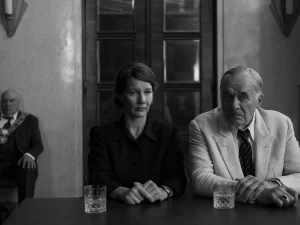
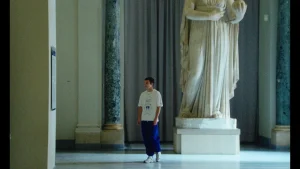
- Killer’s Kiss (1955) – Vivid location shooting on the streets of 1950s New York distinguishes the film that Stanley Kubrick considered his first professional feature, a nervy, hard-edged noir that brought him to Hollywood’s attention. A lifelong boxing aficionado, Kubrick sets the story in the gritty ringside world of middleweight Davey Gordon (Jamie Smith), who gets in way over his head when he tries to help a dance-hall hostess (Irene Kane) escape her violently possessive boss (Frank Silvera). Displaying the striking eye he honed as a photographer for Look magazine, Kubrick captures a bygone Manhattan in evocative monochrome chiaroscuro that is the very essence of noir. Killer’s Kiss is presented here alongside Kubrick’s earlier film work, including his three shorts—Day of the Fight (in both its original and RKO versions), Flying Padre, and The Seafarers—and Fear and Desire, the independently produced first feature that he withdrew from circulation.
- The Killing (1956) – Stanley Kubrick’s account of an ambitious racetrack robbery is one of Hollywood’s tautest, twistiest noirs. Aided by a radically time-shuffling narrative, razor-sharp dialogue from pulp novelist Jim Thompson, and a phenomenal cast of character actors, including Sterling Hayden, Coleen Gray, Timothy Carey, Elisha Cook Jr., and Marie Windsor, The Killing is both a jaunty thriller and a cold-blooded punch to the gut. And with its precise tracking shots and gratifying sense of irony, it’s Kubrick to the core.
- Paths of Glory (1957) – Stanley Kubrick’s Paths of Glory is among the most powerful antiwar films ever made. A fiery Kirk Douglas stars as a World War I French colonel who goes head-to-head with the army’s ruthless top brass when his men are accused of cowardice after being unable to carry out an impossible mission. This haunting, exquisitely photographed dissection of the military machine in all its absurdity and capacity for dehumanization (a theme Kubrick would continue to explore throughout his career) is assembled with its legendary director’s customary precision, from its tense trench warfare sequences to its gripping courtroom climax to its ravaging final scene.
- Spartacus (1960) – Stanley Kubrick directed a cast of screen legends—including Kirk Douglas as the indomitable gladiator who led a Roman slave revolt—in this sweeping epic, which defined a genre and helped usher in a new era of Hollywood filmmaking. The film’s assured acting, lush Technicolor cinematography, bold costumes, and visceral fight sequences won Spartacus widespread recognition, including four Oscars, while its blend of politics and sexual suggestion scandalized audiences. Today the film—the first to openly defy Hollywood’s blacklist, by employing screenwriter Dalton Trumbo—remains a landmark of cinematic artistry and history. But despite its acclaim, the production was a dispiriting one for hired gun Kubrick, and it proved to be the last major studio feature of his on which he lacked full creative control, and his last time shooting in Hollywood.
- Lolita (1962) – “How did they ever make a movie of Lolita?” asked the ads for Stanley Kubrick’s slyly sardonic adaptation of Vladimir Nabokov’s seemingly unfilmable novel, a movie that plays its scandalous source material as a darkly comic, unsettlingly absurdist portrait of twisted obsession and romantic delusion. James Mason is Humbert Humbert, the European literature professor abroad in America whose illicit infatuation with Lolita (Sue Lyon), the adolescent daughter of his landlady (Shelley Winters), drives him to ever more amoral depths of paranoia, degradation, and destructive jealousy. As Humbert’s menacingly enigmatic nemesis Clare Quilty, Peter Sellers displays the brilliance for protean comic improvisation that he would soon deploy with full force in Dr. Strangelove, or: How I Learned to Stop Worrying and Love the Bomb.
- Dr. Strangelove, or: How I Learned to Stop Worrying and Love the Bomb (1964) – Stanley Kubrick’s painfully funny take on Cold War anxiety is one of the fiercest satires of human folly ever to come out of Hollywood. The matchless shape-shifter Peter Sellers plays three wildly different roles: Royal Air Force Captain Lionel Mandrake, timidly trying to stop a nuclear attack on the USSR ordered by an unbalanced general (Sterling Hayden); the ineffectual and perpetually dumbfounded U.S. President Merkin Muffley, who must deliver the very bad news to the Soviet premier; and the titular Strangelove himself, a wheelchair-bound presidential adviser with a Nazi past. Finding improbable hilarity in nearly every unimaginable scenario, Dr. Strangelove, or: How I Learned to Stop Worrying and Love the Bomb is a subversive masterpiece that officially announced Kubrick as an unparalleled stylist and pitch-black ironist.
- 2001: A Space Odyssey (1968) – With this monument of twentieth-century art, Stanley Kubrick fused pop cinema and avant-garde abstraction as never before, resulting in the most influential science-fiction film ever made and a blockbuster of unprecedented philosophical and spiritual depth. Inspired by the futurist writings of Arthur C. Clarke, 2001: A Space Odyssey journeys from the dawn of man to the space age, as two astronauts on a mission to Jupiter discover realms beyond human understanding, along the way awakening to the horror that their ship’s sentient supercomputer, HAL 9000, has turned against them. Both a marvel of technological realism and an otherworldly cosmic ballet composed in images of enigmatic, oneiric power, this consciousness-bending voyage into the unknown continues to inspire awed terror and infinite wonder.
- A Clockwork Orange (1971) – Sex, shock, and ultraviolence: with his mega-controversial adaptation of Anthony Burgess’s cult novel, Stanley Kubrick unleashed this indelibly startling vision of the future. In a pop-art-stylized dystopian London, sadistic thug Alex DeLarge (Malcolm McDowell) and his band of hooligans terrorize the streets—until cruel irony makes Alex a pawn in a much larger game of social and political control. A defining statement for the director on the tension between free will and institutional authority, and one of the most provocative films ever made about the nature of violence, A Clockwork Orange stands as a work of totemic significance: visually brilliant, frighteningly funny, and fearless in its vast philosophical and moral implications.
- Barry Lyndon (1975) – Stanley Kubrick bent the conventions of the historical drama to his own will in this dazzling vision of a pitiless aristocracy, adapted from a novel by William Makepeace Thackeray. In picaresque detail, Barry Lyndon chronicles the adventures of an incorrigible trickster (Ryan O’Neal) whose opportunism takes him from an Irish farm to the battlefields of the Seven Years’ War and the parlors of high society. For the most sumptuously crafted film of his career, Kubrick recreated the decadent surfaces and intricate social codes of the period, evoking the light and texture of eighteenth-century painting with the help of pioneering cinematographic techniques and lavish costume and production design, all of which earned Academy Awards. The result is a masterpiece—a sardonic, devastating portrait of a vanishing world whose opulence conceals the moral vacancy at its heart.
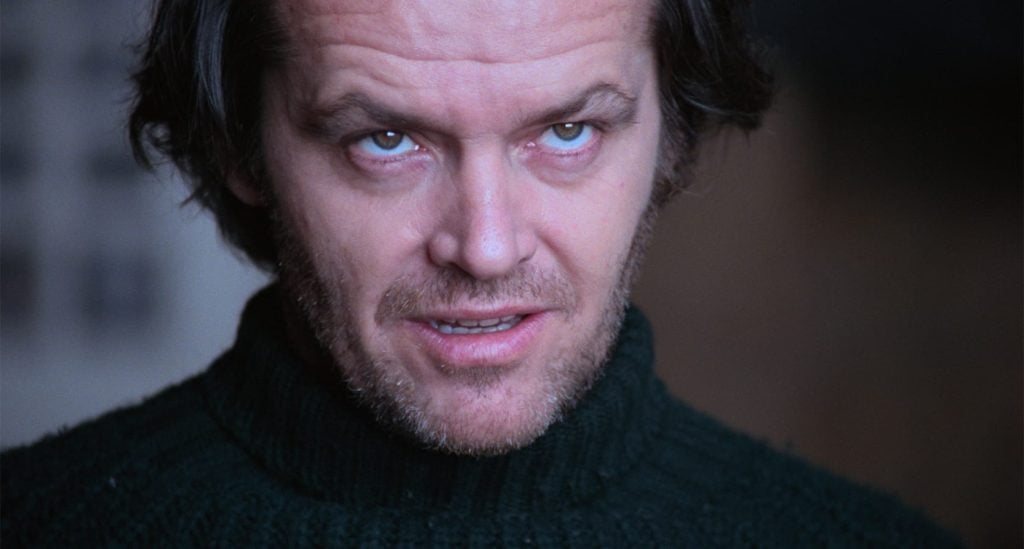
- The Shining (1980) – For this domestic nightmare, Stanley Kubrick took a Stephen King best seller and infused it with his own demons and obsessions, creating a tour de force of dreamlike dread and disturbing ambiguity. Sequestered for the winter at the snowbound Overlook Hotel, a frustrated writer (Jack Nicholson), his increasingly fearful wife (Shelley Duvall), and their psychic son (Danny Lloyd) are plunged into a vortex of madness and violence—a psychosis that seems to emanate from the haunted, labyrinthine corridors of the building itself. Channeling historical trauma and contemporary anxieties about failed masculinity into images of surreal, subliminal power, Kubrick constructs a maelstrom of psychological terror that stands as one of the most endlessly analyzed horror films ever made.
- Full Metal Jacket (1987) – Stanley Kubrick returned to one of his most potent themes—the senseless, dehumanizing devastation of warfare—with this unflinchingly intense plunge into the inferno of the Vietnam War. Based on the writings of Gustav Hasford and Michael Herr, Full Metal Jacket follows a band of U.S. Marine recruits as they are systemically broken down in the crucible of boot camp—an experience that destroys some and hardens others into callous killing machines to be unleashed on the battlefields of Da Nang and Huế. Capturing the chaos and carnage with his exactingly controlled camera, Kubrick delivers one of cinema’s most blistering statements on the nature of war, a caustic, feverishly disturbing portrayal of combat as a relentless ritual of moral degradation.
- Eyes Wide Shut (1999) – Stanley Kubrick’s career-capping Eyes Wide Shut unfolds in a dreamscape vision of New York City, where doctor Bill Harford (Tom Cruise) and his wife, Alice (Nicole Kidman), confront the unconscious desires, jealousies, and fears threatening their marriage. A Christmastime odyssey into a surreal sexual underworld whose hidden power structures are laid frighteningly bare, the film marks the fulfillment of the director’s decades-long desire to adapt Arthur Schnitzler’s novella Traumnovelle (Dream Story) and the culmination of his obsessive interest in the relationship between institutional authority and the individual. Released in 1999, the film also serves as a fitting coda to a century of cinema, by one of its greatest visionaries—an endlessly tantalizing labyrinth whose myriad symbols, mysteries, and meanings are still being unraveled.

THIRTY-DISC 4K UHD + BLU-RAY SPECIAL EDITION COLLECTOR’S SET FEATURES
- 4K restorations of Kubrick’s thirteen features and three shorts, with their original soundtracks alongside the 5.1 mixes, restored and remastered
- Over twenty-five hours of interviews, documentaries, and behind-the-scenes materials
- Kubrick’s international version of The Shining
- A new 4K restoration of Vivian Kubrick’s behind-the-scenes documentary Making “The Shining”
- Newly recorded commentary tracks featuring filmmaker Lee Unkrich (editor of the book Stanley Kubrick’s “The Shining”) and author Michael Benson (Space Odyssey: Stanley Kubrick, Arthur C. Clarke, and the Making of a Masterpiece)
- Rare films from Graphic Films and computer-animation pioneer John Whitney that inspired the special effects in 2001: A Space Odyssey
- Unseen Lolita screen tests with actors James Mason and Sue Lyon and rare Full Metal Jacket behind-the-scenes footage
- A newly recorded conversation with novelist Jonathan Lethem and film historian Kevin Wynter on Kubrick and authorship
- An essay by author and critic Nathaniel Rich
- Deluxe packaging illustrated with rare photographs, artwork, and documents annotated by Kubrick himself, all housed in a singular box inspired by the director’s legendary archive
- And much more . . .

Before we let you go, we have officially launched our merch store! Check out all of our amazing apparel when you click here and type in GVN15 at checkout for a 15% discount!
For major deals and money off on Amazon, make sure to use our affiliate link! If you are purchasing any of the latest and best in physical media at MovieZyng, you can support us using our affiliate link.

Dillon is most comfortable sitting around in a theatre all day watching both big budget and independent movies.