“Death comes in many different ways. Some of which are gentle. And some of which are catastrophic. The big thing is work out what you want ahead of time.” — Walt Patrick. Founder of Herland Forest Conservation Cemetery.
We, as a people, have a crippling fear of the inevitable. Death does not discriminate. It is coming for us all one way or another. And to be morbid, it’s arriving sooner rather than later for one major demographic here in the United States: the baby boomers. The massive population that has defined societal and socioeconomic impacts in the country is hurrying towards death at a fast rate. As we saw during the deaths from COVID, the ability to handle an enormous number of deceased is problematic. And it now poses a bigger question concerning the incoming deaths of baby boomers. How are we preparing for the inevitable boom in funerals of 70 million people?
In one of the most fascinating and at times morbid documentaries I have ever witnessed, Death Boom, narrated by horror filmmaker Eli Roth, gives a probing insight into the undertaking that makes up the so-called death industry here in the United States. While unsettling, the film explores the varied methods and procedures used for human dispositions. Ultimately, it offers a hopeful note, reminding us that death, while unsettling, is natural and, as the film shows, life breeds life.
It should come as no surprise that death is a business. Here in the good old USA, it is a thriving business. Cheers to capitalism, right? On average, the entire death care industry, from funeral home services to the caskets or urns, burials, etc., runs in the neighborhood of $16-23 billion annually. Part of the film succeeds in doing so by scaring us with facts and figures. Not only economic costs but also environmental ones.
For example, the process of embalming a body dates back to the Civil War in the United States. To preserve the bodies of soldiers slain on the battlefields. However, in part thanks to the funeral services for President Lincoln and the transport of his body across the country to various cities, the process of embalming became a more prominent tool in the wake of death. Before the 1860s, embalming did not occur, and more or less, bodies were laid to rest in natural ways. Today, there are more than 800,00 gallons of embalming fluid leaking into the waters, to say nothing of the toxic fumes escaping into the air via cremation.
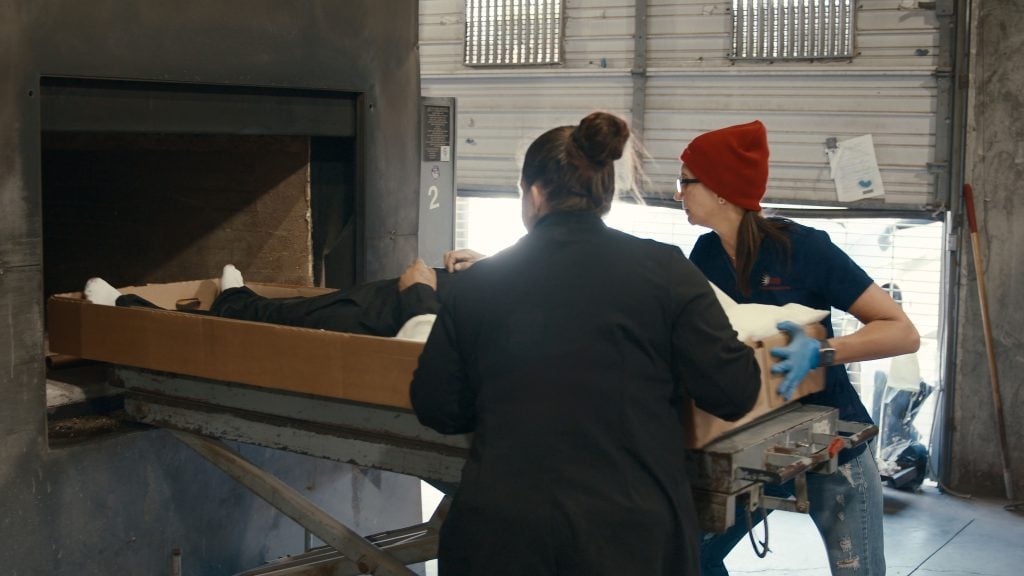
The film highlights the impacts on lower-income communities, where a vast number of crematories are located. Yet, as the film points out, as we all know, air has no exclusive zip code. We all breathe it, rich and poor alike. It takes 30 gallons of fuel to cremate a body. Add to that the fact that cremation now accounts for 60.5% of human dispositions in the United States alone. Everything burns in the air as a greenhouse gas, so do the math. Death is a toxic stew going straight into the ozone. In a rather unsettling, but accurate anecdote, the film points out as a morbid joke, “Your final act on earth at the moment is one of pollution.”
Death, like everything in modern life, is a business, a big business in fact. Today, there is a corporatization of death, with one company in particular, Service Corporation International, owning the vast majority of funeral homes and cemeteries across the country. Again, I say cue the cheers for capitalism.
So what is the point of all this death and gloom? And no, it is not to exclusively dump on the baby boomer generation (though their numbers are ticking, as the film constantly points out, creating a need for space that is running out not only here but across the globe). The ultimate point of Death Boom is to give a better understanding of what is the most difficult part of life: the end.
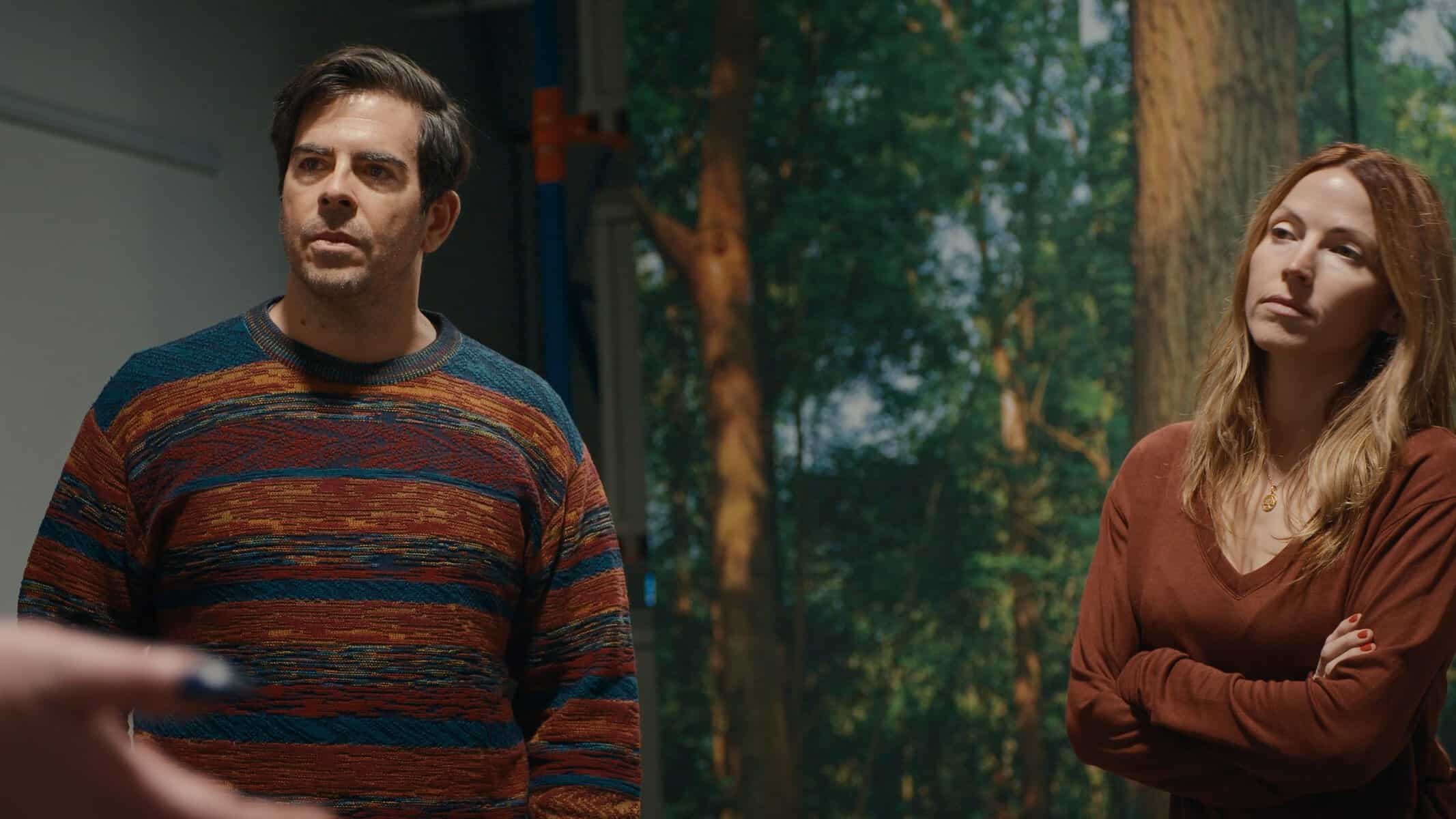
Through sardonic wit and observations, Eli Roth guides the many processes and ways in which one begins the final march to the great beyond. Some points feel low-key familiar to many of Roth’s grisly films. For example, going behind the scenes at a mortuary and witnessing the embalming process. Those of us reading and watching will never experience it firsthand, so here is a chance to get an up-close and personal look at the process.
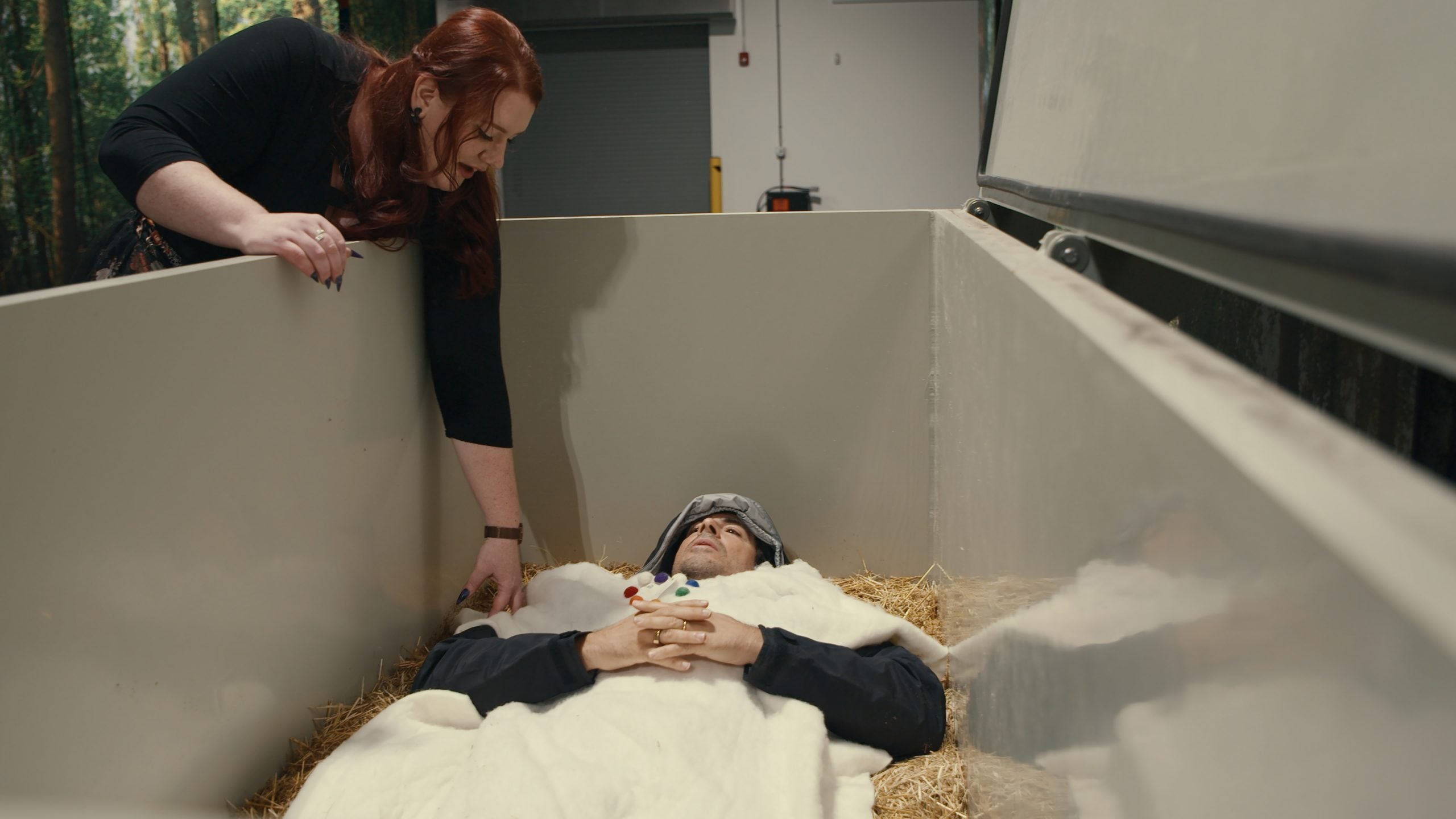
But the film also highlights the many other methods taking place in the death industry today. The green burial movement is on the rise, including natural burials and cremations. There are even body farms, yes, actual body farms, where the deceased can be submitted for study, observation, training, and research. There is even an option for those in the concrete jungle, where spacing is even more limited than in the burbs. Here, human composting is an option.
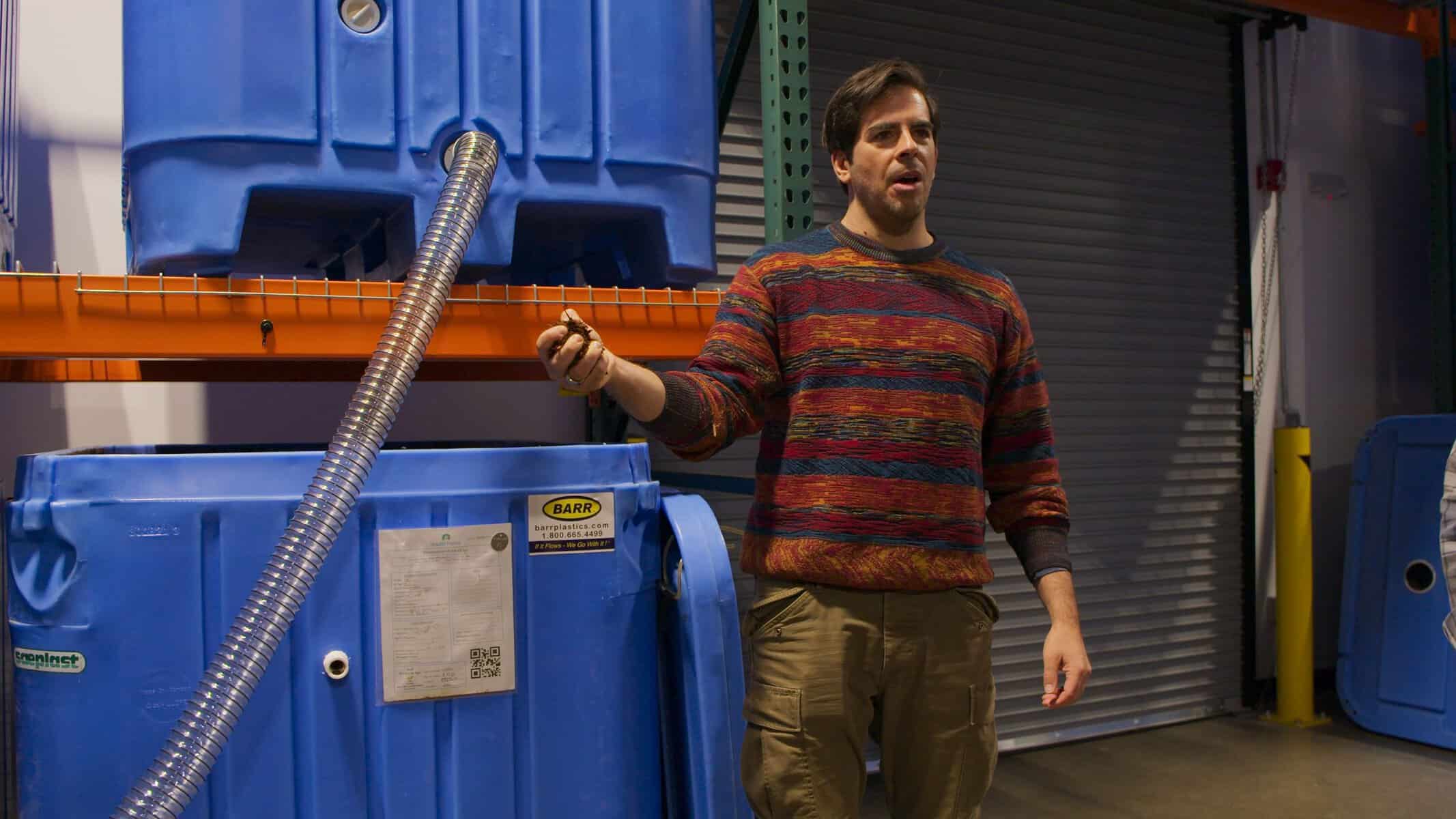
This process sounds disgusting, and it is, but it is about as natural a process as one can achieve. What is essentially an eco-friendly alternative to cremation or burial, the process accelerates natural decomposition, transforming a deceased body into nutrient-rich soil over several weeks. The result is that the remains may go to nourish plant life and forests. In Roth’s words, it turns the body “into human mulch.” Unsettling to think about, but symbiotic in the grander sense.
In what is a fascinating probe into the end of life, Death Boom‘s great accomplishment is a timely reminder that life begets life. The film showcases how human impacts exist beyond death, in a rapidly aging and, in some cases, dying world, and the need to rethink how we address dying. Better said, death is a conversation worth having. Despite the morbid shrouds that hang over much of the film, the story retains an inherent hopefulness.
Call it strange timing to think about a Star Wars film, but so be it. Having recently rewatched Revenge of the Sith, there is a line from Jedi Master Yoda of all creatures that feels appropriately apt when looking at the big takeaway from this stirring documentary. “Death is a natural part of life…” And thanks to this documentary, this viewer is thinking more about natural disposition. And in addition, thinking of ways to break out of the death industrial complex.
Death Boom held its World Premiere as a part of the Escape from Tribeca section of the 2026 Tribeca Festival.
Director: Jessica Chandler
Rated: NR
Runtime: 82m
In what is a fascinating probe into the end of life, Death Boom's great accomplishment is a timely reminder that life begets life. The film showcases how human impacts exist beyond death, in a rapidly aging and, in some cases, dying world, and the need to rethink how we address dying.

Writing & podcasting, for the love of movies.
His Letterboxd Favorites: The Dark Knight, Halloween, Jaws & The Odyssey.