

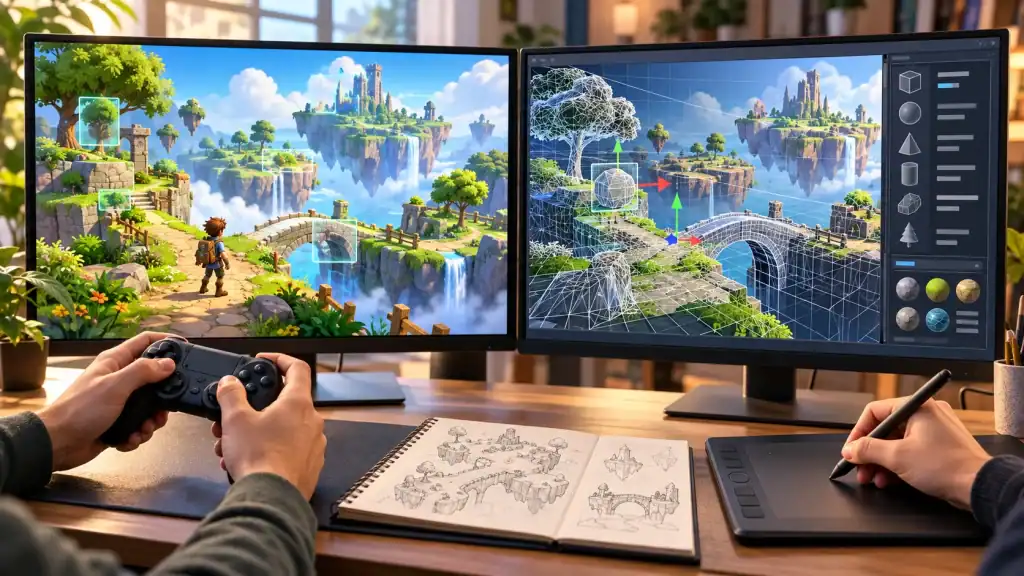
Every video game begins with an idea, but turning that idea into something millions of people can play requires far more than talented programmers. Behind every memorable character, challenging level, and responsive combat system is a team of professionals solving creative and technical problems.
For anyone who grew up exploring virtual worlds, a career in gaming might sound like the ultimate move. However, the industry offers more opportunities than most players realize. From testing early builds to designing gameplay mechanics, you can contribute to game development without following the same career path. Understanding what these jobs involve is the first step toward finding where your interests and abilities fit.
Game Testing: Where Small Details Make a Big Difference
Imagine spending an afternoon playing a game where a character repeatedly walks through a wall. For a regular player, that’s an amusing glitch. For a quality assurance tester, it’s a problem to document, reproduce, and investigate. Game testers evaluate software before release by identifying bugs, checking functionality, and confirming that gameplay behaves as intended. Their work involves careful observation, patience, and clear communication with developers.
Contrary to popular belief, game testing isn’t simply playing for entertainment. A tester might repeat the same sequence dozens of times to determine exactly what causes a technical problem.
Entry-level quality assurance roles can provide exposure to professional development workflows. However, moving from testing into design or programming usually requires additional skills and practical experience; it doesn’t happen automatically.
Getting Your First Opportunity in Gaming
Passion for video games is a useful starting point, but employers need evidence that applicants can contribute to a development team. What that evidence looks like depends on the position.
A prospective game designer might develop a playable prototype or document an original level. A programming candidate could showcase projects built in Unity or Unreal Engine. For quality assurance positions, detailed bug reports and familiarity with testing procedures may be particularly relevant.
Presenting this experience clearly is equally important. When preparing applications, Monster’s resume builder can help candidates organize technical skills, completed projects, and relevant work experience into a readable format. Applicants should then tailor their descriptions to the specific responsibilities listed in each job posting. A portfolio adds context, especially for creative and technical roles. Instead of showing unfinished experiments without explanation, choose projects that show how you approached problems and what you learned.
Game Design: Turning Ideas Into Playable Experiences
Game designers decide how a game works and how players interact with it. Their responsibilities can include developing rules, balancing difficulty, designing progression systems, and collaborating on gameplay mechanics. Consider a racing game. Designers must think about vehicle handling, track layouts, progression, and how rewarding each race feels. These decisions shape whether players stay engaged or get frustrated.
Game design also requires testing assumptions. A mechanic that sounds exciting during planning might become confusing once people start playing. Aspiring designers can begin with small projects, creating levels or experimenting with existing game development tools. Finishing a simple playable experience often demonstrates more practical understanding than describing an ambitious concept that has never been tested.
The Careers Players Rarely Notice
Not everyone working in gaming writes code or designs levels. Modern game production relies on specialists whose contributions may be less visible but are essential to the finished experience.
- Technical artists connect artistic goals with technical requirements, helping visual assets perform properly within game engines.
- UI/UX designers develop menus, navigation systems, and interfaces that make games easier to understand.
- Audio designers create sound effects and interactive audio that respond to player actions.
- Localization specialists adapt dialogue, instructions, and cultural references for different audiences.
- Production coordinators organize schedules, track development tasks, and help teams communicate.
These positions appeal to people with different educational backgrounds and professional strengths. Some require specialized training, while others allow experience from related industries to transfer into game development.
Where New Career Opportunities Are Emerging
However, changes within game development are now generating new specialties. Accessibility is becoming more and more important. Today, developers take into account such things as customizable controls, readability of interfaces, subtitles, and other elements that would be convenient for diverse groups of players. People familiar with the principles of inclusive design will be able to create accessible games.
Live-service games require maintenance once the product is released. This includes tracking feedback from users, providing maintenance of the online component of the game, updating the product, and analyzing its usage patterns. At the same time, cloud-based technology, cross-platform development, and complex software tools demand people capable of solving challenging technical issues.
However, all of this does not ensure a smooth recruitment process. The closure of studios and cancellation of projects are always possible.
Building a Career Beyond the First Level
In fact, a career in video games is never linear. You may start out testing games, find that you have a passion for usability, and end up focusing on game interfaces. Others start in animation, sound design, or software development.
One way to go about this is by selecting a role and meeting the demands associated with it by proving one’s ability to perform the tasks. Short-term successes, critiques, and cooperation with other artists can offer some experience.
Being curious about things is important when you’re in the gaming career path, but this curiosity has to be directed. Those who work in the production of great games are not just great gamers.

Sandra Larson is a writer with the personal blog at ElizabethanAuthor and an academic coach for students. Her main sphere of professional interest is the connection between AI and modern study techniques. Sandra believes that digital tools are a way to a better future in the education system.