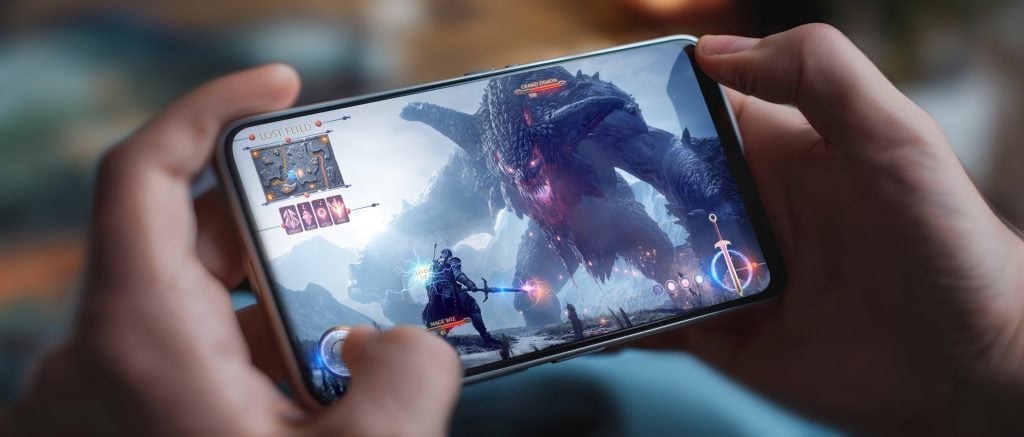
While countries like Japan still have a thriving and lively arcade scene, it isn’t the same in many places anymore. Arcades aren’t as prevalent as they used to be in the 1980s and even into the early 2000s, and that’s just the result of technological advancements.
Nowadays, anyone can easily download arcade-style gaming apps. You have Subway Surfers, Temple Run 2, and even shooters like Deep Rock Galactic and Downwell.
Even heavy mobile games like Call of Duty: Mobile incorporate arcade mini-games during special events, and casino apps also offer real-money arcade games. That said, even if gaming today looks completely different, the core gameplay of arcades remains popular.
Arcade Games: Design, Machine, Gameplay
Early arcade games were designed around purpose-built hardware. Unlike modern devices that run thousands of applications, arcade cabinets typically existed to run a single game. Inside each machine were custom circuit boards, processors, memory chips, speakers, and a CRT monitor dedicated entirely to that experience.
Controls were equally specialized, and honestly, most machines had the highest quality materials for a console. The joysticks, trackballs, steering wheels, and mechanical buttons were built to survive constant use from thousands of players.
In the business side of things, Arcade operators earned money one coin at a time, so developers had an incentive to keep players spending. That’s one reason many classic arcade titles were notoriously difficult.
Classics like Pac-Man, Galaga, and Space Invaders also introduced a short-session gameplay loop. Players could jump in, play for a few minutes, chase a high score, and start all over again with the same excitement. Now, modern mobile games may look different, but many still follow that formula as it simply works.
The Move to Microprocessors and Portable Gameplay
As technology improves, the hardware that arcade games use has become smaller and more affordable. Now, the very first home console was the Magnavox Odyssey, launched in late 1972. However, this didn’t really impact the arcade industry back then because it was extremely basic.
The Odyssey could only display white blocks on a black screen, and players had to stick physical plastic overlays onto their TV screens to simulate graphics.
It can be argued that the Nintendo Entertainment System is what compromised the arcade scene when it was released in 1985. It’s what truly brought the arcade experience home with games like Super Mario Bros. and The Legend of Zelda.
The mid-90s is when people started to experience a better gaming experience at home than in the arcades. This was when the Sony PlayStation was launched, and with 3D graphics at an affordable consumer price point, it was simply a game-changer.
The nail in the coffin was probably the Sega Dreamcast, which was released in 1998. Sega built the Dreamcast using a system architecture that almost perfectly mirrored their NAOMI arcade boards.
This hardware design allowed the Dreamcast to produce home ports of arcade hits like Crazy Taxi and SoulCalibur that were actually superior to the original coin-operated versions, featuring smoother performance and extra gameplay modes.
Once the home experience surpassed the public machine experience, the traditional $7 billion arcade market rapidly collapsed into a niche industry.
The Rise of Mobile Gaming
If home consoles started the decline of arcades, smartphones completely changed the landscape. Now, unlike consoles, smartphones weren’t designed primarily for gaming. They’re created for communications, and mostly as a portable version of telephones or landlines.
However, brands like Nokia eventually had to make the mobile phone experience fun and added simple games like Snake and Space Impact. Years went by, and smartphones eventually became the norm.
For the first time, developers could distribute games directly to millions of users without manufacturing cartridges, discs, or dedicated hardware. A player could discover a game, download it, and start playing within minutes.
Casual puzzle games, strategy titles, RPGs, shooters, and even casino platforms with slots real money games suddenly became accessible from a single device.
Interestingly, many of the mechanics remain familiar, and even casino platforms would have arcade-style games like crash games (Aviator, JetX, Spaceman).
The reason is simple: arcade design still works. It’s great for casual gaming, and many people would actually only play games on their phone in random or short periods of time. That said, developers know they only have a few minutes to capture a player’s attention, and arcade-style gameplay is perfect for that.
Conclusion
Arcades may no longer dominate the gaming industry, but their influence is pretty much everywhere.
So even if the screens got smaller, the hardware became more powerful, and the games became more accessible. The core appeal, however, remains the same: jump in, have fun, and come back for one more round.

Hi! I’m Bryan, and I’m a passionate & expert writer with more than five years of experience. I have written about various topics such as product descriptions, travel, cryptocurrencies, and online gaming in my writing journey.