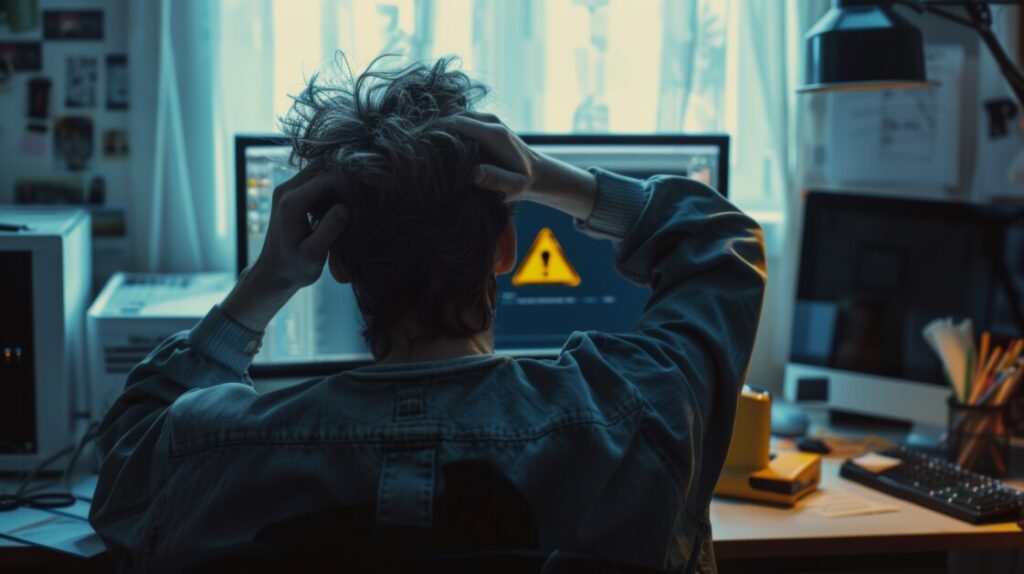
When you spend most of your time staring at a screen, your health is at risk. Too much screen time can lead to problems like poor posture, headaches, brain fog, and disrupted sleep. These issues tend to build gradually over time, which makes the early signs easy to overlook.
If you’re someone who works, relaxes, and socializes online, it’s critical to protect your health. Small adjustments in your routine and adding in physical activity can make a huge difference. Whether you’re dealing with noticeable issues or your goal is prevention, here’s how to maintain your mental and physical health even when your life revolves around screens.
Protect your eyes
People who spend years working on computers often notice subtle vision changes before they realize how much their eyes are strained. This often presents as dry eyes, blurred vision, headaches, sensitivity to light, and trouble focusing.
While most people call it digital eye strain, it’s officially called Computer Vision Syndrome.
There are several ways to protect your eyes from excessive strain:
- Distance yourself. Keep your screens as far away from your eyes as possible. Close-range focus is a primary contributor to eye strain.
- Follow the 20-20-20 rule. Every 20 minutes, look at something about 20 feet away for 20 seconds. This gives your eyes a brief reset, relaxing your eye muscles.
- Blink more. People blink far less when staring at a screen. This can make your eyes feel tired and gritty. Make it a point to blink more often and prevent fans from blowing directly in your face to reduce dryness.
- Adjust your lighting. Harsh lighting can strain your eyes. Avoid having bright light directly behind your screen, and don’t use your devices in the dark. A bright display in a dark room makes movies look good but it creates eye strain.
- Consider vision correction. If your vision is getting progressively worse, you may want to explore Lasik eye surgery. If you’re frustrated dealing with glasses or tired of contact lenses drying out your eyes, Lasik might be a good option to make your workdays more comfortable.
Eye strain may not seem serious at first, but over time, it can become extremely uncomfortable. The sooner you protect your eyes, the better.
Maintain your posture with intention
When you look down at your phone with a forward head posture, it puts major stress on your cervical spine. Holding your phone at eye level will significantly reduce this repetitive strain. The same goes for using your laptop. Avoid using your laptop where you’re forced to hunch over, like on the couch or your bed. Make it a conscious point to maintain proper posture when using any device.
Adopt healthy nighttime screen habits
If you suffer from poor sleep, it could be caused by too much screen time. Constant exposure to blue light disrupts your circadian rhythm, suppresses melatonin production, and keeps your brain stimulated when you should be sleeping.
To improve your sleep, turn your phone off or set it to silent with no vibration at night, and don’t keep it within reach. And while not staring at a screen for at least two hours before bedtime, it’s also smart to avoid negative content before bed. Don’t get involved in arguments or watch emotionally charged videos before you sleep. Consuming stimulating content makes it harder for your nervous system to calm down.
Rebuild your attention span and focus
Constantly using a device can hurt your attention span and ability to focus. Turn off all notifications that aren’t absolutely essential. Notifications that ping your phone all day interrupt your thoughts and train your brain into a state of high alert where it’s constantly waiting for interruptions.
You can also give yourself time to exist in silence to give your brain a chance to recover. Constant stimulation prevents mental decompression. Try walking without headphones, sitting in silence, or driving without playing any audio.
Build a life outside of the internet
A screen-centered life can keep you from living in the real world. If you spend more time watching other people live their lives online than experiencing your own life, now is a great time to take up a new hobby, explore nature, and have face-to-face conversations with people.
Protect your mental health from digital overload
Being constantly connected to the internet is convenient, but it comes at a price. The outrage algorithms, arguments, and information overload can skyrocket anxiety and stress before you realize what’s happening.
It’s okay to rely on screens for work, communication, education, and entertainment. You just need to build a routine that protects your physical health and keeps your life grounded in the real world.

Amanda Dudley is a lecturer and writer with a Ph.D. in History from Stanford University. After earning her doctorate in 2001, she decided to pursue a fulfilling career in the educational sector. So far, she has made giant strides by working as an essay writer for EssayUSA, where she delivers high-quality academic papers to students who need them.