

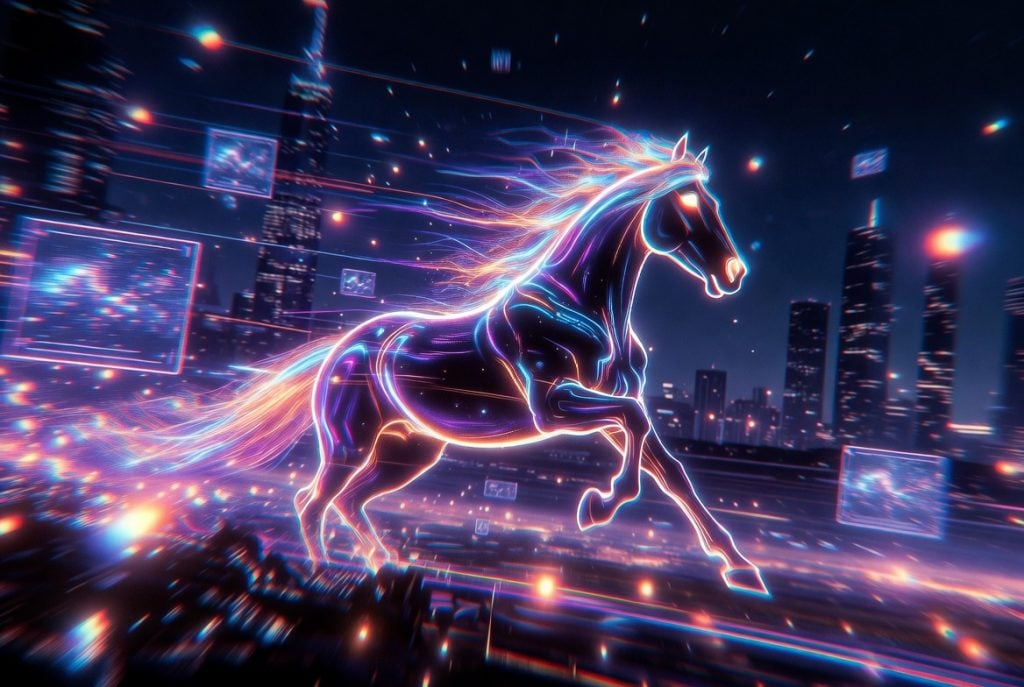
There’s a particular kind of frustration that independent musicians know well. You’ve spent months — sometimes years — working on a track. The production is exactly what you wanted. The mix sounds right. You’re genuinely proud of the thing. And then you have to figure out how to put it into the world, and the visual side of that suddenly feels like a completely separate job that you didn’t sign up for and don’t have the budget to hire out.
Music has always had a visual dimension, but the internet made it inescapable. YouTube became the dominant music discovery platform for an entire generation, and streaming services followed by making video an increasingly prominent part of how music gets surfaced and consumed. Today, even a track released primarily on Spotify benefits from having something visual attached to it — a lyric video, an animated visual, something that gives fans something to share and gives algorithms something to serve. The expectation that music comes with visuals isn’t going away.
For artists on major labels, this is a managed problem. There are directors, production budgets, and creative teams whose job it is to handle this. For independent musicians, it’s just another thing on the list of things you have to figure out yourself, usually with very little money and not enough time.
What Music Visualizers Are Actually For
It’s worth separating the music video from the music visualizer, because they serve somewhat different functions even if they share a format. A proper music video is a narrative or artistic film that accompanies a track — it has a concept, a visual story, a director’s vision. That’s genuinely expensive to do well, and most independent artists know that going in.
A music visualizer occupies different territory. Its job is to give the listener something to look at while the music plays — something that matches the feel of the track, something visually interesting enough to hold attention without competing with the audio for that attention. It’s ambient in the best sense of the word. When it works, it deepens the listening experience rather than distracting from it.
That’s a more achievable target than a full music video, and it’s where AI video generation tools have become genuinely useful for independent artists.
Where Happy Horse Enters the Picture
Happy Horse, the AI video generation model, is capable of producing the kind of atmospheric, motion-rich visual content that works well as a music visualizer foundation. The model’s strength in generating fluid, visually coherent motion — one of the harder problems for earlier AI video tools — translates well to this use case, where the quality of movement often matters more than narrative precision.
An artist releasing a late-night electronic track can use it to generate abstract visuals with the right color palette and the right pace of movement. Someone putting out an acoustic folk record can generate something warmer, more organic — light through leaves, the texture of wood grain in slow motion, landscapes that match the mood of the music. A producer working in a more cinematic space can create sweeping, atmospheric footage that gives a track the visual scale its sound implies.
None of these require a crew, a location, a camera, or a director. They require knowing what feeling you’re trying to create and being willing to iterate on the prompts until the output matches it.
The Practical Workflow
In practice, using an AI video generation tool for music visualizer content involves a back-and-forth process that’s more like art direction than traditional filmmaking. You start with a sense of the visual language you want — the color temperature, the pace, the types of imagery — and translate that into prompts that guide the model toward it.
The iteration matters. First outputs are rarely exactly right, but they tell you something about what adjustments to make. A prompt that produces footage that’s too frenetic for the tempo of a track can be refined toward something slower and more deliberate. A color palette that reads as too cool can be shifted toward something warmer. Over the course of a few rounds of refinement, the visual material starts to cohere around the feel of the music.
From there, the generated footage typically goes into a video editor — even a basic one — where it gets trimmed, layered, and synchronized to the track. Most musicians already have some familiarity with editing software from working on their own recordings, and the skills transfer reasonably well. The gap between having raw AI-generated footage and having a finished visualizer is usually a few hours of work rather than days.
More Than Just YouTube
The utility of this kind of visual content extends beyond the traditional YouTube upload. Short-form video platforms — Instagram Reels, TikTok — have become primary discovery surfaces for music, and they reward artists who can post consistently. A musician who can generate visualizer clips for individual sections of a track, or for multiple tracks across an album cycle, can maintain a posting cadence that keeps them present in their audience’s feed without having to produce entirely new creative assets for every post.
There’s also the Spotify canvas feature, which lets artists attach short looping videos to their tracks. Streams with canvases tend to see higher listener engagement, and it’s a feature that independent artists have historically underutilized simply because producing the video content required resources they didn’t have. AI generation makes canvas content achievable for essentially any artist willing to put in the time to create it.
Album artwork has visual cousins in this space too. The same aesthetic sensibility that informs cover art can be translated into animated visual loops for live streaming backgrounds, for video content that accompanies album announcements, for the kind of ambient visual world that artists with strong aesthetic identities build around their work.
What This Doesn’t Change
Being clear about limitations matters. AI-generated visualizer content is not going to replace the impact of a well-conceived, properly produced music video when that’s what a track calls for. The visual storytelling that a strong director brings to a music video — the narrative coherence, the performances, the choreography of visual and musical elements — is a different thing entirely from ambient generative footage, and it still requires real production.
There’s also the question of authenticity. Some artists’ brands are built around a rawness and directness that atmospheric AI visuals would actually undermine. If your audience connects with you partly because of an unpolished, immediate quality in what you put out, adding sleek AI-generated visual content might be a mismatch with your identity rather than an enhancement of it. These tools serve some artists’ needs better than others, and figuring out whether they fit your situation requires some honest self-assessment.
But for independent artists who are currently releasing music with no visual accompaniment because they can’t afford to produce it, or who are making do with static images because the alternative seemed out of reach — which is a lot of artists — the barrier has come down considerably. The ability to give your music a visual life that matches the care you put into the audio is no longer exclusively the domain of artists with label budgets behind them.
That’s a meaningful change for anyone who’s been on the other side of that gap.

Sandra Larson is a writer with the personal blog at ElizabethanAuthor and an academic coach for students. Her main sphere of professional interest is the connection between AI and modern study techniques. Sandra believes that digital tools are a way to a better future in the education system.
1 Comment
Great breakdown of how visualizers can help independent musicians present their tracks more professionally without the cost of a full crew. The focus on mood, motion, and practical workflow is especially useful for artists who need something effective but manageable. For creators who also want to build better repetition and memory around language learning, typingmandarin.com offers a simple way to strengthen Chinese listening and writing through repeated dictation practice. It’s a focused tool that makes steady progress feel more achievable, much like the article’s approach to making visual production more accessible.