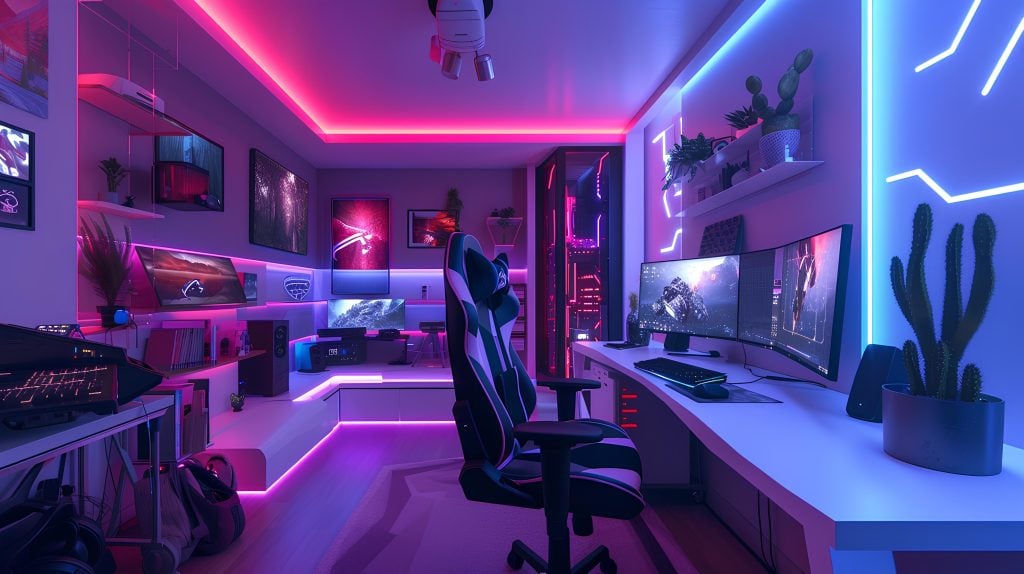
A game room makeover can sound like a cosmetic project at first. New paint, better lighting, a larger screen, cleaner storage, and more comfortable seating. Yet the most successful game rooms are not built around objects alone. They are built around how people gather, move, talk, play, snack, compete, and relax.
That is what made this makeover different.
Before the redesign, the room was used, but not loved. Friends came over occasionally, played a few rounds, watched part of a game, and drifted out before the night had any real rhythm. The space had the right ingredients, but they were scattered. The seating did not encourage conversation. The screen dominated one wall, leaving the rest of the room feeling unfinished. Snacks ended up wherever there was room. Controllers, cards, chargers, and cables had no clear place to live.
After the makeover, weekends changed. Friends stopped treating the room like a side area and started treating it like the destination. People arrived earlier. They stayed longer. They brought food, planned games, invited others, and started using the room as the natural center of the house.
The difference came from design decisions that were practical, social, and surprisingly simple. One of the most important changes was the addition of swivel bar stools, which turned a forgotten counter area into one of the room’s most active spots.
The Room Was Redesigned Around How People Actually Gather
The original mistake was common: the room had been arranged around equipment instead of people. A large screen sat at the center, but seating was placed wherever it fit. A small table was pushed into a corner. The counter area had no clear purpose. Storage was treated as an afterthought. The room looked as if it had been assembled one purchase at a time, which was exactly what had happened.
The makeover began with a different question: what should happen here on a typical Saturday night?
That changed the entire plan. Instead of asking where the screen should go first, the layout started with movement, sightlines, comfort, and group interaction. The room needed to support video games, board games, sports viewing, casual eating, music, and conversation without feeling crowded.
The new layout created three main zones:
- A main viewing and gaming zone with comfortable lounge seating
- A counter and snack zone with swivel bar stools for casual seating
- A table zone for cards, board games, food, and quick conversations
Nothing felt overly formal, but everything had a purpose. That balance made the room easier to use without making it feel stiff or overdesigned.
Swivel Bar Stools Changed the Flow of the Room
The biggest surprise with the remodel was how much the swivel barstools changed the way people used the space.
Before the renovation, the counter was largely a place to dump bags, cups, snacks, and random trash. It was promising, but hardly an invitation. The counter came alive with the addition of swivel barstools. Friends could hang out there while someone made drinks, opened munchies, checked the score, or talked between games. No more awkward standing around the wall. People had a place to land comfortably.”
The swivel function was more important than I thought. Fixed stools work effectively in some settings. A game room requires movement. They look from the TV to the table and back again, to a conversation behind them. They flit between watching, chatting, eating, and reacting. With swivel barstools, you have that movement without people having to lug chairs around.
This tiny element made the space seem more social. No one at the desk was taken from the group. They could see the action, share a joke, view a replay, or talk to someone on the sofa without getting up. The stools were a bridge between the areas.
That flexibility is great for weekend get-togethers. But not everyone wants to fall flat onto the sofa. Some people like to hang around the grub. Some desire a place with a view. Some like a place where they can drop in without committing to a single activity. Swivel bar stools did just that, naturally.
Seating Became the Social Engine
The redesign was not dependent on one sort of seating. And part of what made it successful was that.
The area needed places to sit for extended periods, places to sit upright for games and meals, and informal seating for guests who wished to move between activities. The main seating area was anchored by a deep sectional, and the swivel bar stools added a second layer of practicality to the counter space. The table chairs had cards, board games, and fast food.
People sat on mismatched chairs, a beat-up sofa, sometimes on the floor, pre-makeover. Nobody complained out loud, but the chamber was quietly pushing people away. Somebody would get up after an hour. Someone else would go to the kitchen. He would lean on the wall, a third man. The group broke up slowly.
The new seating arrangement broke that pattern. The sectional was great for movie evenings and game marathons. The table seating was for active gaming. The swivel bar stools made it easy to sit and still feel a part of everything else going on in the room.
This is important since weekend get-togethers are seldom about just one thing. But even when everyone comes over to watch a game or do something specific, the actual value is in the pauses: the joking between rounds, the food on the counter, the side discussions, and the relaxed sensation that nobody has to rush.
Comfort altered the length of the visit. It transformed the energy of the visit. They made the space a location where people liked to hang out.
The Counter Became More Than a Snack Station
A counter can easily turn into wasted space in a game area. Chips, drinks, remotes, and unopened boxes may be present but seldom become part of the gathering without chairs.
The swivel barstools give the counter a meaningful purpose.
Now, it’s a snack bar, a casual dining area, a place to discuss the scoreboard, and a space for side conversations. People sit there between turns on gaming nights. The stools are the best seats for anyone who wants food within reach and a good view of the screen during sports. The counter is the first spot people go to when they come in for a casual hangout.
That also simplified the hosting. The host can set up a snack zone instead of hauling food back and forth from the kitchen. The guests will naturally gather around it without obscuring the main seating area. The stools keep people comfortable while the counter keeps the mess contained.
And height is important too. Bar height seating has a different energy than low lounge seating. It feels lively, awake, and social. In a game room, such contrast is helpful. The sofa beckons you to sit down. The rotating bar stools beckon customers to stay involved.
Lighting Made the Room Feel Like an Event
The old lighting had one setting: bright overhead light. It made the room useful, but not inviting. During movie nights, it felt too exposed. During board games, turning it off made the room too dark. There was no middle ground.
The makeover added layered lighting. Ceiling lights provided general brightness when needed. Wall lights softened the edges of the room. LED lighting behind the media wall created a low-glare glow for screen time. A focused light near the counter made the swivel bar stool area feel intentional rather than secondary.
The room suddenly had moods.
For weekend gatherings, that flexibility matters. The room can feel active during competitive games, calm during a movie, and warm during late-night conversation. The lighting also helped define the zones. The counter area felt like its own small hangout spot, not just a leftover surface near the wall.
Good lighting made the stools more useful, too. Nobody wants to sit at a dark counter while the rest of the room feels alive. With the right glow, the bar area became one of the best seats in the room.
Storage Removed the Friction That Used to Kill the Mood
A room can appear comfortable yet still fail because minor details are bothersome. The game room had too much friction before the remodeling. Controllers were absent. Batteries were in another drawer. Board games were arranged irregularly. Extra blankets have nowhere to go. Cups accumulated on the floor. Chargers disappeared.
The redesign provided a home for every recurring issue.
A modest media cabinet held consoles, controllers, headphones, remotes, and charging connections. Closed cabinets concealed visual clutter, whereas open shelves showcased a few games and personal objects. A storage ottoman housed blankets and additional pillows. The counter cabinets held snacks, napkins, coasters, and supplies close to the swivel bar chairs.
The room got easy to start and tidy.
That one modification had a greater social impact than anticipated. When a gathering involves less setup, more people use the space. When cleaning is straightforward, the host is more likely to say yes to the following weekend. Design isn’t only about appearance. It is about removing the minor impediments that cause people to avoid using a space.
The Table Turned Watching Into Participation
The table zone became another success of the makeover.
At first, it was added for board games and snacks. Over time, it became the place where the room shifted from watching to doing. Friends used it for cards, trivia, fantasy sports drafts, quick meals, puzzle games, and casual conversations away from the screen.
A good game room needs at least one surface that invites participation. Without it, everyone becomes an audience. With it, people have a reason to lean in, move around, and interact.
The swivel barstools supported this rhythm by giving extra guests a place to sit without crowding the table. Someone could watch a card game from the counter, join a conversation, or rotate into the next round. The room no longer had one fixed center. It had several points of energy.
That flexibility changed the weekend pattern. People no longer came over only when there was something specific to watch. They came because the room could become whatever the group wanted.
Technology Was Integrated, Not Allowed to Take Over
The makeover included a better screen, cleaner audio, and improved cable management, but technology was handled with restraint. The goal was not to create a showroom. It was to create a room where technology supported the experience without becoming the only reason to be there.
The media wall was simplified. Cables disappeared behind panels and furniture. Speakers were positioned for balanced sound instead of maximum volume. A charging drawer helped keep devices powered without leaving cords across the floor or counter.
This made the technology feel more intentional.
Many game rooms become visually noisy because every device is visible. Consoles, routers, controllers, wires, speakers, and accessories compete for attention. The redesigned room kept the tools accessible but controlled. Friends could easily play, watch, stream music, or charge their phones, but the space still felt like a room rather than a tech closet.
A Better Weekend Starts With Better Places to Sit
The finished room did more than just enhance the home. It altered the social patterns surrounding it.
Friends no longer need a detailed arrangement. The game room became the plan. A few texts were sufficient. Somebody brought food. Someone introduced a new game. Someone has claimed the sectional. Someone else snatched a swivel barstool from the counter. The room provided everyone with a natural setting.
That is the true benefit of a successful game room makeover. It’s not just about more storage, more technology, or prettier finishing. These things are important, but the deeper return is behavioral. A well-designed room influences how frequently people use it, how long they stay, and how easily they connect within it.
The makeover worked because it solved both practical and emotional problems simultaneously. It increased comfort, eliminated clutter, supported numerous activities, softened the lighting, arranged the electronics, and gave the counter area a true purpose with swivel barstools.
A weekend room doesn’t have to be enormous. It doesn’t require the most costly screen, the loudest sound system, or the flashiest decor. It must comprehend people.
When a room gives people a reason to show up, relax, focus on the conversation, laugh longer, and return the next weekend, the makeover has done more than just improve the space. It has altered the rhythm of the household.