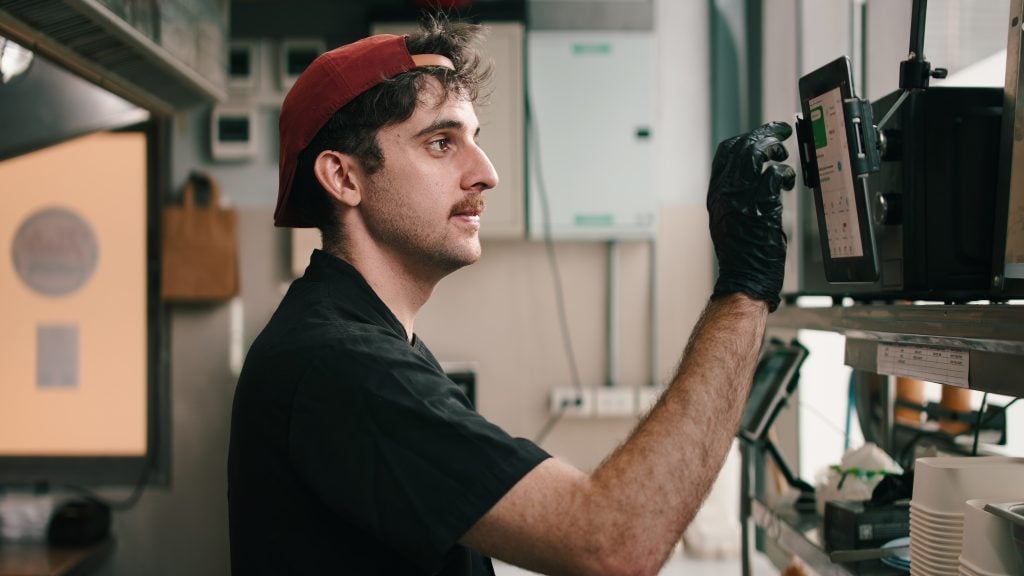
Third-party apps are eating your margin. Modern restaurant software systems now let you capture orders directly — routing pickup, curbside, and delivery into your own POS workflow without handing a cut to a marketplace. The question isn’t whether to set up direct online ordering in 2026. It’s why you haven’t done it yet. Every order that flows through DoorDash or Uber Eats instead of your own channel is a fee you chose to pay.
The Real Cost of Marketplace Dependency
Here’s the operational reality: third-party platforms charge commissions that can range from roughly 15% to 30% per order, depending on the contract and market. That’s not a rounding error — that’s the difference between breaking even on a slow Tuesday and actually profiting from it. Industry coverage from HospitalityTech and Restaurant Business Online in 2025–2026 consistently ties direct online ordering to meaningfully lower per-order costs, specifically because orders stay on the restaurant’s own channel instead of a marketplace.
The math isn’t complicated. The willingness to act on it — that’s what separates operators who protect margin from those who fund someone else’s logistics platform.
What Direct Online Ordering Actually Means Operationally
Direct ordering isn’t just a “nice-to-have branded page.” It’s a specific order flow: customer places an order on your site or app, it drops directly into your POS queue, routes to the kitchen printer or KDS, and triggers the right fulfillment mode — pickup, curbside, or delivery. Three modes. One system. No intermediary taking a percentage.
Platforms like SkyTab (Shift4) document exactly this: branded ordering channel tied to the POS, with direct order capture instead of third-party marketplace routing. Clover’s restaurant ordering flow connects customer orders straight to POS and handles menu publishing and kitchen routing. The tech is mature. The integrations exist. What breaks things is usually configuration, not capability.
During a Friday dinner rush, the last thing you want is an order sitting in a marketplace queue while your KDS shows nothing. With a direct integration, the ticket fires to the kitchen the moment the customer pays. That’s the operational difference.
Where These Systems Break — and How to Catch It Early
I’ve seen operators set up online ordering, declare victory, and then wonder why customers are calling about items that show as available online but are 86’d in the kitchen. That’s a menu sync failure. It shows up as unavailable items still visible on the ordering page — and it costs you the order, the customer relationship, and sometimes a bad review.
The three operational problem areas that vendor docs flag most consistently:
-
Menu sync errors: Items get updated in the POS but the online menu lags. Check your sync schedule and confirm changes propagate within minutes, not hours.
-
Printer/KDS misconfiguration: Orders route to the POS but no kitchen ticket fires. This shows up as missing tickets — orders fall into a void. Verify your routing rules every time you change hardware or update firmware.
-
Reconciliation mismatches: Payment captured online doesn’t match what the POS records. Usually a timing or integration handshake issue. Pull your end-of-day reconciliation report and flag any gaps before close.
If your pickup-slot scheduling starts showing conflicts — customers booking the same window — that’s a scheduling/availability settings problem, not a customer behavior problem. Fix the logic in the system, not the message on your site.
POS Integration: The Layer That Makes or Breaks It
The kitchen routing layer is where most operational failures actually live. Oracle MICROS hospitality docs describe online ordering integration as routing order tickets to kitchen printers and KDS while syncing item availability. That’s the right architecture. But it only works cleanly when your POS, your online ordering module, and your kitchen hardware are talking to each other without configuration gaps.
Check these before you go live — and recheck after any system update:
-
Confirm online orders appear in the POS order queue within seconds of placement.
-
Verify kitchen tickets fire to the correct printer or KDS station for each order type (pickup vs. delivery).
-
Test menu sync: make a price change in POS, check that it reflects online within your expected window.
-
Run a test order through each fulfillment mode — pickup, curbside, delivery — and trace the full ticket path.
-
Pull a reconciliation report after your test orders and confirm payment capture matches POS records.
At 9pm close, if your manager finds three online orders that never generated kitchen tickets, you have a routing misconfiguration — not a busy night. Those are the edge cases that stack up into real revenue loss over a month.
Owning Your Channel: Data, Loyalty, and Repeat Business
Here’s what the marketplace model takes from you beyond the commission: customer data. When a guest orders through DoorDash, DoorDash owns that relationship. You get the revenue minus the fee. You don’t get the email address, the order history, or the ability to retarget that customer with a Tuesday special.
With a direct ordering channel, every order builds your customer database. You know who orders what, how often, and at what ticket size. That’s the foundation for loyalty programs, targeted promotions, and re-engagement campaigns. Shift4/SkyTab’s branded ordering approach specifically positions the owned channel as the asset — your menu, your brand, your data.
This matters more as digital ordering volume grows. Building on someone else’s platform is renting. Building your own channel is owning.
Choosing the Right System for Your Operation
The honest answer: the “best” online ordering system is the one that integrates cleanly with your existing POS without creating a parallel operation your staff has to manually babysit. A system that requires a tablet on the counter just to acknowledge third-party orders is not an integration — it’s a workaround.
If you’re running Oracle MICROS hardware, the micros pos system for restaurants has established integration pathways for online ordering that route directly into kitchen workflows. The key is verifying that your specific version and configuration support the order routing you need — don’t assume, test it.
What to evaluate before committing to any platform:
-
Does it connect natively to your POS, or does it require a middleware layer that can introduce sync lag?
-
Which fulfillment modes does it support — pickup, curbside, delivery — and can you configure them independently?
-
How does it handle menu updates: real-time sync or scheduled batch?
-
What does reconciliation look like — can you pull a clean daily report that matches your POS closeout?
-
What happens when the integration goes offline? Does it fail open (orders still accepted) or fail closed (ordering page goes down)?
That last one — the offline fallback behavior — is an edge case most operators don’t think about until a network hiccup during a busy Saturday lunch service creates a stack of unrouted orders. Know your system’s failure mode before it fails.
The Operational Shift That Pays Off
Moving orders from third-party marketplaces to your own channel isn’t a marketing decision. It’s an operations and margin decision. Every order that routes through your POS instead of a marketplace keeps the full transaction value inside your business. Over the course of a month, that compounds.
The technology to do this cleanly exists in 2026. Platforms document the integrations. Vendors support the configuration. The gap is usually execution: setting up the system correctly, testing every order path, and building the habit of checking reconciliation daily instead of monthly.
Start with one fulfillment mode. Get pickup working cleanly — orders flowing into POS, tickets firing to the kitchen, payments reconciling. Then add curbside. Then delivery. Don’t try to launch all three simultaneously and troubleshoot three problem areas at once.
The operators who protect margin in 2026 aren’t doing anything exotic. They’re running their own channel, owning their customer data, and making sure every online order lands in the kitchen within seconds of placement. That’s it. The rest is just configuration.

Andrea Bell is a blogger by choice. She loves to discover the world around her. She likes to share her discoveries, experiences and express herself through her blogs. You can find her on Twitter:@IM_AndreaBell

![‘Diamond’ Review – A Cinematic Love Letter To Authentic Detective Storytelling [Cannes 2026]](https://cdn.geekvibesnation.com/wp-media-folder-geek-vibes-nation/wp-content/uploads/2026/05/Diamond-300x169.jpg "‘Diamond’ Review – A Cinematic Love Letter To Authentic Detective Storytelling [Cannes 2026]")