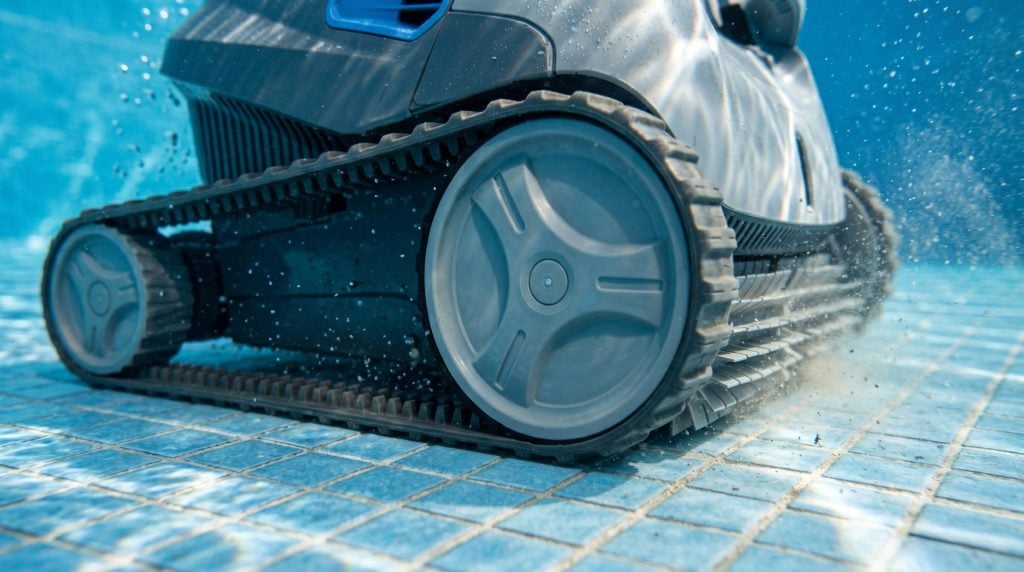
Pool care is starting to look more like the rest of the smart home. Many homeowners already use robot vacuums, smart lights, app-controlled thermostats, video doorbells, and lawn robots to reduce repeated chores. Pool cleaning is moving in the same direction.
A cordless pool cleaner robot appeals because it removes some of the friction from pool care. There is no long cable stretched across the deck, no hose setup, and less clutter around the water when the pool is not being cleaned. After storms, parties, windy afternoons, or heavy summer use, a robot can help reset the pool without turning cleaning into a full manual project.
The right choice still depends on the pool. Size, shape, debris type, cleaning zones, filtration, battery life, retrieval, and long-term maintenance all matter more than a flashy feature list.
Start With Pool Size, Shape, and Cleaning Zones
Match Runtime and Coverage to the Pool
A cordless cleaner needs enough runtime and coverage for the pool it is expected to clean. A small rectangular pool is very different from a large, deep, freeform pool with steps, slopes, ledges, and heavy debris after every windy day.
Before comparing models, check the recommended pool area, cycle length, and whether one charge can realistically clean the pool. A robot that works well in a simple pool may struggle in a larger layout if the battery, navigation, or debris capacity is not a good match.
Decide Which Areas Need Cleaning
Pool owners should also think about zones. Some pools mostly need floor cleaning. Others need help with walls, waterline grime, steps, ledges, and floating debris.
Do not assume every cordless cleaner handles every zone. Wall climbing, waterline cleaning, and surface-related cleaning vary by model. A good buying question is simple: does the pool mainly collect dirt on the floor, or does it also need regular help with leaves, waterline residue, and wall buildup?
Navigation and Sensors Matter More Than Buzzwords
Smart navigation is useful when it improves real cleaning. The point is not to have technology for its own sake. The point is fewer missed areas, fewer repeated passes, and a more predictable cleaning cycle.
Sensors can help a robot detect walls, slopes, corners, obstacles, steps, and changes in direction. More advanced navigation can also help a cleaner use battery power more efficiently because it spends less time wandering over the same area.
For homeowners comparing a cordless pool cleaner robot, the best approach is to connect each feature to a real pool problem. If the pool has a simple shape, basic navigation may be enough. If the pool is larger, busier, or more complex, smarter path planning and broader cleaning support become more important.
Battery Life, Charging, and Handling Decide Daily Convenience
Cordless Convenience Has Trade Offs
Cordless operation is convenient because it removes cable handling and makes the pool area cleaner while the robot is not in use. It can also be easier to remove the cleaner before swimming, which matters for families and frequent pool users.
The trade-off is battery management. Charging time, battery aging, cleaning-cycle limits, and remembering to recharge all become part of ownership. A cordless robot is most helpful when its runtime fits the pool and its charging routine fits the owner’s habits.
Weight and Retrieval Are Easy to Overlook
A cleaner may look great online, but daily use depends on small details. Weight, water drainage, handle placement, smart parking, and basket access all affect whether the owner actually uses it often.
If a robot is awkward to lift or annoying to rinse, it may sit in storage. Reviews that mention retrieval, cleaning the basket, and storing the unit can be just as useful as spec sheets.
Plan Around Pool Season and Real Use
Timing matters too. A homeowner shopping in early spring may care about cleanup after winter. A buyer in midsummer may be trying to keep up with guests, pollen, storms, and heat. Understanding the best time to open your pool can also help owners think about when a robotic cleaner will be most useful.
For example, a pool that opens early may need repeated cleaning as spring debris falls in. A pool used heavily through July and August may need more frequent cycles after parties, storms, and long sunny days. The best cleaner is the one that fits the season, not only the pool dimensions.
Filtration and Debris Handling Shape the Cleaning Results
A smart robot still needs strong physical cleaning performance. Large debris needs enough basket capacity. Fine dust, pollen, sand, and silt need better filtration. Waterline grime needs contact and coverage, not just suction.
Filter access also matters. If the filter is easy to remove, rinse, and reinstall, owners are more likely to clean it after each cycle. That keeps the robot working better and makes the routine easier to repeat.
Replacement filters, brushes, tracks, and charging accessories should be easy to find. A pool robot is not only a purchase. It is a piece of equipment that needs upkeep through the season.
Compare Features Before Comparing Model Names
Shoppers often compare model names first, but that can lead to the wrong decision. One pool may need stronger wall and waterline cleaning. Another may need better surface debris handling. Another may simply need a robot that is easy to charge, retrieve, and rinse.
Some buyers may compare compact or different-tier options such as Beatbot sora 30, but this guide focuses on AquaSense 2 Pro because the goal is to evaluate a premium cordless option for owners who want broader automation. The better starting point is not the product name. It is the pool’s actual cleaning pattern, debris load, and owner routine.
| Buying Factor | Why It Matters | What to Check |
| Pool size | Runtime and coverage must match the pool | Recommended pool area and cycle length |
| Cleaning zones | Not all robots clean floor, walls, and waterline | Zone support and cleaning modes |
| Navigation | Better routes can reduce missed areas | Sensors, path logic, and obstacle handling |
| Battery | Cordless convenience depends on charge habits | Runtime, charge time, and battery care |
| Debris type | Leaves and fine dust need different handling | Basket size and filter design |
| Retrieval | Hard-to-lift robots get used less | Weight, handle, drainage, and smart parking |
Beatbot Robotic Pool Cleaner as a Smart Cordless Option for Pool Owners
Beatbot AquaSense 2 Pro fits this smart pool tech guide because it is designed for owners who want a premium cordless cleaner with stronger automation than a basic floor-only robot. It can be presented as a cordless pool cleaner robot for pools that need regular help with floor debris, wall buildup, waterline grime, and surface-related cleaning needs. For a tech-focused audience, the value is not just that it is “smart.” The value is how its cordless operation, cleaning-zone coverage, navigation support, and repeatable cleaning routine reduce manual work during the swimming season. A practical scenario is easy to imagine: after a windy day or weekend swim, AquaSense 2 Pro runs while the owner checks the skimmer, tests the water, rinses the basket, and gets the pool ready for the next use. It can make physical cleaning more consistent, but it does not replace water testing, filtration, chemical balance, or safe pool habits.
Check App Features, Support, and Long Term Ownership
App features are useful when they solve real problems. Mode selection, cleaning status, alerts, firmware updates, and simple controls can make ownership smoother. But an app cannot make up for poor filtration, weak debris handling, or awkward retrieval.
Long-term support should also be part of the buying decision. Check warranty terms, replacement filters, brushes, tracks, charging accessories, and customer support. A good smart pool tool should reduce friction over time, not become another device that constantly needs troubleshooting.
Choosing Smart Pool Tech That Fits Your Routine
Choosing a cordless pool cleaner robot means matching technology to the pool, not simply buying the most feature-heavy model. The main decision points are pool size, cleaning zones, navigation, battery life, retrieval, filtration, app usefulness, and long-term support.
AquaSense 2 Pro makes the most sense for pool owners who want premium cordless cleaning support and a more repeatable maintenance routine. The right smart pool cleaner is the one that makes cleaning easier to keep up with while still leaving water testing, filtration, and basic maintenance in the owner’s weekly routine.

Sandra Larson is a writer with the personal blog at ElizabethanAuthor and an academic coach for students. Her main sphere of professional interest is the connection between AI and modern study techniques. Sandra believes that digital tools are a way to a better future in the education system.