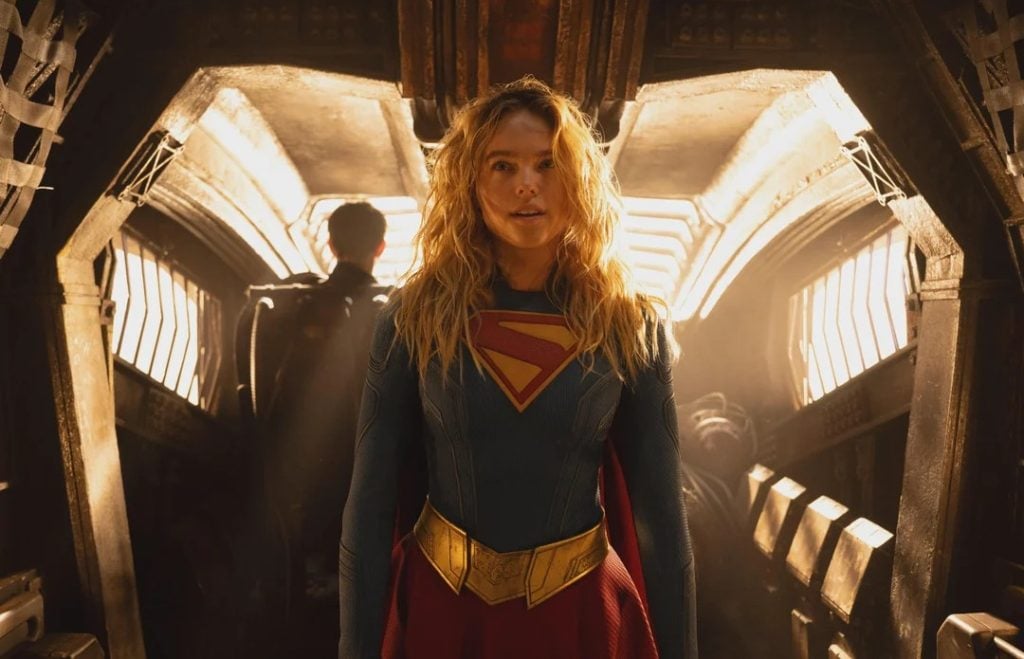
James Gunn’s DCU returns with the revival of a character that hasn’t led a live-action feature since 1984. For decades, Supergirl has lived in Superman’s shadow on screen and in other media. She’s usually been introduced as “Superman’s cousin” first and a character second, rarely given the space to define herself outside of that relationship. That’s what makes this new take so interesting. Rather than treating Kara Zor-El as a brighter, younger version of Clark Kent, writer Ana Nogueira and director Craig Gillespie lean into what separates them as Kara grew up watching Krypton die. She remembers her parents and her home; unlike Clark, she didn’t spend her childhood on a peaceful Kansas farm surrounded by people who loved her. She’s carrying trauma that Superman never had to experience, and the film wisely builds its story around that difference. Whether all of it works is a little more complicated.
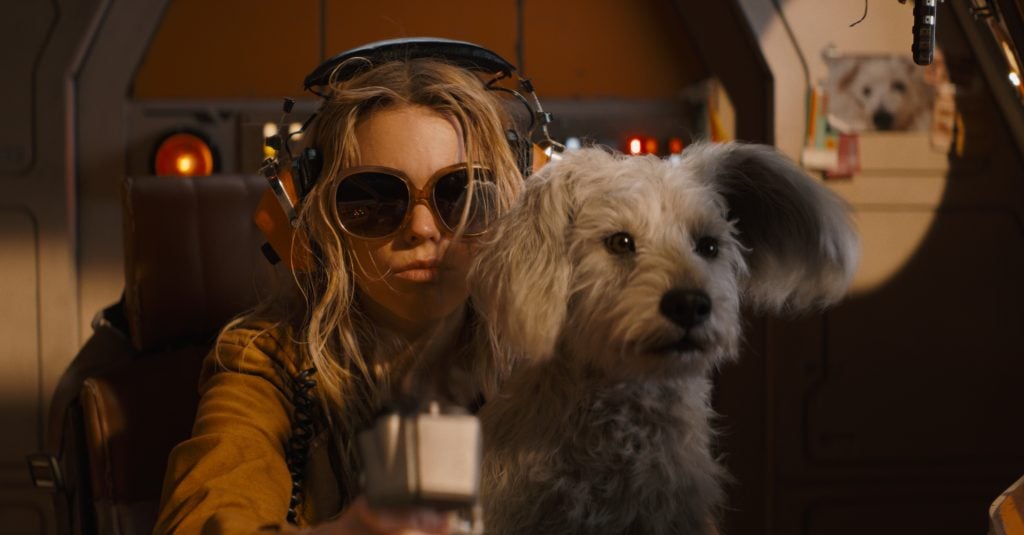
The film opens with Kara (Milly Alcock) celebrating her twenty-third birthday exactly how you’d expect someone with Kryptonian powers might do it: by finding a planet orbiting a red sun where she can actually get drunk. She is very reckless and sarcastic, and well, she is clearly lost and doesn’t want to be found. Elsewhere, a young girl named Ruthye Marye Knoll (Eve Ridley) watches the space pirate Krem (Matthias Schoenaerts) murder her family before her eyes. Their paths eventually cross after Kara intervenes during a confrontation at a bar, and when Krem poisons Krypto, the mission becomes personal for both of them.
From there, Supergirl becomes more of a revenge tale transplanted into deep space than your traditional cape-wearing superhero movie. Kara and Ruthye chase Krem across the galaxy while both trying to make sense of losses that continue to define them. Revenge sits at the center of the story, but underneath that is something quieter about identity and deciding what kind of person you want to become after the worst thing imaginable has already happened.
Milly Alcock carries the film with a lot of confidence. She never tries to imitate previous versions of the character, nor does she play Kara like a female Superman. There’s anger underneath almost everything she does. Even during the lighter moments, you get the sense she’s someone who’s learned to mask pain with sarcasm and self-destructive behavior. Alcock makes that internal conflict very believable, and she has enough charisma to keep Kara engaging even when the screenplay occasionally loses focus. She feels almost perfect for the role, and it’s rather difficult to imagine anyone else in this role.
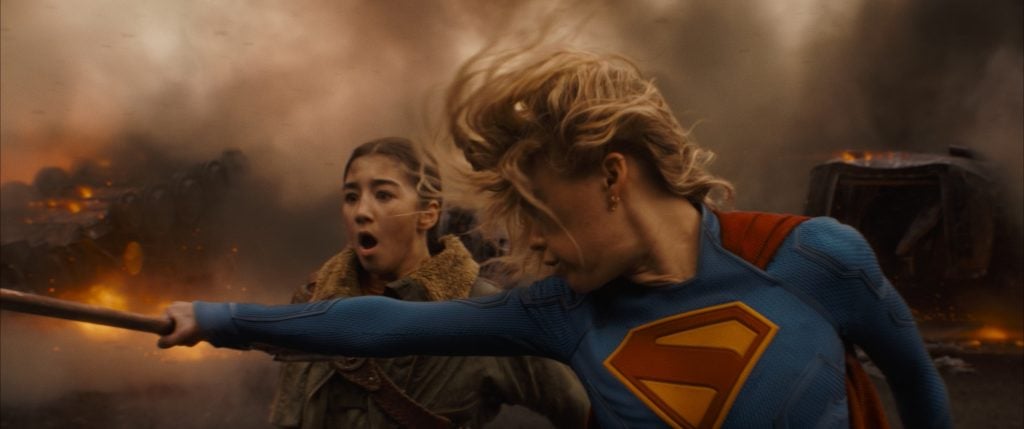
The relationship between Kara and Ruthye is the film’s strongest emotional thread. Both characters are motivated by grief and the need to quench their anger with violence and revenge, but they process it differently. Ruthye wants revenge because her loss is fresh, and Kara understands exactly where that road leads because she’s been living with her own loss for years. The film doesn’t always dig as deeply into that dynamic as it could have, but when it does, it’s easily at its most compelling.
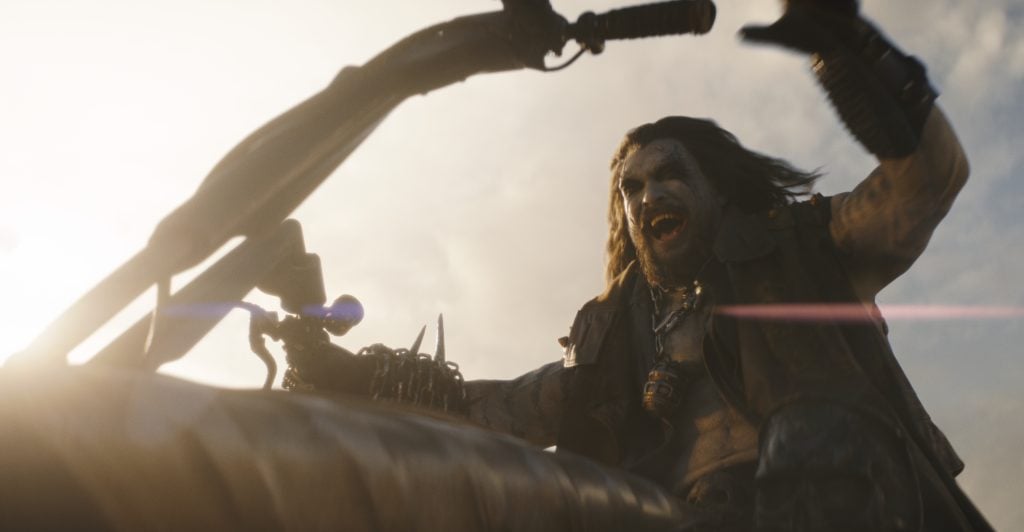
Jason Momoa, meanwhile, arrives as Lobo and immediately changes the movie’s energy. He’s having an absolute blast playing the character, and it’s contagious. For me, it was hard not to have a big dumb smile while watching him. Lobo is loud and ridiculous, and Momoa effortlessly brings him to life. Every time he shows up, the movie gets a welcome jolt of energy.
I just wish that same energy carried over into the action. On paper, you’d think the action has everything going for it as there are massive creatures, lots of shootouts, hand-to-hand fights, and enough destruction to satisfy anyone looking for a blockbuster spectacle. Technically, it’s all put together well enough as the visual effects blend nicely with practical creature work and makeup, giving many of the aliens a tangible quality that a lot of modern superhero films are missing. Yet I never found myself particularly excited by any of it.
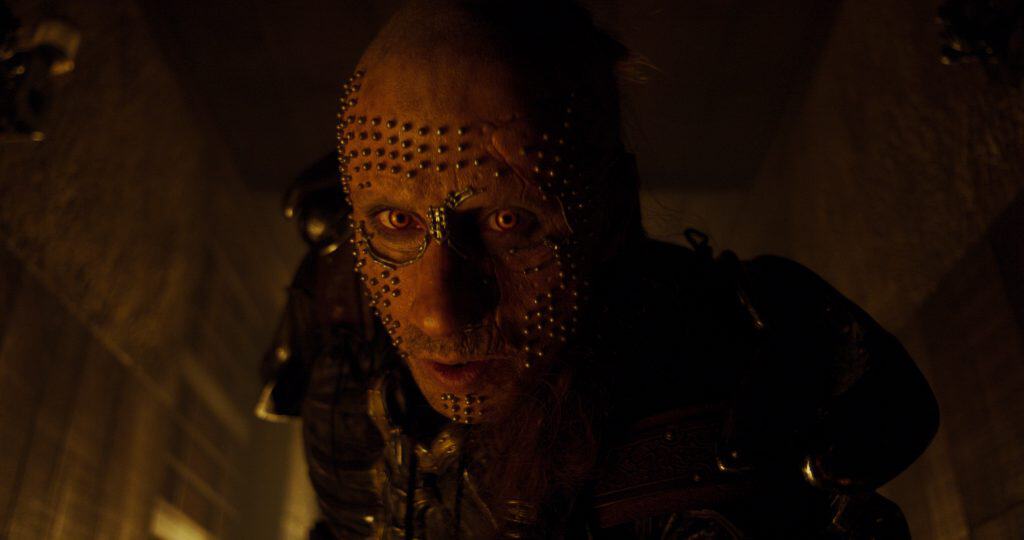
Part of that comes down to the pacing. The action frequently stops just as it’s beginning to build momentum, only for the film to slow itself back down again. Instead of escalating naturally, several set pieces feel isolated from one another, making the overall experience feel strangely uneven. I admired the choreography more than I actually enjoyed watching it.
I had similar feelings about Craig Gillespie’s direction. There are individual choices I liked. The camera is almost constantly in motion, often moving as though it’s struggling to keep pace with Kara herself. It gives several scenes a restless energy that suits the character well. But visually, the film never develops much of an identity beyond that. Considering James Gunn’s Superman embraced bright colors and a heightened comic book aesthetic, I expected Supergirl to feel like it occupied that same world while still carving out its own visual personality, but alas, it does not.
Instead, the cinematography often looks surprisingly flat. There’s very little sense of scale or visual wonder despite the story taking place across multiple planets. For a movie this cosmic, I wanted imagery that felt more imaginative than what ultimately ends up on screen.
The humor is similarly inconsistent. Some jokes land, others fall completely flat. That’s hardly unusual for a comic book movie, but the batting average here feels closer to fifty-fifty than one can hope. Fortunately, the performances are strong enough that even weaker jokes don’t derail entire scenes.
Where the film ultimately succeeds is in its understanding of Kara herself. This isn’t a story about someone discovering she’s a hero. Kara already knows she’s capable of extraordinary things, but here the real question is whether she’s willing to stop running from herself. Her tendency to drink, party, and avoid responsibility isn’t presented as rebellious behavior for its own sake, but really it’s avoidance of herself, or well, really just her having to face any kind of reality or responsibility. Helping Ruthye forces her to confront emotions she’s spent years trying not to deal with, and while the screenplay doesn’t always explore those ideas with the depth they desperately deserve, they give the movie a stronger emotional foundation.
I found myself with mixed feelings by the end. There are stretches where Supergirl threatens to become something genuinely great, largely thanks to Milly Alcock’s performance and the emotional core shared between Kara and Ruthye. Then the pacing stumbles, the action loses its urgency, or the film settles for ideas that feel more interesting than their execution. Still, it won me over, if only by a narrow margin. It’s an imperfect start for this version of Kara Zor-El, but it’s also one that leaves me wanting to spend more time with her. And honestly, that’s probably the best compliment I can give it. It’s fine overall, but an iffy addition to the new DC.
Supergirl will debut exclusively in theaters on June 26, 2026, courtesy of Warner Bros. Discovery.
There are stretches where Supergirl threatens to become something genuinely great, largely thanks to Milly Alcock's performance and the emotional core shared between Kara and Ruthye
-
GVN Rating

Roberto Tyler Ortiz is a movie and TV enthusiast with a love for literally any film. He is a writer for LoudAndClearReviews, and when he isn’t writing for them, he’s sharing his personal reviews and thoughts on Twitter, Instagram, and Letterboxd. As a member of the Austin Film Critics Association, Roberto is always ready to chat about the latest releases, dive deep into film discussions, or discover something new.