

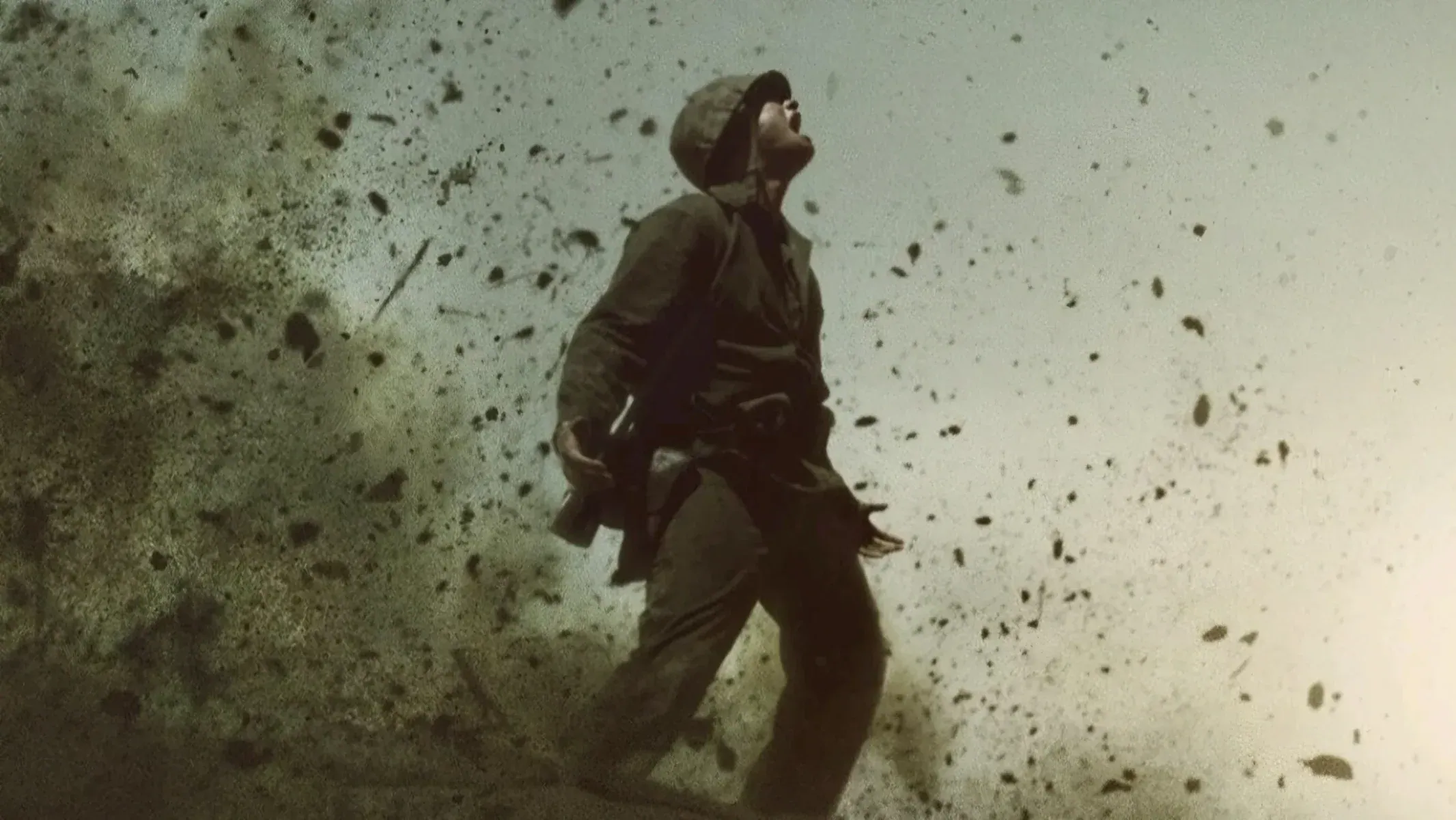
The Mosquito Bowl, the new Netflix film now playing in theaters before its streaming debut on November 30th, is the type of war film that most critics have no idea what to do with. At the same time, the film seems so hell-bent on moving toward a piece of Americana that it loses its way amid the utter madness of the situation. And there’s nothing wrong with the film using this event as a backdrop.
That’s because The Mosquito Bowl‘s titular event is unusual, special, and even eye-opening, as director Peter Berg (Friday Night Lights, Hancock) shows some of America’s greatest athletes, who played college football at a time when the college game was bigger than the professional game, finding a sense of normalcy, joy, and excitement during a time of great uncertainty and profound sacrifice.
Netflix’s The Mosquito Bowl Plot

The film’s title comes from the story of four top American college football players: Brown University’s John McLaughry (Masters of the Universe‘s Nicholas Galitzine), Wisconsin’s Bob Baumann (It‘s Bill Skarsgård), Purdue’s Tony Butkovich (an electric Ray Nicholson, son of Jack), and another Badger teammate, Dave Schreiner (Tom Francis of Jay Kelly fame), who enlist in the United States Marine Corps, spurred by the attack on Pearl Harbor.
The opening sequences of Berg’s film depict the first wave of the Battle of Tarawa in the Gilbert Islands during World War II. While the Battle of Normandy is often depicted in films, history books, and probably any dinner involving Tom Hanks and Steven Spielberg, Tarawa took place the year before that historic invasion. Over 3,000 Marines were killed or wounded in just over 76 grueling hours.
This makes Tarawa one of the bloodiest amphibious assaults not just of the Pacific War, but of the war as a whole. Which brings me to my point: Berg depicts an invasion that rivals Spielberg‘s opening sequence in Saving Private Ryan. The scenes are visceral, harrowing, and an unflinchingly realistic depiction of combat. Yes, the aforementioned film paved the way, but nothing can quite prepare you for what Berg achieves here.
Netflix’s The Mosquito Bowl Review
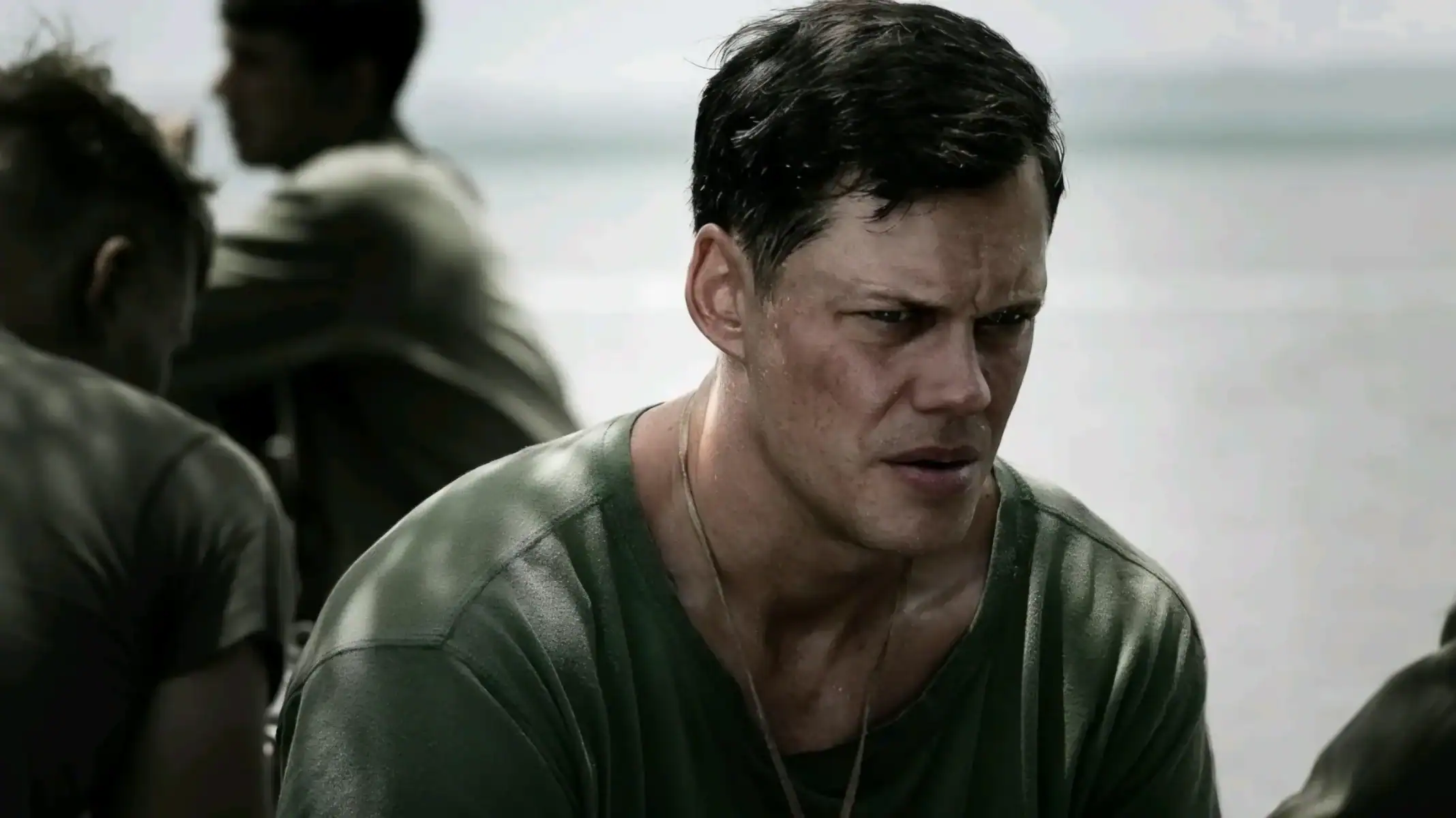
The film opens with several football sequences that serve more as exposition than offer anything significant. Yes, they establish the leadership qualities you see on screen later, which is commendable. However, I think a smarter choice would have been to weave flashbacks into the later sequences so we could learn more about these men gradually, instead of an excessive exposition dump before the opening credits.
The performances are charismatic, with the much hyped-up ex-punter and current podcaster Pat McAfee, who has a small part that it hardly registers. However, Ray Nicholson gives the film’s best turn. Nicholson brings a type of manic charisma, with swagger and emotional vulnerability, with such reckless intensity, you cannot take your eyes off of him. The young Nicholson has the spark, something you cannot teach, like his legendary father.
Tom Francis also registers as the moral, stoic authority of a young Steve McQueen. Of course, the bigger names of Skarsgård and Galitzine bring their movie-star presence, but Nicholson and Francis leave lasting impressions long after the final credits roll. Still, the quartet has terrific chemistry, showing how the spoils of war brought them together despite the college rivalries, instead of tearing them apart.
Is Netflix’s The Mosquito Bowl Worth Watching?
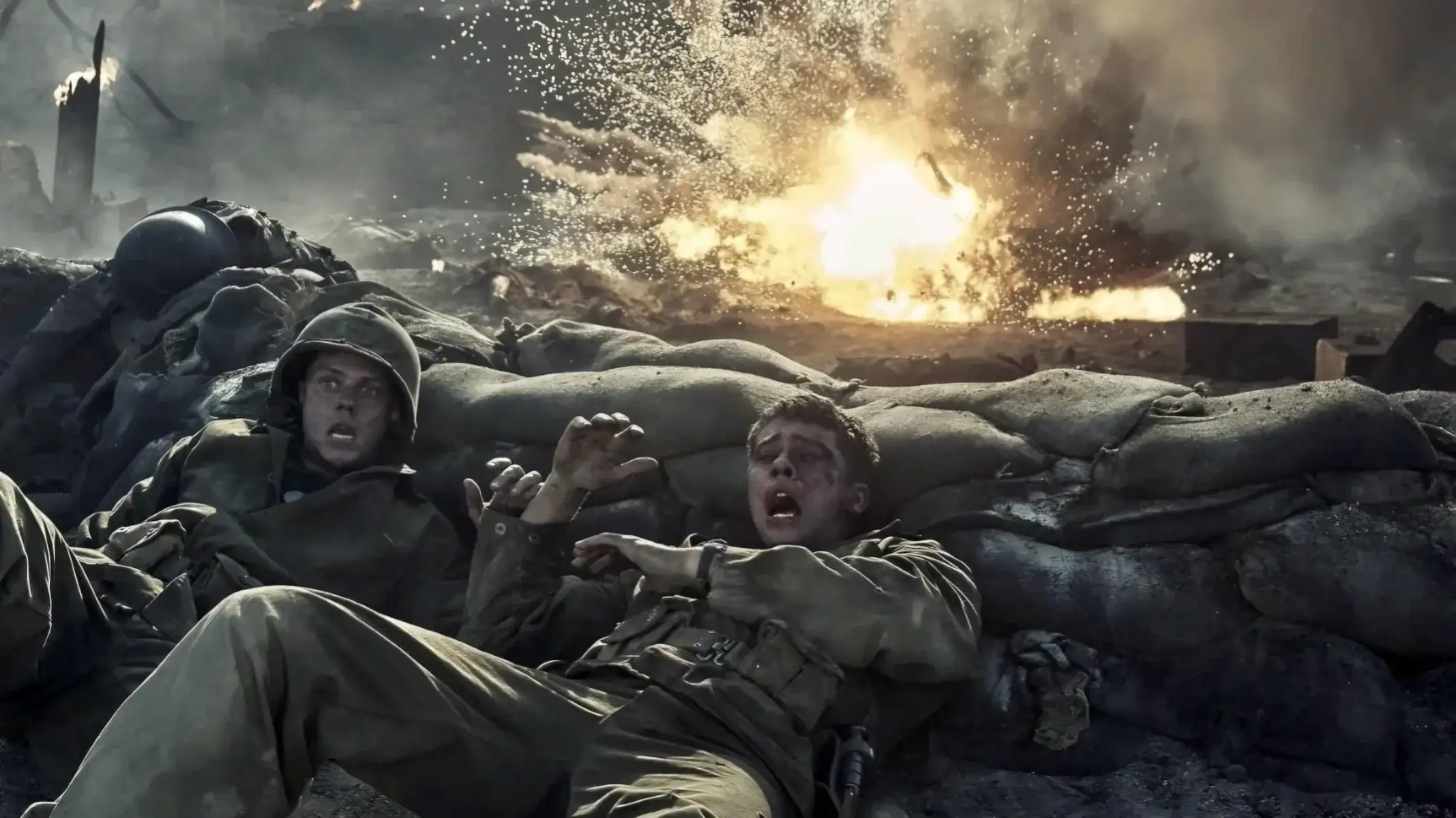
And when we finally reach the famous Mosquito Bowl, some will probably scratch their heads, but the point is the pure joy of finding something, anything, to return to a sense of normalcy. That rings true, sandwiched between Tarawa and, later, the devastating Battle of Okinawa. The overwhelming brutality that follows makes that brief reprieve all the more poignant, leaving audiences with a greater appreciation for the emotional weight of the story Berg is trying to tell.
This unflinching film finds fleeting joy amid unimaginable calamity. Berg’s understands that tragedy isn’t simply how these men died, but how much life they still had left to live. They say youth is wasted on the young. Watching old, male politicians send these young men into battle, you have to wonder if war wouldn’t be better wasted on the old rather than on those who have barely begun to live.
You can watch The Mosquito Bowl in select theaters and stream it exclusively on Netflix on November 30th!
Peter Berg's The Mosquito Bowl is a visceral, haunting war drama that finds fleeting joy amid unimaginable tragedy.
-
GVN Rating

I am a film and television critic and a proud member of the Las Vegas Film Critic Society, Critics Choice Association, and a 🍅 Rotten Tomatoes/Tomato meter approved. However, I still put on my pants one leg at a time, and that’s when I often stumble over. When I’m not writing about movies, I patiently wait for the next Pearl Jam album and pass the time by scratching my wife’s back on Sunday afternoons while she watches endless reruns of California Dreams. I was proclaimed the smartest reviewer alive by actor Jason Isaacs, but I chose to ignore his obvious sarcasm. You can also find my work on InSession Film, Ready Steady Cut, Hidden Remote, Music City Drive-In, Nerd Alert, and Film Focus Online.