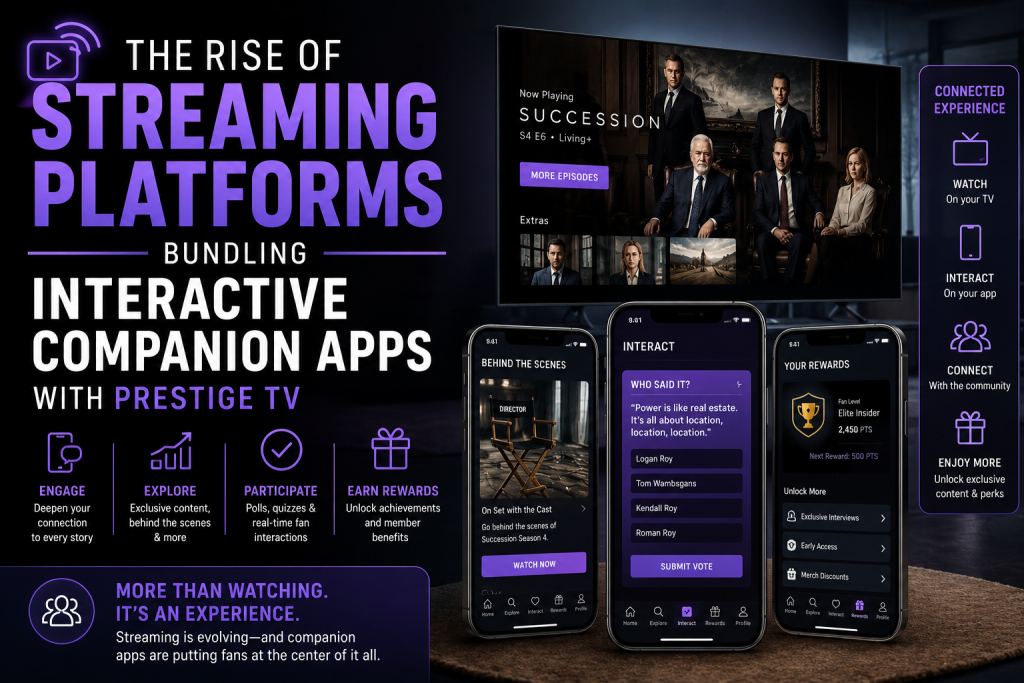
Watching a single prestige drama used to mean just that: watching. Now it often means toggling between the show and a second screen packed with trivia, character breakdowns, and behind-the-scenes footage timed to the exact scene playing. Streaming platforms have noticed that fans want more than a passive viewing experience, and they’re building the infrastructure to deliver it.
This shift isn’t accidental. It reflects how audiences already behave when the TV is on, and platforms are simply meeting that behavior with purpose-built tools instead of leaving engagement to chance.
Prestige Dramas Now Ship With Companion Apps
Amazon’s Prime Video X-Ray feature is probably the clearest example of this trend in action. Pause an episode and you’ll get cast bios, character context, trivia, and even the name of the song playing in the background, all without leaving the main screen. It’s a quiet but deliberate way of turning a solo viewing session into something closer to an interactive experience.
Disney+ has taken a similar approach with its Marvel and Star Wars series, layering in lore-driven extras and community-facing content that live alongside the shows themselves. Netflix, meanwhile, has leaned into interactive storytelling formats and mobile-first discovery tools that keep viewers engaged between episodes, not just during them. The common thread is intentional design: these aren’t afterthoughts bolted onto a show, they’re part of the release strategy from day one.
How Fan Engagement Tools Reward Real-Time Viewing
What makes these companion experiences work is timing. Trivia that drops the moment a twist happens, or a behind-the-scenes clip that surfaces right after a big reveal, rewards viewers for watching live rather than catching up days later. That immediacy creates a small dopamine loop, similar to how well-designed digital platforms in other industries keep users coming back.
It’s worth noting how much design thinking goes into these systems more broadly. Fitness apps reward daily streaks with badges and progress charts that make skipping a session feel costly. Music platforms surface personalised discovery playlists at precisely the moment a listener’s attention dips. Gambling platforms like top rated crypto casinos apply the same reward-driven logic with provably fair mechanics and instant wallet transactions. Prestige TV companion apps are borrowing from that same playbook, using layered rewards and real-time feedback to keep fans invested episode after episode.
Interactive Features Mirror Broader Digital Entertainment Trends
The numbers back up why platforms are investing so heavily here. Multi-screen viewing isn’t a niche habit anymore; it’s practically the default. Data compiled in a television viewing report shows that a majority of US viewers already use a second device while watching TV, making structured companion content a logical next step rather than a gimmick.
The market is responding accordingly. A recent companion app market analysis notes that mobile platforms account for the overwhelming majority of revenue in this space, confirming that phones and tablets, not smart TV interfaces, are where fans actually engage with these features. Streaming services that ignore this shift risk leaving real engagement on the table.
What This Means For The Next Season
If current momentum holds, expect companion experiences to become standard rather than exceptional for any prestige series with real cultural weight. The broader smart TV app ecosystem, valued in the hundreds of billions and still growing according to industry market research, gives platforms the technical runway to build increasingly sophisticated interactive layers without reinventing the wheel each season.
For fans, that likely means richer premiere nights, more reason to watch live, and companion content that feels less like marketing and more like an extension of the storytelling itself. The next wave of prestige TV won’t just be watched. It’ll be navigated, tapped through, and experienced across more than one screen at a time.

Caroline is doing her graduation in IT from the University of South California but keens to work as a freelance blogger. She loves to write on the latest information about IoT, technology, and business. She has innovative ideas and shares her experience with her readers.