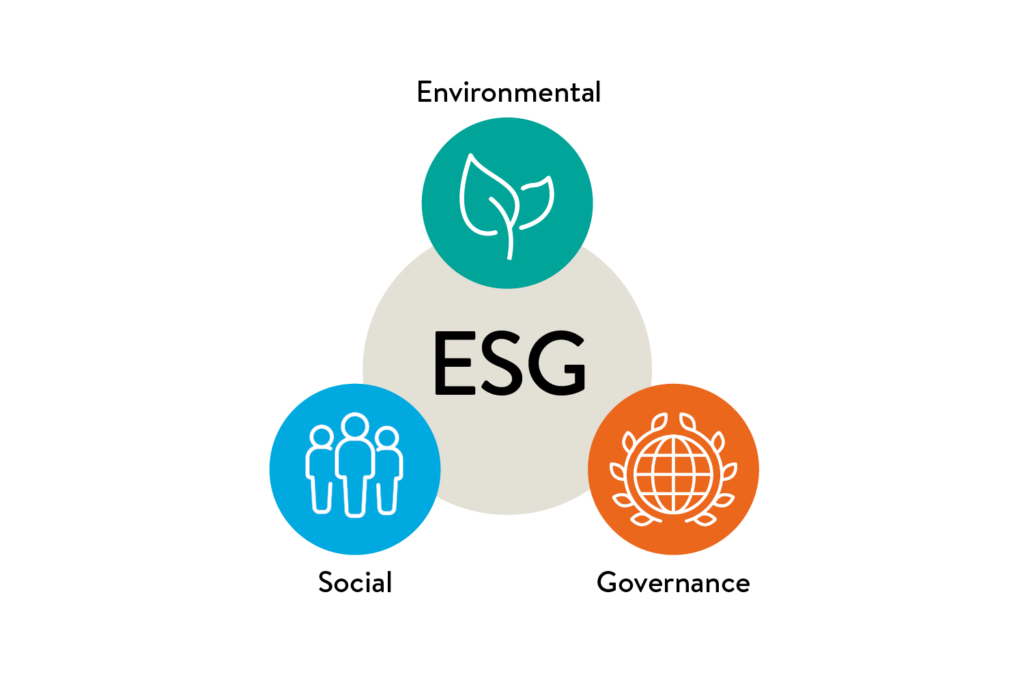
Over the past decade, Environmental, Social, and Governance (ESG) investing has moved from the margins of finance into the center of global business strategy. What was once treated as an ethical add-on is now a defining factor in how companies are evaluated, funded, and trusted. Investors, regulators, and consumers are no longer satisfied with organizations that focus solely on profitability. Instead, they expect businesses to demonstrate responsibility toward environmental sustainability, social well-being, and transparent governance.
ESG investing reflects a broader understanding that long-term success depends on how companies manage risks that extend beyond financial statements. Climate change, workforce dynamics, supply chain ethics, and leadership accountability all play a role in determining whether a company can sustain growth over time. As a result, ESG is not just influencing how investors allocate capital; it is fundamentally reshaping how businesses make decisions at every level.
Understanding ESG: A Framework for Modern Business
At its core, ESG provides a structured way to evaluate how a company operates in the real world. The environmental dimension focuses on how organizations interact with natural resources, including emissions, energy use, and environmental impact. The social component examines how businesses treat employees, customers, and communities, while governance addresses leadership, accountability, and ethical decision-making.
What makes ESG particularly powerful is the way these three dimensions intersect. A company that reduces emissions but neglects employee welfare is unlikely to build long-term trust. Similarly, strong governance without environmental responsibility can expose a business to future regulatory risks. ESG therefore encourages a holistic approach, where sustainability and ethics are embedded into the overall strategy rather than treated as isolated initiatives.
The Evolution of Sustainable Investing
The rise of ESG investing did not happen overnight. It evolved alongside growing awareness of global challenges such as climate change, social inequality, and corporate misconduct. As these issues became more visible, investors began to recognize that traditional financial analysis alone was insufficient to assess long-term value.
Institutional investors, asset managers, and even retail investors started incorporating ESG factors into their decision-making processes. This shift was further accelerated by regulatory changes and the increasing availability of ESG data. Companies are now expected to disclose not only financial performance but also their environmental impact, workforce practices, and governance structures.
Rachel Sinclair, Acquisitions Director at US Gold and Coin, explains, “ESG is no longer a separate strategy; it’s becoming the foundation of modern investment thinking. Companies that fail to integrate sustainability into their core operations risk losing both capital and relevance in the market.” This shift in mindset highlights how ESG has transitioned from a niche concept to a mainstream expectation.
How ESG Is Reshaping Business Decision-Making
The influence of ESG is most visible in how businesses approach strategic decisions. Capital allocation has undergone a significant transformation as investors increasingly favor companies that demonstrate strong sustainability practices. Organizations that align with ESG principles are more likely to attract funding, secure better financing terms, and maintain investor confidence during periods of uncertainty.
At the same time, ESG has become a critical component of risk management. Traditional risk assessments often overlook factors such as environmental disruptions or social backlash. Today, companies are proactively identifying these risks and integrating them into their planning processes. This has led to more resilient business models that are better equipped to handle unexpected challenges.
Strategic planning has also evolved under the influence of ESG. Companies are no longer focusing solely on efficiency or cost reduction. Instead, they are rethinking their operations to align with sustainability goals. This includes developing eco-friendly products, optimizing supply chains, and exploring new business models that reduce environmental impact. These changes are not just about compliance; they are about unlocking innovation and creating new sources of value.
ESG and Corporate Reputation
One of the most immediate impacts of ESG can be seen in how it shapes corporate reputation. Consumers today are more informed and more selective about the brands they support. They are increasingly drawn to companies that demonstrate a genuine commitment to sustainability and social responsibility.
A strong ESG profile can enhance brand loyalty and differentiate a company in competitive markets. It signals to customers that the organization is not only focused on profits but also on making a positive contribution to society.
On the other hand, poor ESG performance can quickly damage a company’s reputation, especially in an era where information spreads rapidly through digital channels.
This shift has forced businesses to think more carefully about how their actions are perceived. ESG is no longer just an internal metric; it is a public statement about a company’s values and priorities.
Talent, Culture, and ESG
The impact of ESG extends beyond external stakeholders to influence internal dynamics as well. Employees, particularly younger generations, are increasingly seeking purpose-driven work environments. They want to be part of organizations that align with their values and contribute to meaningful change.
Companies that prioritize ESG are often better positioned to attract and retain talent. A strong commitment to social responsibility and ethical practices creates a sense of purpose and engagement among employees. This, in turn, leads to higher productivity, stronger collaboration, and improved overall performance.
Karina Simonovič, Marketing Manager at Optimal Warranty, explains, “Today’s workforce evaluates employers like customers evaluate service providers; ESG performance plays a key role in attracting and retaining top talent.”
From a cultural perspective, ESG encourages organizations to adopt more inclusive and transparent practices. It fosters a workplace environment where accountability and ethical behavior are valued, which can have a lasting impact on organizational success.
Financial Implications of ESG
There is a growing body of evidence suggesting that ESG is not just about ethics; it is also about financial performance. Companies that effectively manage ESG factors tend to exhibit stronger long-term stability and lower risk profiles. This makes them more attractive to investors who are looking for sustainable returns.
One of the key financial advantages of ESG is its ability to reduce the cost of capital. Investors are more willing to support companies that demonstrate strong governance and risk management practices. Additionally, sustainable operations often lead to greater efficiency, which can improve profitability over time.
Another important aspect is resilience. Businesses that integrate ESG into their strategy are better equipped to navigate economic downturns and external shocks. By addressing environmental and social risks proactively, they can avoid costly disruptions and maintain continuity in their operations.
The Role of ESG Reporting
Transparency plays a crucial role in the effectiveness of ESG. As stakeholders demand more accountability, companies are under increasing pressure to disclose their sustainability practices and performance. ESG reporting has therefore become a key element of corporate communication.
Organizations are now adopting standardized frameworks to measure and report ESG metrics. This allows investors to compare companies more effectively and make informed decisions. However, the process is not without challenges, as data collection and verification can be complex and resource-intensive.
An expert insight highlights the importance of this trend: “Transparency is the currency of ESG. Investors don’t just want good intentions; they want measurable outcomes and clear accountability.” This emphasis on measurable impact is driving companies to move beyond vague commitments and focus on tangible results.
Challenges and Criticisms
Despite its rapid growth, ESG is not without criticism. One of the main challenges is the lack of standardization in ESG metrics. Different rating agencies often use varying methodologies, which can lead to inconsistent evaluations of the same company.
Another concern is greenwashing, where organizations exaggerate or misrepresent their sustainability efforts. This undermines trust and makes it difficult for investors to distinguish between genuine commitment and superficial marketing.
There are also practical challenges associated with implementing ESG strategies. Transitioning to sustainable practices can require significant investment and operational changes. For some companies, particularly smaller ones, this can be a barrier to adoption.
However, these challenges are gradually being addressed as regulatory frameworks evolve and technology improves. Over time, ESG is expected to become more standardized and transparent, enhancing its credibility and effectiveness.
ESG in Emerging Markets
While ESG has gained significant traction in developed economies, its influence is also growing in emerging markets. Investors are increasingly recognizing the potential of ESG to drive sustainable development in these regions.
In many cases, ESG practices are helping improve corporate governance and attract foreign investment. They are also encouraging businesses to adopt more sustainable practices, which can contribute to long-term economic growth.
Technology is playing a key role in this process by enabling better data collection and analysis. As ESG frameworks become more accessible, companies in emerging markets are finding new opportunities to align with global sustainability standards.
The Future of ESG
Looking ahead, ESG is expected to become even more deeply integrated into business and investment strategies. Advances in technology, particularly in data analytics and artificial intelligence, will enhance the ability to measure and manage ESG performance.
Regulatory requirements are also likely to expand, making ESG reporting more comprehensive and mandatory. This will further reinforce the importance of transparency and accountability.
Perhaps most importantly, the concept of value itself is evolving. Businesses are increasingly being evaluated not just on financial performance but on their broader impact on society and the environment. This shift toward stakeholder capitalism reflects a more inclusive and sustainable approach to economic growth.
An expert insight captures this direction: “The future of business will be defined by its ability to create value beyond profit. ESG is not a trend, it’s the blueprint for sustainable growth in a rapidly changing world.”
Conclusion
ESG has emerged as a powerful force transforming how businesses operate and how investors make decisions. It has redefined success by placing equal importance on financial performance, environmental responsibility, social impact, and governance practices.
As sustainable investing continues to grow, companies are being pushed to rethink their strategies and align with broader societal goals. This transformation is not just about meeting expectations; it is about building resilient, innovative, and future-ready organizations.
The businesses that embrace ESG today are not only responding to current demands but also positioning themselves for long-term success. In a world where change is constant and challenges are increasingly complex, ESG provides a framework for navigating uncertainty and creating lasting value.

Sandra Larson is a writer with the personal blog at ElizabethanAuthor and an academic coach for students. Her main sphere of professional interest is the connection between AI and modern study techniques. Sandra believes that digital tools are a way to a better future in the education system.