
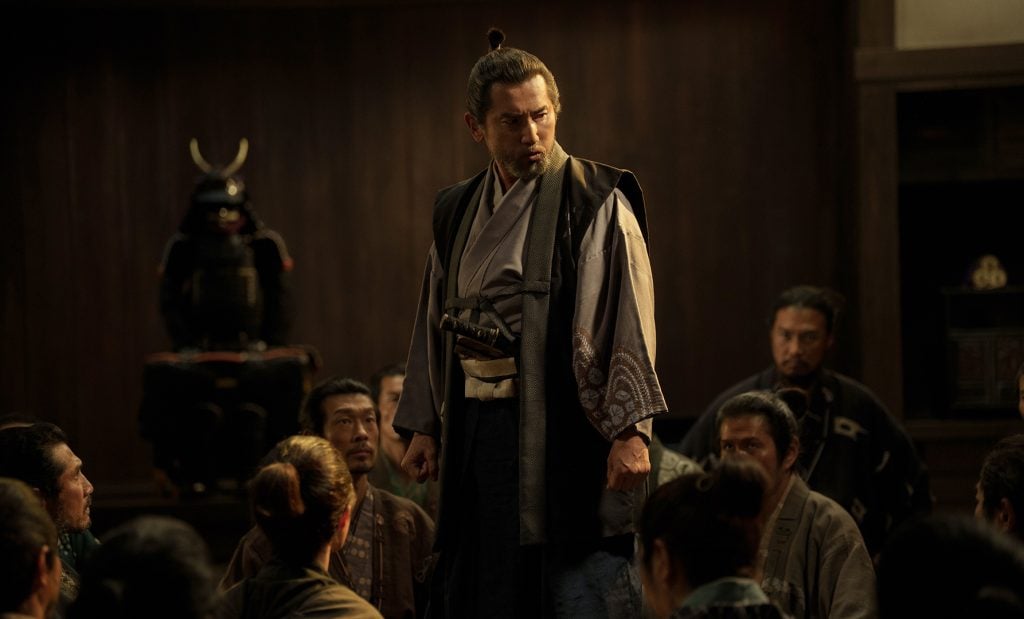
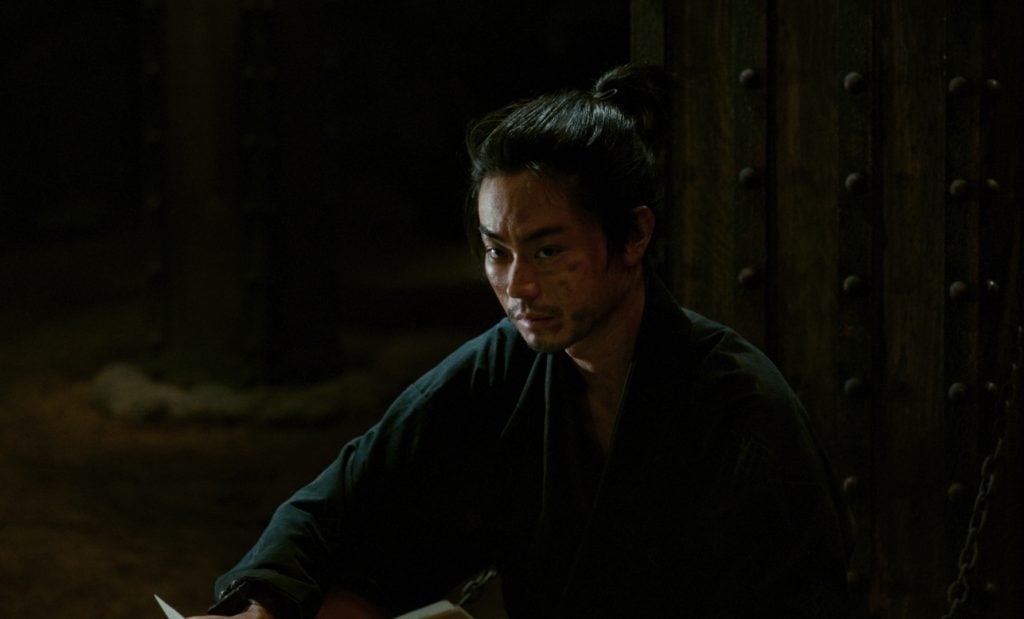
Set in 1578, the film follows Lord Murashige Araki (Masahiro Motoki), who has rebelled against the warlord Oda Nobunaga and barricaded himself inside Arioka Castle as Nobunaga’s forces surround him. Things are already looking pretty bleak, but the situation starts to become strange when a series of unexplained deaths begins occurring inside the castle. Murashige has no shortage of problems to deal with, so he turns to the one person who might actually be capable of making sense of them: Kuroda Kanbei (Masaki Suda), a brilliant strategist whom he has imprisoned in the castle’s dungeon.
There is a really interesting movie buried inside The Samurai and the Prisoner. A samurai lord trapped inside a besieged castle with a brilliant strategist locked away in his dungeon, and a series of strange murders that only the two of them can unravel, is such a good premise that I could not help but be immensely curious to see where Kiyoshi Kurosawa would take it. What makes it even more interesting is that Kurosawa has almost no interest in making the kind of samurai movie you might expect from that setup. There are battles, swords, political maneuvering and plenty of death, but the film is much more interested in the people stuck in the middle of all this than the violence itself. That same restraint eventually makes the movie feel incredibly slow and, at times, almost impenetrable.
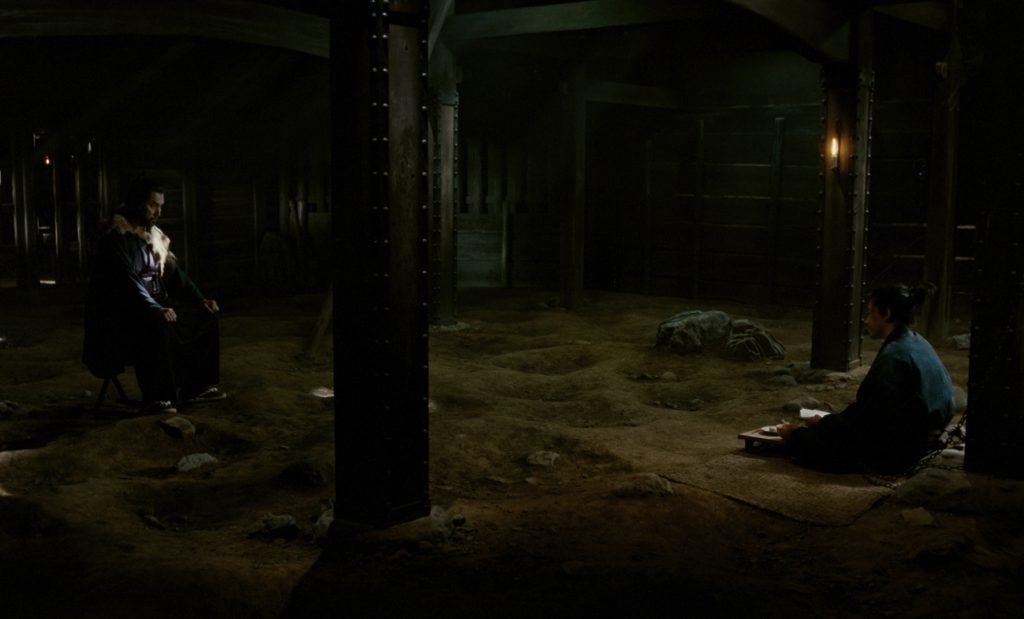
That relationship at the center of the movie’s core is the strongest part of The Samurai and the Prisoner. Motoki and Suda have an unusual chemistry because Murashige and Kanbei are never exactly friends, enemies, or even proper allies. They need each other, but neither man completely trusts the other. Murashige repeatedly comes to Kanbei for answers, while Kanbei has his own motives and is clearly thinking several steps ahead of everyone else. Their conversations become little battles of their own, with Murashige trying to determine whether Kanbei is genuinely helping him or quietly maneuvering him toward his destruction. It gives the movie a surprisingly intimate center despite the enormous historical events happening around them.
The problem is that almost everything surrounding that relationship is presented with the same slow, restrained rhythm. The four-season structure gives the story a nice sense of progression, with each chapter introducing another mystery and another threat to the fragile order inside the castle. That structure also gives the movie a somewhat literary quality, almost like watching a series of historical mysteries unfold one after another. But the mysteries themselves can be so deliberately obscure that I eventually stopped trying to solve them and simply waited for the movie to explain what was going on.
There is, of course, something admirable about Kurosawa refusing to spoon-feed the audience. He assumes you’ll pay attention to every conversation, every name and every seemingly insignificant detail. The film is constantly asking you to remember who belongs to which clan, who supports Nobunaga, who has defected, who has been killed, who might be lying and what each political alliance actually means. That makes the world feel lived-in, but it also creates a serious barrier to entry. There are so many characters, historical references and proper nouns thrown into dialogue that keeping track of everyone becomes a job in itself.
Still the decision to turn a samurai story into something closer to a murder mystery is genuinely clever. Instead of building toward some giant showdown, Kurosawa keeps asking why these strange things are happening inside the castle. A man is found dead without an obvious weapon, two rival groups begin fighting over the identity of a dead commander, a valuable tea urn disappears and people start wondering whether the strange events are signs of divine punishment. Each incident becomes another piece of a much larger puzzle, and Kanbei’s ability to see connections that everyone else misses gives these scenes a nice intellectual tension.
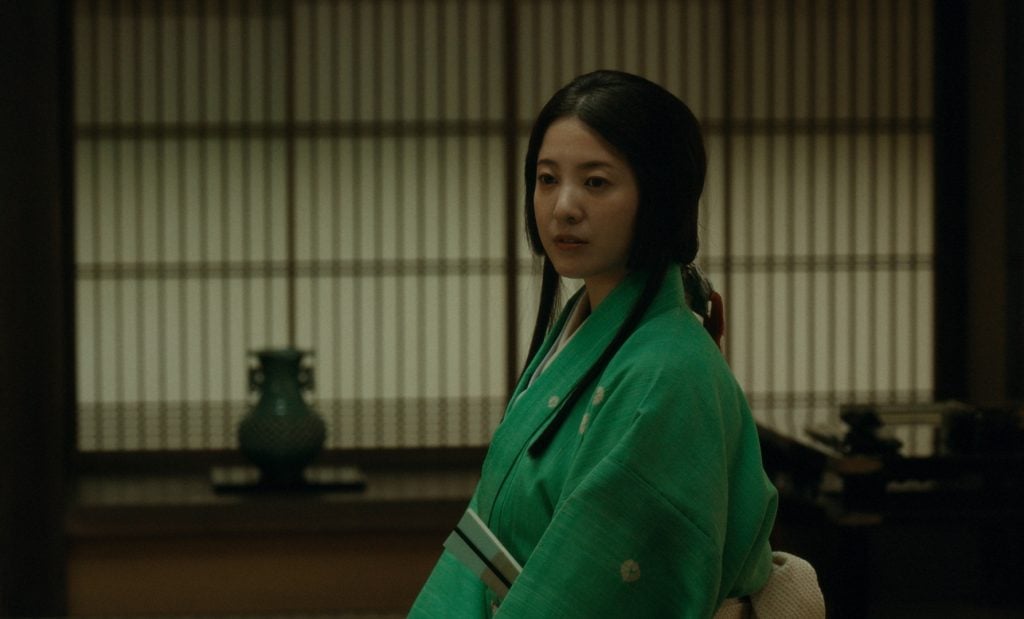
That said, the film’s refusal to give us much information can sometimes feel less like mystery and more like homework. There were several moments where I understood what Kurosawa was doing on a thematic level but still wasn’t particularly invested in the actual mystery playing out in front of me. The movie wants uncertainty to be part of the experience, and sometimes that works beautifully. Other times, I simply felt lost.
To make up for it, the visuals of the film are quite nice. The Samurai and the Prisoner has a suitably gloomy atmosphere. The castle is full of shadows, muted colors and empty spaces, and there is a constant feeling that something is wrong even when nobody is saying it outright. The old-fashioned production design and rigid compositions also fit the period setting without making the movie feel overly polished or romanticized. But at same time, the movie can look and feel just as rigid as the world it depicts. The deliberately restrained filmmaking means there isn’t much visual excitement outside of a few bursts of violence. That’s clearly intentional, but when combined with the slow pacing, it can make the two-hour-plus runtime feel much longer than it actually is. There are stretches where the movie seems to be standing still while everyone talks around the same problem.
What I appreciated most is that Kurosawa isn’t particularly interested in glorifying the samurai. There is no romanticized idea of honor here where every warrior is noble and every battle has some grand purpose. These are frightened, stubborn and sometimes ridiculous people trapped inside a system that demands they keep moving forward even when the path ahead is obviously leading toward disaster. Murashige is constantly being pressured to make the “right” decision, even when every available choice seems terrible.
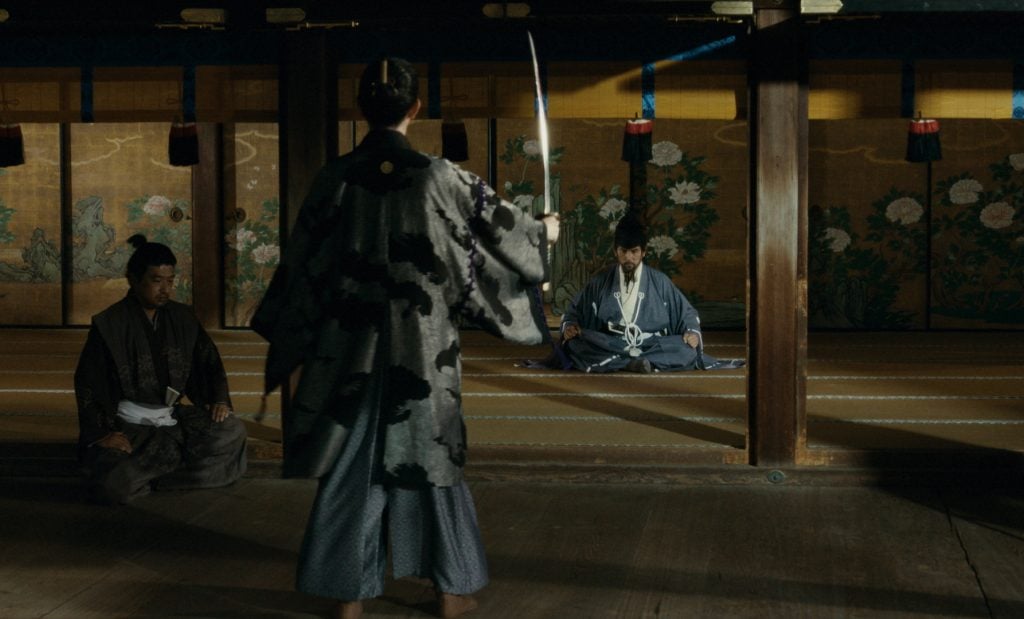
That becomes especially important in the final act. Murashige eventually realizes that Kanbei’s advice may actually be designed to destroy him. He understands that leaving the castle could make him look like a coward and could destroy his reputation, yet he chooses to follow the plan anyway. It is a fascinating idea because the film isn’t necessarily presenting surrender as weakness. Sometimes the bravest thing a person can do is stop playing a game that everyone else insists must be played.
I just wish the movie had been easier to engage with along the way. There are some genuinely thoughtful ideas here about loyalty, morality, violence and the pressure to continue moving forward simply because everyone else expects you to. But the storytelling is so slow and rigid that those ideas can get buried underneath the sheer amount of information the film asks you to process. The relationship between Murashige and Kanbei is fascinating, yet the movie sometimes seems determined to make you work for every moment of clarity.
The Samurai and the Prisoner is ultimately a strange film to recommend because so much of what I admire about it is also what made it difficult for me to enjoy. Kurosawa has taken the samurai genre somewhere unexpected, replacing grand battles with paranoia, deduction and philosophical conversations about what it means to surrender. Masahiro Motoki and Masaki Suda give the film a compelling center, and the final ideas about abandoning a doomed path are genuinely affecting. But the pacing is painfully slow, the storytelling can be frustratingly opaque, and the sheer number of characters and historical details makes the movie harder to follow than it needs to be.
If you’re looking for a traditional samurai movie packed with sword fights, battles and spectacle, this is probably going to test your patience. If you’re willing to sit with something much stranger and more deliberately paced, there is plenty here to appreciate and admire. I liked it overall though, despite my many qualms with it. A rich film with lots of layers both ugly and not.
The Samurai and the Prisoner is currently playing in select theaters courtesy of Janus Films.
The Samurai and the Prisoner is ultimately a strange film to recommend because so much of what I admire about it is also what made it difficult for me to enjoy.
-
GVN Rating

Roberto Tyler Ortiz is a movie and TV enthusiast with a love for literally any film. He is a writer for LoudAndClearReviews, and when he isn’t writing for them, he’s sharing his personal reviews and thoughts on Twitter, Instagram, and Letterboxd. As a member of the Austin Film Critics Association, Roberto is always ready to chat about the latest releases, dive deep into film discussions, or discover something new.