There is a scene in Toy Story (1995) where three small green aliens sit inside a Pizza Planet claw machine, worshipping ‘the Claw’ as it descends. The gag lands because everyone in the audience recognises the machine instantly.
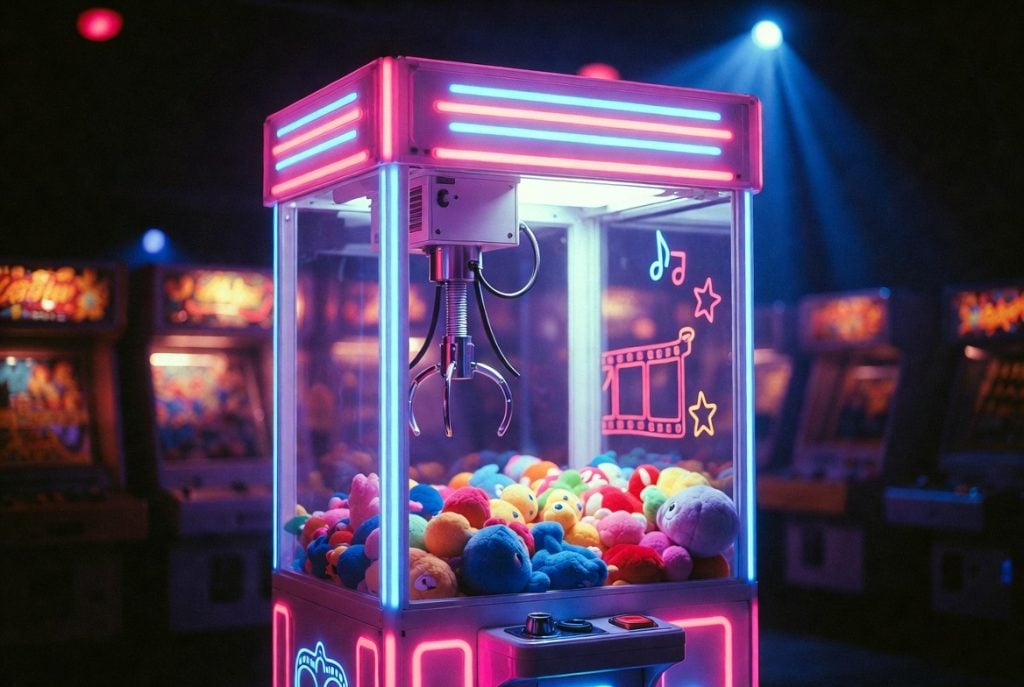
The claw machine keeps appearing across pop culture with unusual persistence. Something about the object works iconographically in a way most arcade cabinets do not. Working out why is worth a moment of attention.
Where the Claw Machine Actually Shows Up
Toy Story (1995) established the claw machine as pop culture shorthand. The imagery has carried through every sequel that visits similar arcade territory. Audiences already recognise the device and know it mostly does not pay out, and that prior recognition is what makes ‘the Claw’ funny.
Stranger Things extended the iconography to a full arcade setting. The Palace Arcade in Hawkins, Indiana becomes a central location across multiple seasons, with the claw machine as one recurring visual anchor among the various cabinets. The imagery works for the same reasons that made it work in Toy Story.
The rigging is not incidental to the iconography. It is part of what makes the machine funny and slightly melancholy at the same time.
The claw machine’s engineering is worth understanding. NPR’s claw investigation covered the Vox piece by Phil Edwards that documented the mechanics. Adjustable grip settings, payout cycles targeting roughly one win per twenty-four plays, and dropping-skill programming that lets the claw teasingly release the prize together engineer the outcome; the machines are not random.
The Digital Games Inheritance
The claw machine iconography carried directly into digital gaming when the industry moved to online formats. Slot developers imported the visual language wholesale, including cute plush prizes, the mechanical claw arm, and the moment of tension as the claw descends and grips. The transfer preserved most of the original psychological hooks.
The Eyecon-developed Fluffy Favourites is a direct inheritance that closes the loop. Fluffy Favourites slots at Fruity King use claw machines as the bonus feature, with cute animal plush prizes being ‘grabbed’ from a virtual grid on the reel. The digital format preserves the exact iconography of the physical machine.
What is preserved is the visual grammar. What is not preserved is the physical randomness of grip strength; digital slots run on pre-programmed probability rather than mechanical claw cycles, though the outcome distribution is comparable.
Five Properties That Make the Claw Machine Iconographic
Five properties combine to give the claw machine its iconographic weight in pop culture:
- Randomised reward with visible payoff. You can see the prize you might win before you play. Most gambling formats hide the payoff behind abstract symbols; the claw machine shows you the plush directly, which creates a visual promise that most other formats cannot match.
- Asymmetric small-cost try. One quarter or one credit for a potentially twenty or thirty dollar stuffed animal. The visible ratio between cost and potential prize is unusually favourable, which draws the initial play even for people who otherwise avoid arcade games.
- Public and social display. The machine sits in high-traffic locations where other people watch you play. Winning is celebrated publicly, losing is witnessed publicly. The social layer amplifies both outcomes.
- Skill illusion mixed with genuine chance. Positioning the claw is a skill; the grip strength on any given play is engineered chance. Players consistently over-estimate the skill component, which is what keeps them returning.
- Physical mechanism visible throughout. Unlike a slot machine or dice throw, you can watch the claw arm move, grab, lift, and drop. The mechanism is not hidden, and that transparency amplifies the emotional reaction on any given attempt.
The five properties do not appear together in any other arcade format. That combination is what makes the claw machine iconographic rather than merely popular.
Why the Nostalgia Actually Matters
The claw machine is not going away. Its persistence in pop culture reflects something durable about how people respond to the format. The same durability keeps digital versions viable decades after the physical machines first appeared in the 1980s.
Toy Story’s aliens are still worshipping ‘the Claw’ every time a new generation discovers the film. Stranger Things fans still recognise the Palace Arcade set pieces as core visual iconography. Fluffy Favourites players still get the same claw-machine bonus feature that Eyecon built into the slot in the 2000s.
Some iconography ages. Some sits still and keeps working. The claw machine has been sitting still for decades and, so far, keeps working.

Amanda Lancaster is a PR manager who works with 1resumewritingservice. She is also known as a content creator. Amanda has been providing resume writing services since 2014.