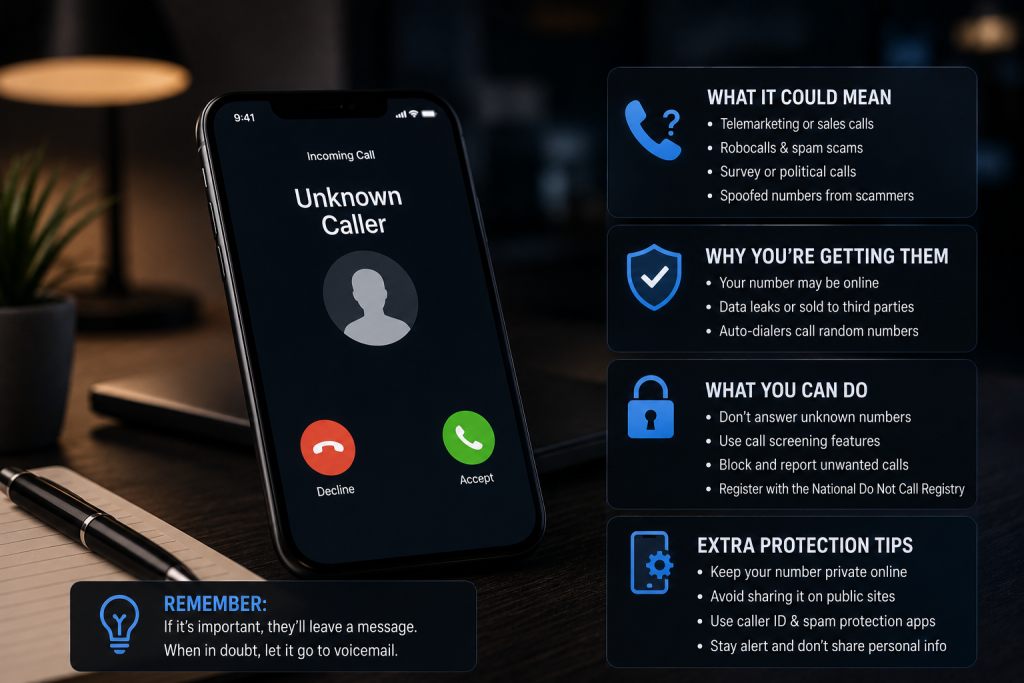
We have all been there, the phone buzzes, and a quick glance shows us the words nobody likes to see: No Caller ID. Now what?
A common first thought is that it’s a scammer or a doctor calling from a private line. Maybe it’s somebody you actually need to hear from, like a family member or business associate. That uncertainty is what makes these calls so annoying.
As this is a very common issue, here, we will explore everything about No Caller ID, from who makes these calls to what they mean. In the end, you will leave this article with the knowledge to block and investigate these calls without guessing.
First, Here’s What “No Caller ID” Actually Means
A lot of people mix up No Caller ID and unknown numbers, as the names hint at a similar situation. They are not the same thing because No Caller ID means the caller intentionally hid their number before placing the call. This can be done in a few ways:
-
Using 67: In the US and Canada, dialing *67 before a number hides the caller ID for that call on most major carriers.
-
Carrier-level blocking: Some people choose to hide their numbers through their carriers, common for private businesses and organizations.
-
Spoofing apps or VoIP systems: Some callers use internet-based systems to display fake caller information. Most commonly used for scam operations and spam calls.
On the other hand, an unknown number means that your carrier simply could not identify the incoming number. There are various reasons this happens:
-
Network issues
-
International routing problems
-
Outdated caller ID systems
-
Blocked transmission data
-
Outdated software
Any interference can cause your phone to produce an unknown number when receiving a call. Phone carriers allow caller ID blocking that results in this situation due to privacy reasons. A very useful feature commonly used for safety and confidentiality is the same one creating a common problem in telecommunication.
Who’s Actually Calling You
While a No Caller ID number or unknown number protects us, it also causes unease due to scammers’ abuse of these systems. This technology is essential for many legitimate calls coming from:
-
Doctors offices
-
Hospitals
-
Lawyers
-
Social workers
-
Abuse hotlines
-
Corporate security teams
-
Law enforcement
-
Delivery coordinators
There are dozens more personal and important parties that may block their number to avoid patients calling directly. You wouldn’t want a lawyer or hospital to use a line not suited for client privacy that prevents tracking.
Even so, the existence of scammers has made believing unknown numbers much more difficult. Even if a party identifies itself, there is always the question of whether they are who they claim to be.
To keep yourself safe, always think through a call, if it’s expected, and if it portrays a realistic situation. Remaining vigilant and thinking through each call will significantly improve your security. Especially, since most calls can be postponed to a later date or verified through other means of communication.
Can You Actually Find Out Who Called?
When it comes to finding out who called, sometimes you can, sometimes you can’t. Many consumer tools can help, but none guarantee results. For example, TrapCall is a very popular and well-known service that works by:
-
Subscribing your line to their service in advance.
-
When a No Caller ID call comes in, TrapCall intercepts it and unmasks the number before it reaches you.
-
The revealed number then appears on your screen like any other incoming call
The system is amazing when it works, but often you will find it limited by different carriers, spoofed VoIP numbers, or unidentifiable calls. You can choose the manual option with the *69 call return to call back the most recent number. However, even this method is limited, as it often does not work with fully blocked No Caller ID calls or other carrier-provided privacy options.
What You Can Do to Protect Yourself
The best way to protect yourself from No Caller ID and potential spam texts and calls is to use the built-in systems on your phone and carrier. On your device, make sure to silence unknown callers and enable call screening features. This may cause you to miss some legitimate calls from clinics or recruiters, so that is a big consideration.
It is also recommended to check for carrier-level options like T-Mobile’s Scam Shield or AT&T’s Active Armor. These tools are great for spam detection and robocall filtering while keeping your device open to real opportunities.
Finally, if you feel like you need additional protection, you can spring for third-party screening apps like RoboKiller. They work by identifying suspicious calls thanks to their huge spam databases. In the end, it’s up to you if you want to limit potential contact or gauge what’s real and fake on your own.
When to Answer and When to Let It Go
It is important to understand that you do not need a perfect system. Most options that limit No Caller ID are not practical for all users, which is why it’s important to limit it to your preferences. If you gauge that utilizing built-in systems and third-party is the best option for you, feel free to do so.
However, if you are someone who often needs to interact with No Caller ID or unknown callers, these tools might not be for you. In this case, the best option is to use context or rely on voicemails to gauge authenticity. If anything, never make decisions on suspicious calls immediately – scammers rely on urgency, and taking time to verify always works in your favor.
No single system will work every time, but combining all of the available tools and taking the time to learn about these calls gives many options.

Sandra Larson is a writer with the personal blog at ElizabethanAuthor and an academic coach for students. Her main sphere of professional interest is the connection between AI and modern study techniques. Sandra believes that digital tools are a way to a better future in the education system.