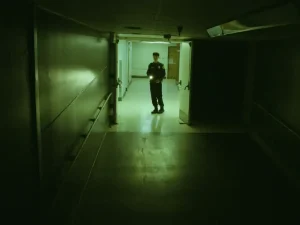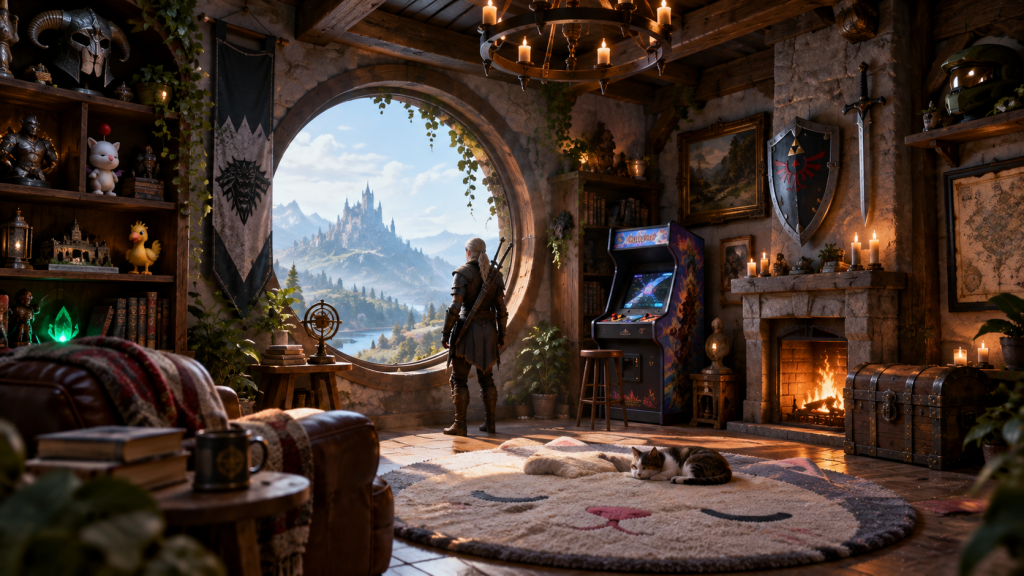
In any new game, you’ll open a door expecting loot, an enemy or at least a suspiciously important item. Instead, you find two chairs, a crooked painting and a mug somebody abandoned beside a window. Nothing flashes. No quest begins. The room has absolutely no practical value, and somehow you’re delighted it exists.
Video games spend a lot of time teaching you that exploration should produce rewards. Check behind the waterfall and you’ll find a chest. Climb the tower and you’ll unlock part of the map. Crawl through a vent and you’ll discover ammunition, because apparently every ventilation engineer in gaming history was also preparing for a lengthy siege.
Pointless rooms break that agreement. They contain no collectibles and don’t advance the plot, yet they can make a fictional world feel more convincing than another page of lore ever could.
Empty Space Lets a World Breathe
A believable location can’t exist entirely for the player’s convenience. Real buildings contain spare bedrooms, forgotten storage cupboards and hallways leading to places you have no reason to visit. Every object doesn’t announce its purpose the moment you enter.
Games often struggle to resist filling those spaces with something you suddenly need to pass the level. A bedroom becomes a loot station and a bathroom contains healing supplies. When you regularly follow video game and entertainment coverage, enormous worlds and ambitious feature lists receive plenty of attention. The smaller details are harder to place in a trailer, though they’re often what you remember once the spectacle has worn off.
A pointless room slows you down for a moment. Perhaps you look at the photographs, wonder who slept there or notice that one side of the bed has been left untouched. The game hasn’t given you an objective, but your imagination has started doing unpaid narrative work anyway.
Players Will Invent Meaning If You Give Them Half a Chance
Put an unusual chair in the center of an otherwise empty room and players will spend hours deciding what it means. Was someone waiting there? Is the chair facing the wrong direction deliberately? Should it be sat on? Sometimes a chair is simply a chair, naturally. Developers also know exactly what they’re doing when they place one beneath a single flickering light.
Environmental storytelling works best when it trusts you to notice rather than stopping the game for an explanation. The Last of Us uses abandoned homes to suggest who lived there and how they left. Fallout arranges skeletons, terminals and everyday clutter into tiny scenes that range from tragic to darkly ridiculous. Resident Evil fills grand buildings with offices and bedrooms that make absolutely no architectural sense but are a lot of fun to inspect.
The details don’t need to form a complete account. Players naturally fill the gaps. You can ignore the space entirely, or you can stand there building an elaborate theory about strangers who don’t technically exist.
Not Every Door Should Lead to Treasure
Constant rewards can make exploration very predictable. If every side path ends with an upgrade, you stop exploring out of curiosity and start vacuuming the map for resources.
A room without a reward changes your relationship with the environment. You enter because the door is there. You poke around because you want to know what the designers chose to include. The reward is understanding the place a little better, which sounds terribly worthy until you remember that you also spent several minutes trying to jump onto a wardrobe.
Pointless spaces can help valuable discoveries feel more surprising too. Finding a rare weapon in every third cupboard turns rare weapons into ordinary household clutter. Discovering one after several uneventful rooms gives it weight.
Horror games understand this especially well. An empty room offers relief, but you don’t know that it’s empty until you’ve checked every corner. The absence of an enemy becomes its own event. You open the next door feeling slightly calmer, which is usually when the game decides to introduce something with far too many eyes.
Clutter Can Say More Than Dialogue
Studios have become extremely good at producing detailed spaces, but detail alone doesn’t create personality. Fifty technically impressive bottles on a shelf aren’t as interesting as one bottle placed somewhere it shouldn’t be. Players notice intention, even when they can’t explain why.
The best pointless rooms also provide a brief pause between larger moments. After a difficult fight or noisy set piece, stepping into a quiet kitchen gives your brain somewhere to settle. You can inspect the magnets on the fridge, reload your weapon and prepare yourself before the game starts shouting again.
No trailer will lead with an empty utility room. Nobody pre-orders a deluxe edition for an optional corridor containing a broken lamp. Those modest spaces still perform valuable work. They give buildings history, characters private lives and players room to be curious without expecting payment.
So leave the odd door unlocked. Put a chair inside, add a cup of cold coffee and resist the urge to hide crafting materials under it. Somebody will wander in, look around and remember that room long after they’ve forgotten the contents of the expensive treasure chest downstairs.

Hi! I’m Bryan, and I’m a passionate & expert writer with more than five years of experience. I have written about various topics such as product descriptions, travel, cryptocurrencies, and online gaming in my writing journey.