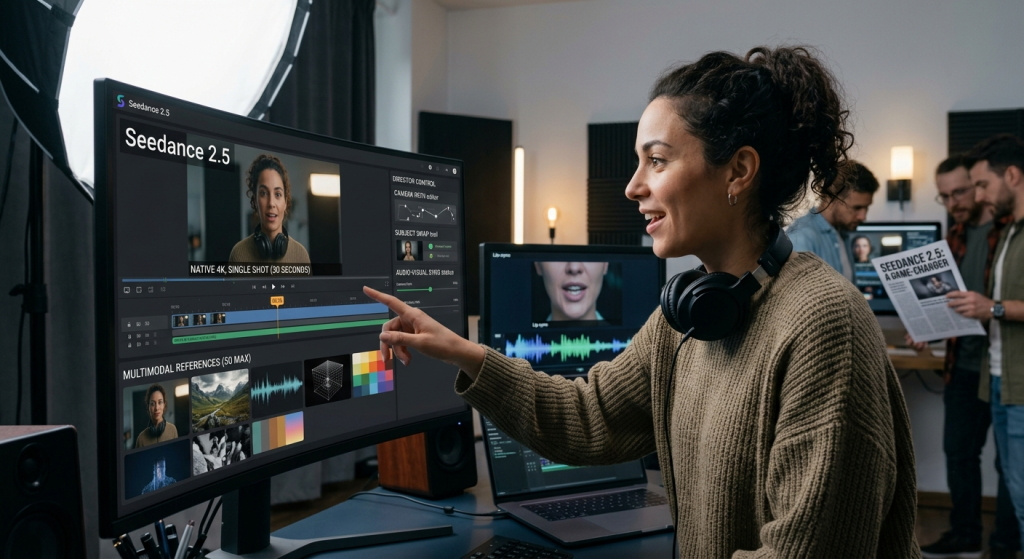
AI video gets a new “breakthrough” roughly every other week, and most of them are forgotten by the following Monday. So when a release actually sticks in the conversation — when creators, studios, and skeptics are all still arguing about it days later — it’s worth asking what’s different. The Seedance 2.5 reveal has done exactly that, and the reasons it’s holding attention say as much about where AI video is headed as about the platform itself.
It solved a structural problem, not a cosmetic one
The first reason the chatter has legs: this wasn’t a quality bump. Most AI video announcements promise sharper frames or marginally better motion — improvements that are real but incremental, the kind that don’t change what you can actually make.
Seedance 2.5 went after a structural limit instead. The 15-second clip ceiling wasn’t a polish problem; it was the thing capping what the entire category could be used for. By generating a continuous 30-second shot natively — in one pass, no stitching — it removed a constraint that had defined AI video’s awkward adolescence. People are talking because a structural fix changes the conversation from “this looks a bit better” to “this enables work that wasn’t practical before.” That’s a different order of news.
The reference number people can’t stop repeating
The second talking point is a single statistic that’s been ricocheting around the discussion: 50. The platform reportedly accepts up to 50 full-modal reference materials in one generation — images, video, audio, style references — a roughly fourfold jump from the previous ceiling of around 12.
The number caught on because everyone who’s used AI video immediately understands what it implies. References are how you control consistency, and consistency was the wall. Going from a dozen inputs to fifty isn’t “more of the same” — it’s the difference between nudging the model and actually specifying what you want. That’s why even cautious observers flagged it as the most significant part of the reveal. If you want to understand the buzz firsthand rather than secondhand, the simplest move is to feed several references of the same subject into Seedance 2.5 free and watch how much tighter the result holds — the number stops being abstract the moment it’s your own footage.
The demos gave the skeptics less to push against
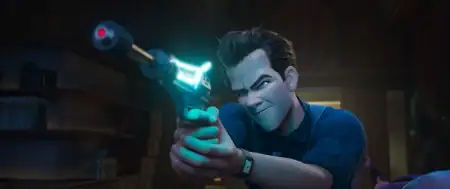
AI video discourse is professionally skeptical, and for good reason — the gap between a cherry-picked demo and real-world reliability has burned people before. What kept this conversation going was that the demos were unusually specific. A single 30-second shot tracking one character through six rooms in six art styles, held consistent by reference images. An edit that added an element to an existing clip while preserving the face, camera, and action. A match-cut through eight scenes in one generation.
Specific demos invite specific scrutiny, which is itself a kind of confidence. It’s harder to dismiss “watch this character stay consistent across six styles” than a vague montage. The discussion stayed alive partly because there was something concrete to actually argue about.
The healthy skepticism that’s part of the conversation
Not all the talk is praise, and that’s worth being honest about — it’s also why the conversation feels credible rather than hyped. The loudest caveat in the discussion is timing: this was a preview, not a public release. The platform is in enterprise beta with a public launch targeted for early July, which means the figures circulating are vendor numbers and stage demos, not independently benchmarked results. The data that’s actually been measured still describes the predecessor.
Seasoned observers are also noting the usual gap between a polished stage demo and day-one production reliability. None of this is dismissal — it’s the normal, healthy friction of a category that’s learned not to take launch claims at face value. The fact that the skepticism is this engaged is itself a signal: people are taking the release seriously enough to scrutinize it properly.
It reframed the cost conversation
There’s a quieter reason professionals are discussing it: the economics. When a usable 30-second result comes from one clean generation instead of multiple stitched clips plus an hour of cleanup, the way you evaluate cost changes. The relevant figure stops being price-per-clip and becomes price-per-finished-output. That’s prompted a lot of “is this actually cheaper for real work?” debate, and the honest answer is that it depends on your workload — which is exactly why people are running their own numbers against the Seedance 25 AI rather than accepting a verdict from anyone else. A conversation that sends people to do their own math is a conversation that’s actually landing.
What the talk is really about
Step back, and the chatter isn’t really about one platform. It’s about a threshold. For two years, AI video has been “impressive but not quite usable for real work.” The Seedance 2.5 reveal has people talking because it looks like the moment that gap might finally close — longer shots, controllable consistency, surgical editing, real direction, arriving together rather than one at a time.
Whether it fully delivers is the early-July question, and the skeptics are right to wait for it. But the reason the conversation won’t die down is that everyone senses the same thing: if the production version lives up to the preview, the discussion stops being “look at this cool demo” and becomes “this is how the work gets made now.” That’s a conversation worth having — and it’s why this one is still going.

Sandra Larson is a writer with the personal blog at ElizabethanAuthor and an academic coach for students. Her main sphere of professional interest is the connection between AI and modern study techniques. Sandra believes that digital tools are a way to a better future in the education system.