

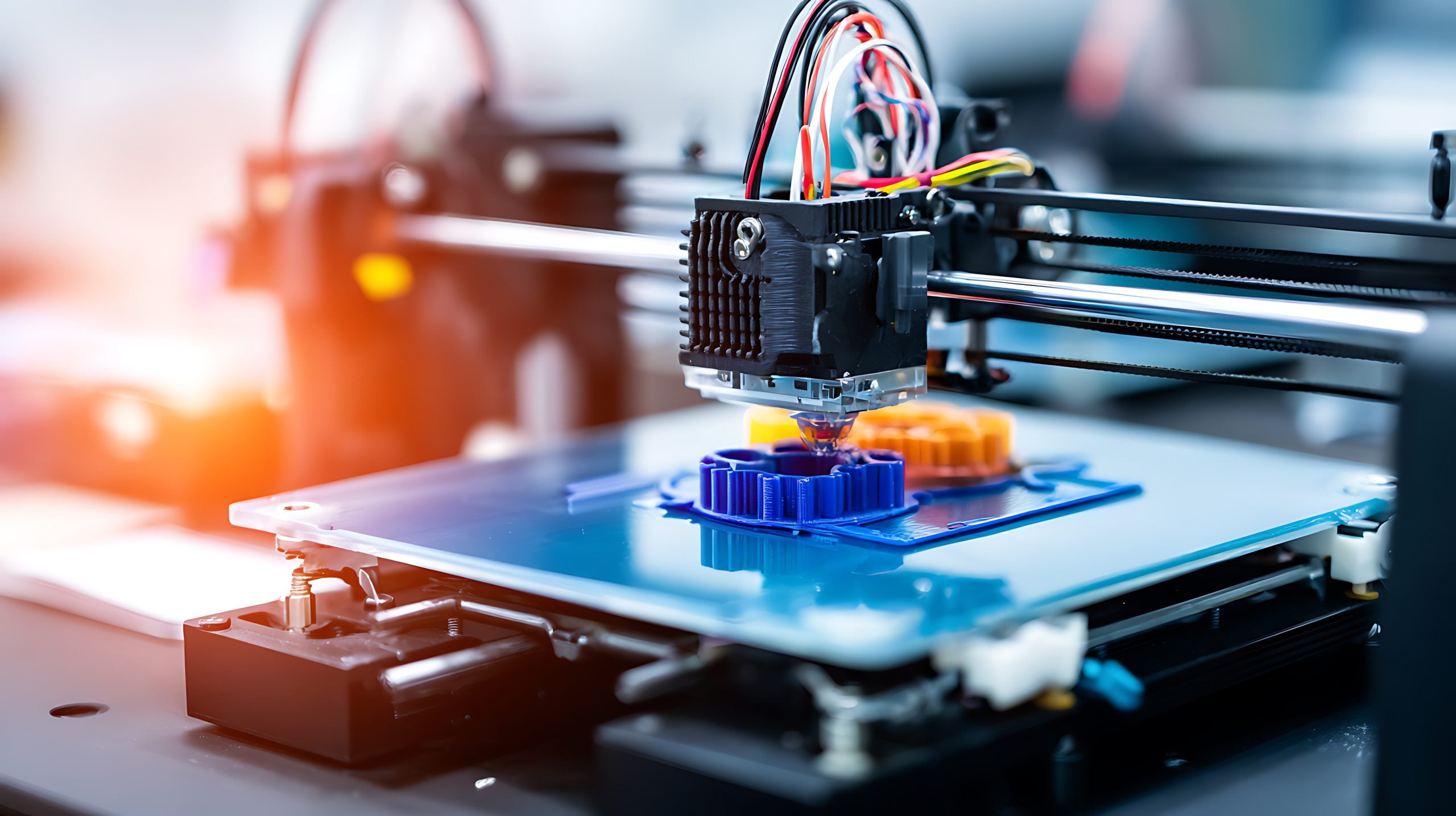
If you plan to use 3D printing for load-bearing parts like gears, jigs, drone arms, or car mounts, an enclosed chamber is a baseline requirement for successful Nylon printing. By stabilizing the internal temperature at approximately 45–65°C, it significantly reduces warping risks and ensures the tensile strength of the finished part reaches its rated specifications. This article covers the physical properties of Nylon, the role of enclosed designs, buying logic for home use, and a guide to avoid common failures.
Why Nylon Is Different From Common 3D Printing Materials
When comparing Nylon (PA) to PLA or PETG, it becomes clear why it is difficult to manage. Nylon has a high glass transition temperature, a shrinkage rate 2–3 times that of PLA, and can absorb 7%–9% of its weight in moisture within 24 hours. These three physical traits mean that Nylon requires a much higher level of temperature stability, humidity control, and cooling management.
| Material | Printing Temp | Bed Temp | Shrinkage Rate | Moisture Absorption |
| PLA | 200°C | 60°C | 0.3–0.5% | Low |
| PETG | 230°C | 80°C | 0.5% | Medium |
| ABS | 240°C | 100°C | 0.7–0.8% | Medium |
| PA12 | 260–280°C | 80–100°C | 1.5–2.5% | Very High |
| PA-CF | 280–300°C | 90–110°C | 0.3–1.0% | Very High |
Data perspective: The tensile strength of a PA-CF part printed in an open-chamber 3D printer is much lower than its rated value. An enclosed constant-temperature 3D printer allows the part to reach its intended performance. The difference determines if a part is functional or useless.
What an Enclosed 3D Printer Does
An enclosed 3D printer uses a physical chamber to lock in the residual heat from the nozzle and the rising warm air from the heat bed. This creates a stable internal environment. While this temperature barrier has little effect on low-shrinkage materials like PLA or PETG, it is the deciding factor for high-shrinkage materials like ABS, ASA, Nylon, and carbon fiber-reinforced engineering filaments.
Why Nylon Prints Better in an Enclosed 3D Printer
With the mechanism of an enclosed chamber clear, these three points explain its value for Nylon.
It Keeps the Printing Space Warm
During Nylon 3D printing, the filament leaves the nozzle at about 280°C and cools rapidly. If it cools too fast, the molecular chains do not align properly, leading to weak layer adhesion. An enclosed 3D printer raises the ambient temperature to 45–65°C, creating a gentle cooling curve that significantly improves layer strength.
It Reduces Warping and Cracking
Warping is caused by shrinkage stress. When the bottom layers have cooled and the top layers continue to shrink, the stress pulls the part away from the heat bed. An enclosed chamber reduces the temperature gradient across the part, distributing shrinkage stress evenly and lowering the chance of warping or cracking.
It Helps Parts Come Out Stronger
Home users often underestimate this benefit. A part printed in an enclosed 3D printer can be twice as strong as one from an open 3D printer using the same file and filament. The Flashforge Creator 5 Pro uses an enclosed constant-temperature chamber to treat internal heat as a controlled parameter, which is vital for engineering materials.
What Can Go Wrong Without an Enclosure
Printing Nylon in an open 3D printer often leads to first-layer warping, cracking at the third layer, mid-print layer separation, or a brittle finished part. These issues are a chain reaction. For example, a user printing a 150 mm PA-CF drone arm on an open 3D printer might see the part warp and detach after six hours. In an enclosed 3D printer, that same file usually succeeds on the first try. Open 3D printers also face air drafts that cause nozzle temperature fluctuations and dust that weakens layer bonds.
When Home Users Should Choose an Enclosed Nylon 3D Printer
Enclosed 3D printers represent a higher investment, so your choice depends on your specific needs. Selecting a dedicated nylon 3d printer ensures you have the thermal stability required for high-performance materials.
| Project Type | Enclosed 3D Printer Requirement |
| Models, toys, decorations (PLA) | Not required |
| Storage, outdoor parts (PETG) | Optional |
| Car interiors, enclosures (ABS/ASA) | Strongly recommended |
| Structural parts (PA12/PA-CF) | Mandatory |
| Long or overnight prints | Recommended (Safety/Noise) |
| Households with kids or pets | Recommended (Safety) |
If you intend to work with Nylon, ABS, ASA, or carbon fiber filaments, an enclosed chamber is a necessary configuration.
How to Choose an Enclosed 3D Printer for Nylon
When selecting an enclosed 3d printer for high-performance nylon, hardware specifications are just the foundation. To ensure dimensional accuracy and prevent warping, focus on these three critical areas:
Prioritize Active Chamber Heating
Nylon is prone to warping due to thermal contraction. An enclosed design is the minimum requirement, but a system with active chamber heating is optimal. It maintains a constant, controlled internal temperature, preventing the temperature fluctuations that cause stress-cracking and deformation. This stable environment is essential for achieving professional-grade precision in engineering parts.
Check Thermal Capabilities (Nozzle and Bed)
Nylon typically requires printing temperatures between 260–300°C. Ensure the printer has a nozzle capable of at least 300°C and a bed reaching 100°C. For example, the Flashforge Creator 5 Pro features a 320°C nozzle and a 120°C bed, providing the necessary thermal overhead to reliably handle advanced materials like PA-CF, PET-CF, and PPA-CF.
Manage Filament Moisture
The printer’s internal environment manages the printing process, but your filament’s condition is equally critical. Nylon is highly hygroscopic and can absorb enough moisture to cause bubbles and structural failure in under 4 hours at 50% humidity.
- Pre-dry: Use a filament dryer at 50–70°C for 8–12 hours.
- Maintain: Always utilize a dry box during the printing process to ensure the filament remains bone-dry throughout the build.
Design for Stability and Safety
A high-quality enclosed printer should feature robust construction capable of withstanding long-term high-temperature operation. For home or office environments, look for integrated HEPA filtration to manage emissions and door-open detection for safe, uninterrupted printing.
Simple Tips for Printing Nylon at Home
- Set the first-layer speed to 20–30 mm/s to give the Nylon time to bond with the bed.
- Use a PEI plate with PA-specific glue (PVP-based), as standard glue sticks often lack enough grip.
- Preheat the 3D printer for 10 minutes until the chamber temperature stabilizes above 45°C.
- Do not open the door during prints longer than 8 hours to avoid temperature shifts that cause separation.
- Let the part cool naturally to below 30°C before removal to prevent warping from residual stress.
| Issue | Common Cause | Solution |
| First layer warping | Low bed temp / No glue | Increase bed temp 5°C; Use PA glue |
| Surface bubbles | Damp filament | Dry at 70°C for 8 hours |
| Layer cracking | Unstable chamber temp | Keep door closed; Avoid drafts |
| Heavy stringing | Bad retraction / Dampness | Increase retraction to 1.5 mm; Dry filament |
| Brittle parts | Rapid cooling | Use enclosed chamber; Lower fan speed |
Final Thoughts: Is an Enclosed 3D Printer Worth It for Nylon?
If you only print Nylon occasionally for curiosity, an open 3D printer might suffice. However, to use Nylon as a true engineering material, an enclosed chamber is essential. It ensures your parts are load-bearing, functional, and stable. Investing in an enclosed 3D printer provides a reliable engineering lab for your home. The value of the 3D printer lies in its ability to deliver the specific parts you need.

Sandra Larson is a writer with the personal blog at ElizabethanAuthor and an academic coach for students. Her main sphere of professional interest is the connection between AI and modern study techniques. Sandra believes that digital tools are a way to a better future in the education system.