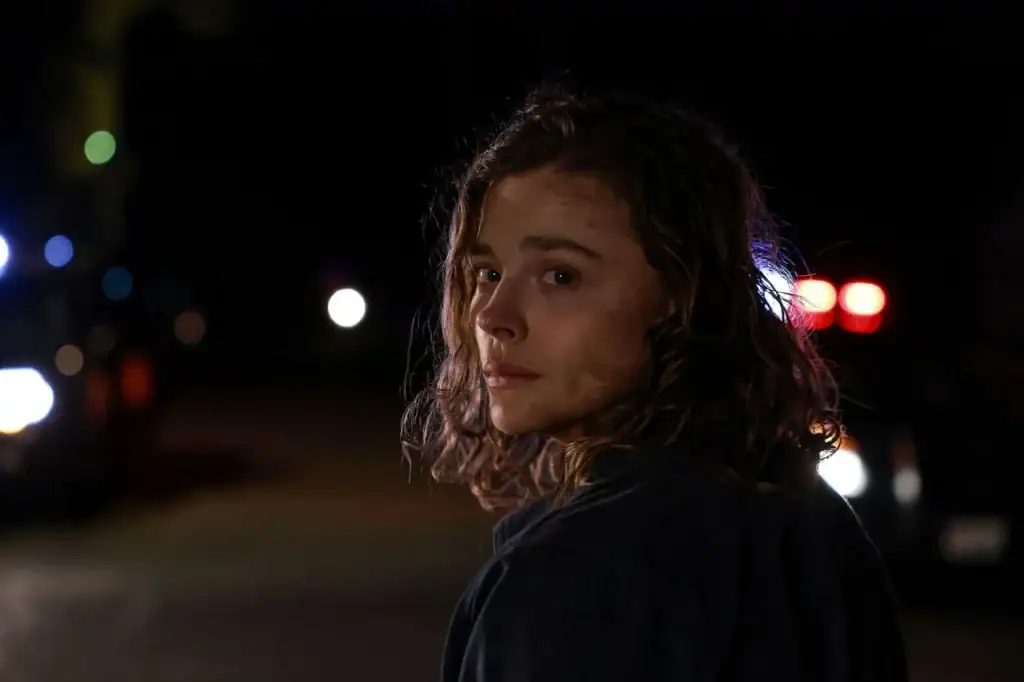
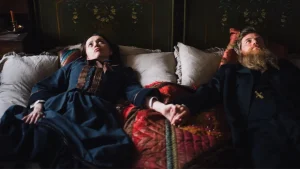
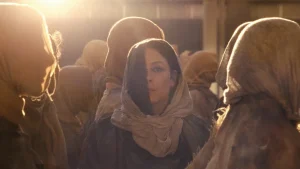
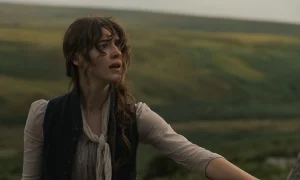
Reeve LeClaire (Chloë Grace Moretz) escapes her grisly captor’s clutches. Traumatized and scared, she is finally free. Ten years later, she is still reeling as she tries to move on. Yet as she tries to heal, another young girl, a survivor of a similar situation, enters Reeve’s life. What begins as a story of recovery becomes a sinister cat-and-mouse game. While the story is predictable at points, the main performance is stellar. Dark tension runs through the film, building to a cathartic release at the end.
The story begins ten years after Reeve’s escape. She is now in college, but living in constant relapse from the trauma of her abduction. Working with her psychiatrist, Dr. Lerner (Rupert Friend), helps but also feels daunting. A young girl named Tilly (Ava Jarque) makes headlines for surviving her captor. As a result, Friend puts her in contact with Tilly. What begins as mentoring becomes a case of deja vu for Reeve. While talking with Tilly, Reeve sees that the girl’s story points to other missing victims. With the police unhelpful and the prosecutor cutting her off, Reeve pieces together the clues, while putting herself in a dangerous game that has a target on her back.
The film’s real highlight is Moretz. She is dynamite in this movie. What could be a run-of-the-mill trauma escapade becomes something much more intimate. Moretz breathes pathos into Reeve and brings a lived-in experience to the role. She is reeling from her abduction, even a decade later. She avoids exposition and tedious monologues, projecting pain and scars through subtle, bewitching stares. It is a raw performance that gives Found Alive its juice. It stays with you, long after the credits roll. A haunting portrayal, but one that rises through the ashes like the proverbial phoenix, breathing life into a new day.
Now the story itself becomes a tad pedestrian. Events unfold as one might expect, with little fanfare or even contrived surprise. The cat-and-mouse game plays out as Reeve investigates the missing girl. It’s a familiar yarn: the trail has gone cold, and the obvious clues are being ignored. Reeve becomes a quasi-vigilante, making it her mission to rescue the missing girls. The disappointment is that once the film moves on from the mentoring angle of two survivors bonding over their shared experience, the pacing drags. The story follows the beats of a run-of-the-mill thriller but lacks the punch to make this outing memorable.
The film never decides whether it wants to be a personal story or a thriller à la The Call. Unlike Carlota Pereda’s first film, Piggy, this one lacks any tension or stakes. The atmosphere is heavy, but it stems mainly from the subject matter and is far from pleasant. To the film’s credit, it does not take the abduction or exploitation of children lightly. The subject matter carries a seriousness and maturity. Yet it is a vexing film, indecisive about what story it wants to tell. It has many moving parts, but nothing comes together smoothly.
The story stretches into a long-winded police procedural. The cat-and-mouse game is neither interesting nor revealing. We learn pretty quickly who the mysterious cat is, which makes for a less engaging mystery and more of a clock-watching exercise until we reach the inevitable conclusion. The ending captures a dimestore version of The Silence of the Lambs’ finale. Slipshod and predictable.
Ultimately, the film’s real gem, and perhaps its saving grace, is Moretz performance. Fierce yet relatable. There is a moment where she stares at grief and pain and lets it wash over her. It is a beautiful sight, and it makes the overall experience at least worthwhile. The story barely clears the line, but the performance is nothing short of spectacular.