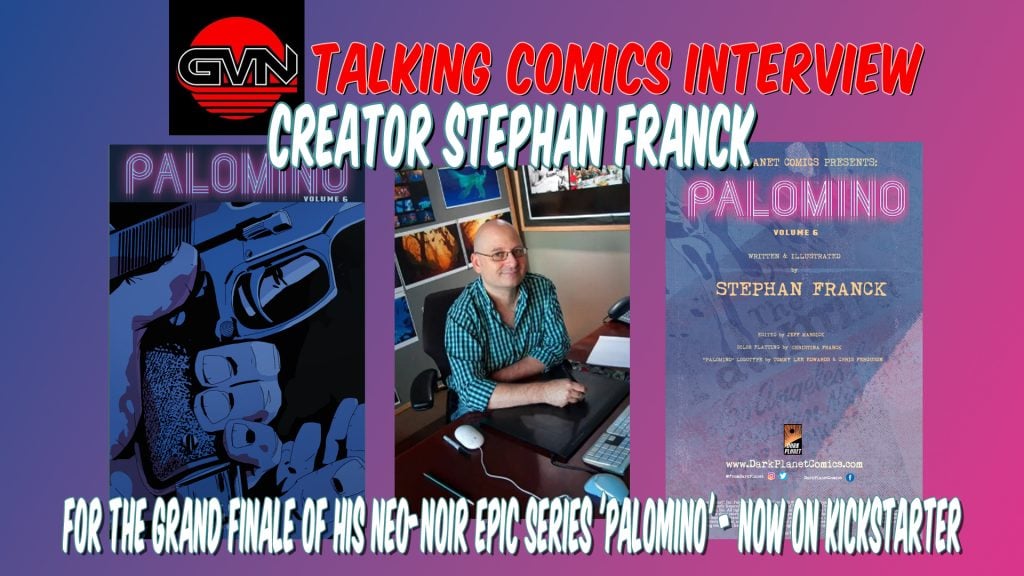
Few modern indie comics have captured the soul of neo‑noir quite like Stephan Franck’s PALOMINO. Set against the smoky bars and neon‑washed nights of 1980s Los Angeles, the series has followed former detective Eddie Lang and his daughter Lisette through a world of broken dreams, country‑western melancholy, and the kind of danger that never announces itself until it’s too late.
Now, after years of meticulous world‑building and character‑driven storytelling, Franck is bringing his Dark Planet Comics epic to a close with PALOMINO Volume 6, the final chapter, launching on Kickstarter. It’s the culmination of a long creative journey, one that blends noir fatalism with a deeply human story about family, grief, and the choices that define us.
We recently sat down with Stephan to talk about crafting a finale worthy of his characters, the emotional weight of saying goodbye, and how the Kickstarter community has shaped PALOMINO from the very beginning.
Palomino Volume 6
GVN: Welcome back, Stephan. We last spoke in May of 2025 about your book “Romance in the Age of the Space God, which was just starting its Kickstarter campaign. At the same time, we mentioned volumes 4 & 5 of PALOMINO. Fast forward a year, and we are meeting again to discuss the final chapter of this iconic series. So, let’s get into it. PALOMINO has always blended noir grit with a deeply personal emotional core. As you approached Volume 6, how did you balance delivering a satisfying mystery with giving these characters the closure they deserve?
STEPHAN: Palomino is indeed a mystery, with a web of seemingly unrelated crimes that all connect. As the series progresses, those mysteries are solved one by one, and in this final volume, we are left with not only the most central mystery of them all, but also the one with the strongest emotional resonance: who killed Lisette’s mom, Lena, and what exactly happened to her.
This unsolved mystery has loomed so large in Lisette’s life that it’s foundational to her core—well beyond “the truth will set you free.” At the beginning of Volume 4, Mac tells Lisette that she needs to give herself permission to live. This ultimate journey unfolds over one final night that Lisette must survive against all odds in order to be reborn on the other side.
How Palomino’s Vision has Evolved
GVN: This final volume marks the end of a long creative journey. Looking back, how has your vision for PALOMINO evolved from the earliest concept to this concluding chapter?
STEPHAN: Palomino is definitely a saga (661 pages!), and as I was mentioning earlier, it’s a web of interconnected mysteries that have to tie together, so there is no way to embark on something like this without a road map—or at least a sense of where things are trying to go and where the key connections are. I only started writing in earnest once I had a good way into the story, an angle on the characters, a clear sense of what the central mystery was, and at least images in my head of how it would resolve.
That said, they say that art is discovered, not created, so within those guidelines, I leave room for improv so the story can find its voice and reveal some of its secrets organically. And sometimes, it’s surprising. The biggest surprise came as I was writing Volume 4 and realized that some of the scenes I had planned didn’t quite ring true—until the idea that we needed a 14-year time jump in the middle of the story presented itself. Past the shock, and once I embraced it, everything fell into place.
Capturing 1980’s Los Angeles
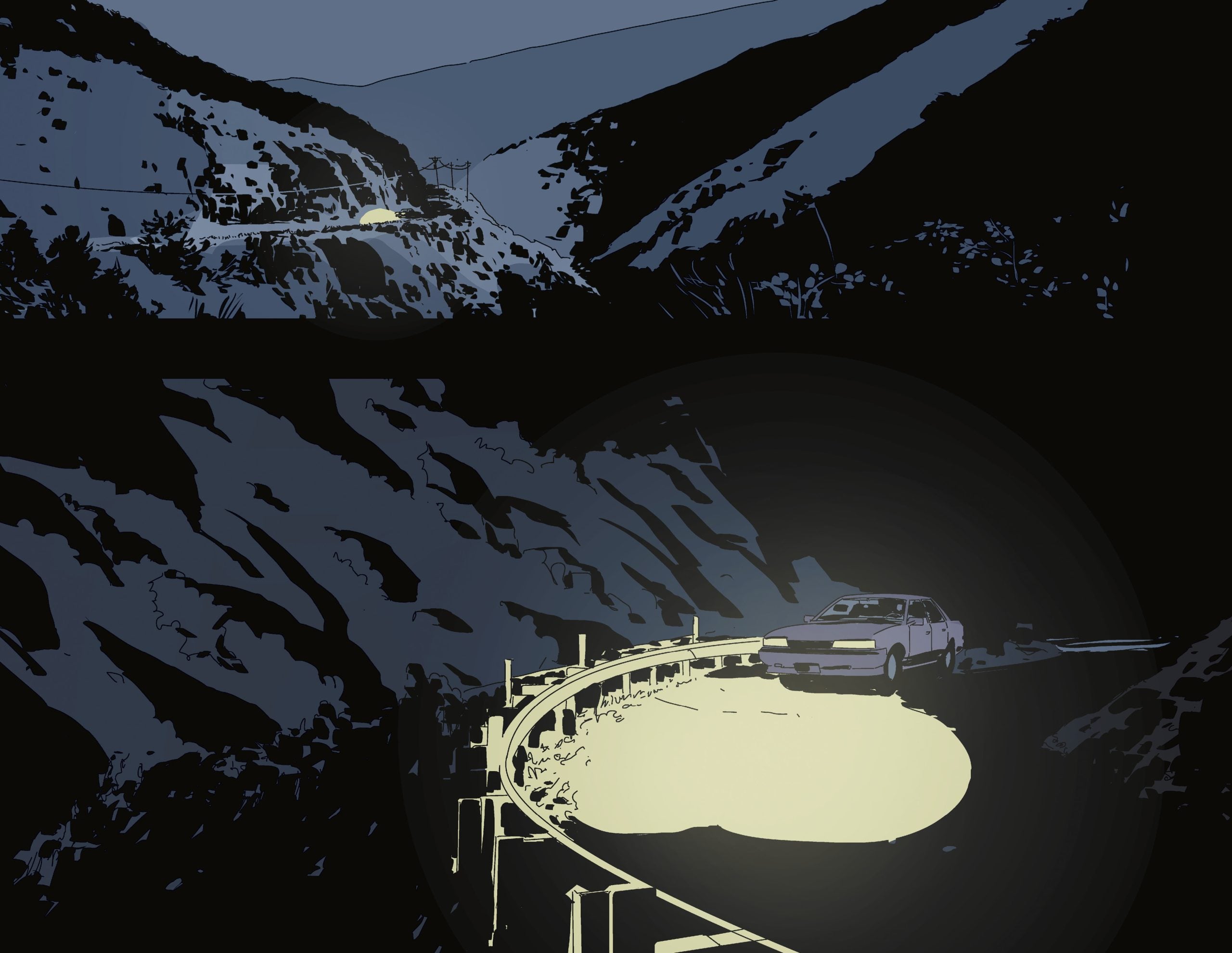
GVN: One of the hallmarks of PALOMINO is its grounded, lived‑in depiction of 1980s Los Angeles. How did you approach capturing that world one last time, and were there any visual or thematic callbacks you intentionally wove into the finale?
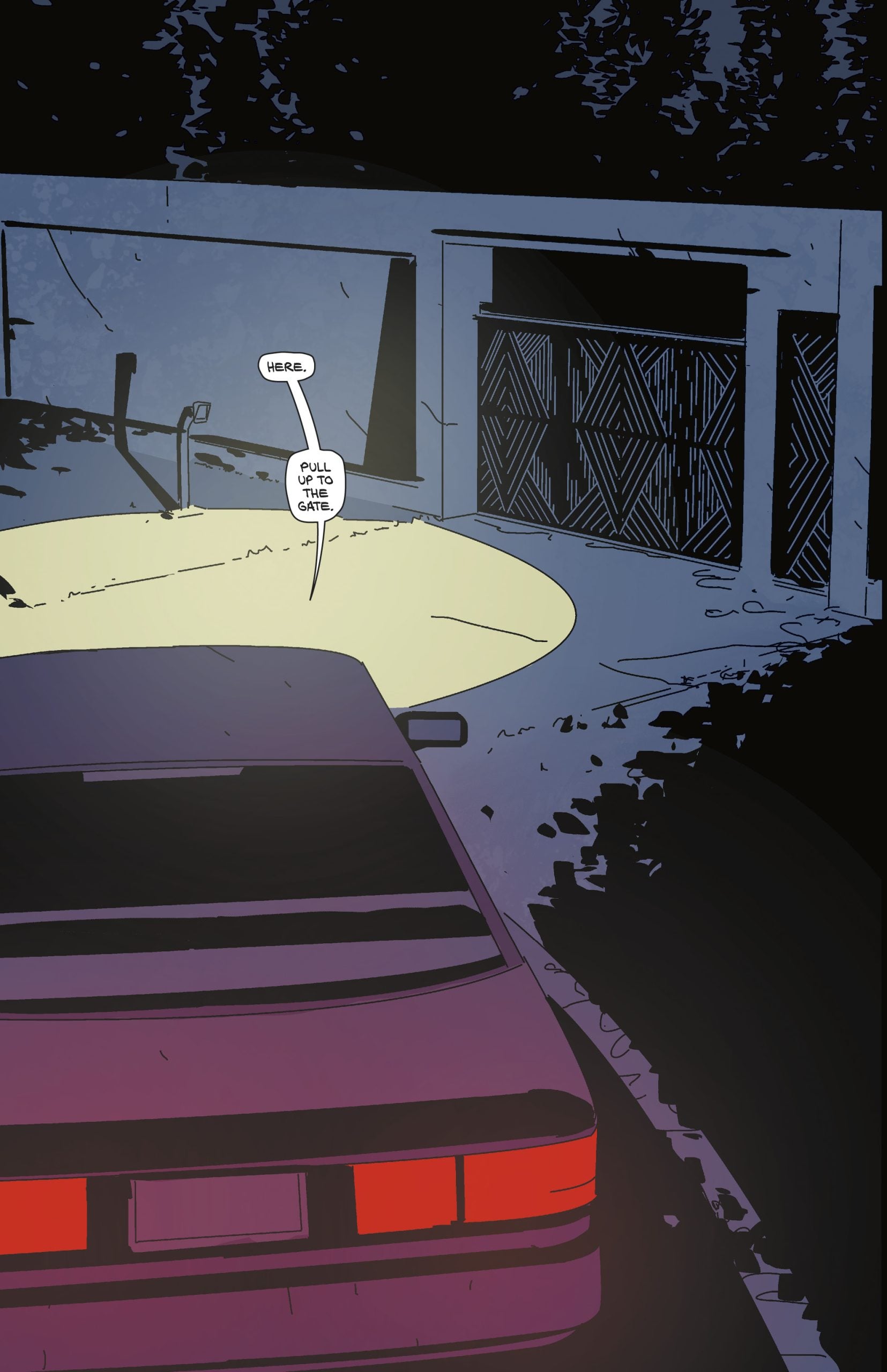
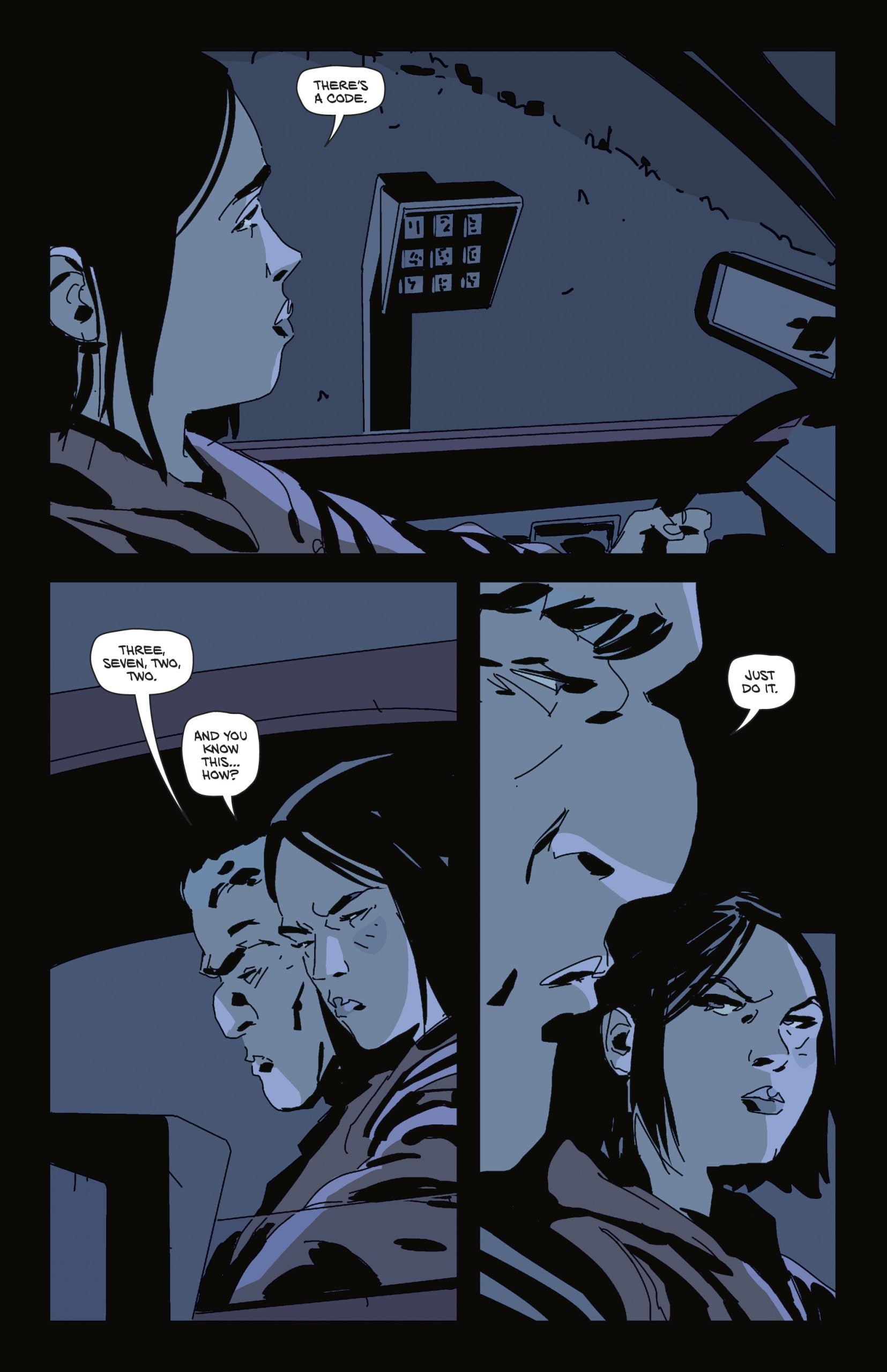
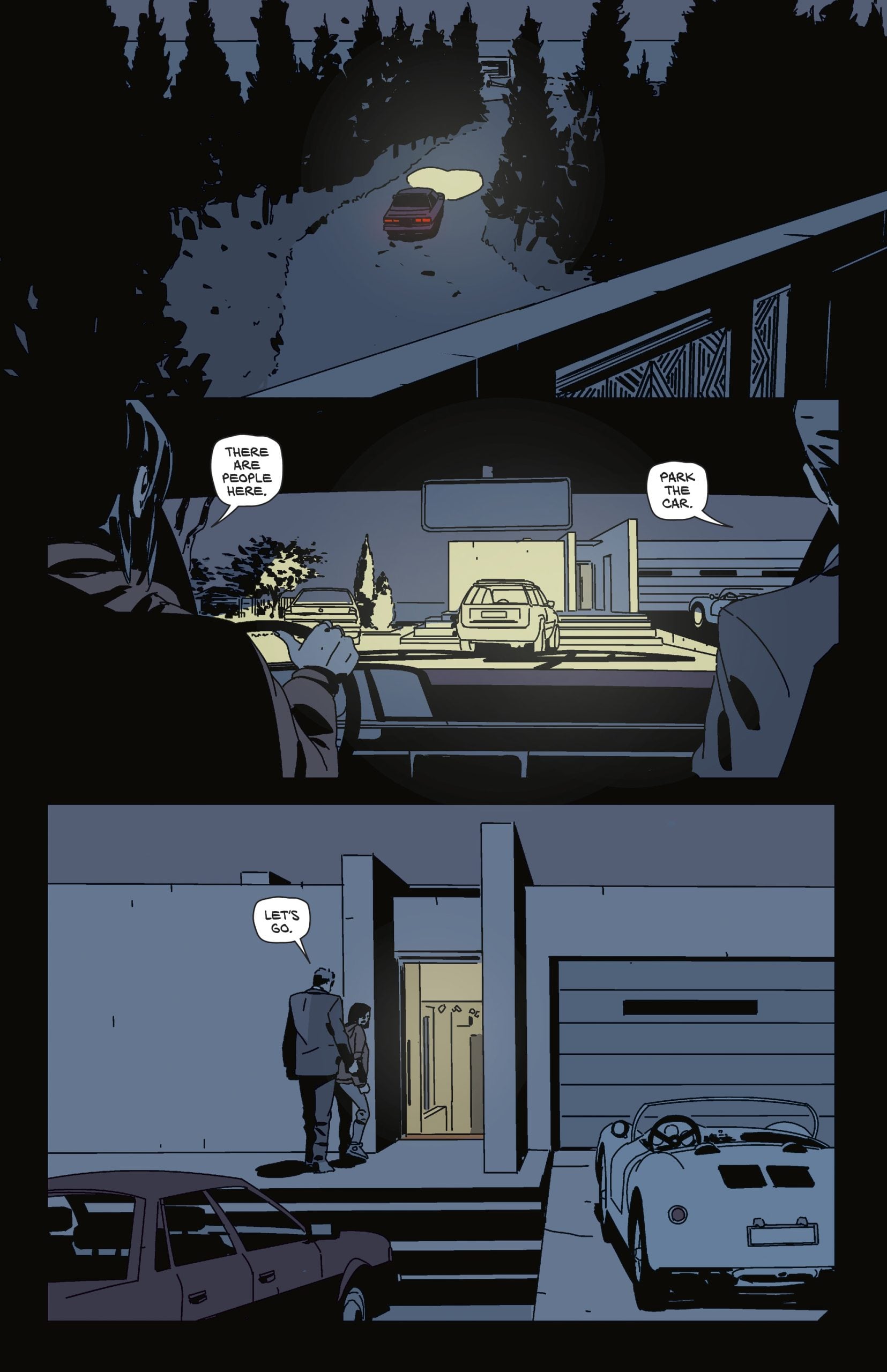
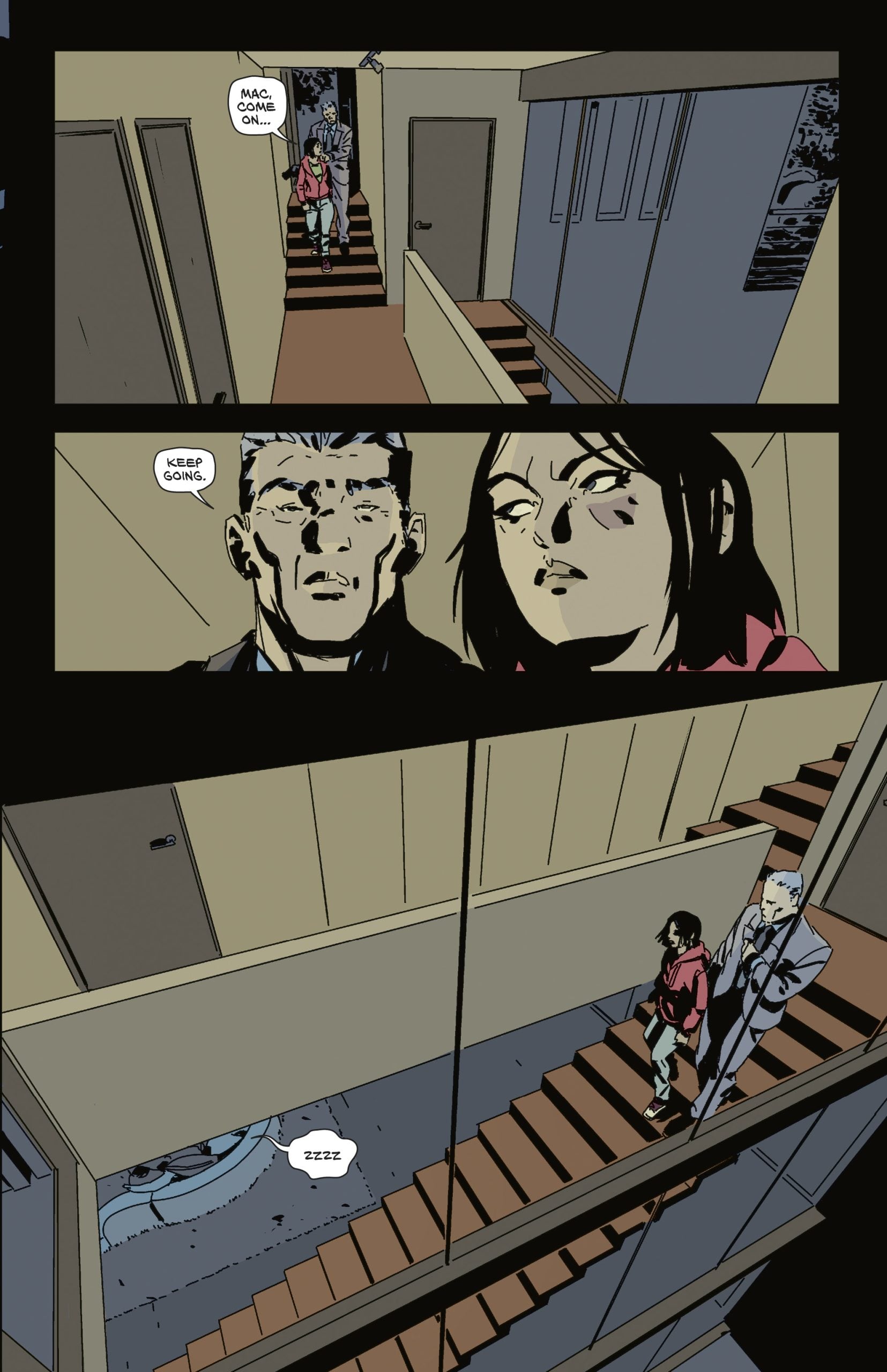
STEPHAN: I’m a vibe person, so I always go with a feeling before anything else. Because Palomino takes place in a world and time period that I actually lived through, I could start with personal memories of how things felt. This final volume is probably the most location-dependent in the series, and—without giving too much away—that Malibu mansion was crucial. I took inspiration from similar houses I had been to, and although the story concludes in the ’90s, I also needed to portray a sense that it had known its heyday back in the ’80s.
Then there is the epic final location where the ultimate confrontation takes place. The idea for that was completely story-driven and came from imagination, but when I looked for reference to see how it might possibly look, I was shocked to learn that it existed almost exactly the way I had imagined it. I had no idea. That goes to show that when you’re dialed in, you should just follow your instincts.

The Father/Daughter Dynamic
GVN: The father‑daughter dynamic between Eddie and Lisette has been the emotional spine of the series. What did you want to explore or resolve in their relationship as you brought the story to its end?
STEPHAN: The Eddie/Lisette relationship was really amazing to dive into, because it exists both when they’re together and later, in his absence. Yet he remains a defining presence in her life, and their relationship is frozen in time, which is why, after the time jump, we find Lisette—now going by Liz—with a case of arrested development. She is still a badass, and like Eddie, the kind of hard case who can’t let injustice go, but in the end, she needs to redefine herself, free of the things in her past that have controlled her for so long.
Emotional Resonance
GVN: Noir endings can be bleak, redemptive, ambiguous, or all of the above. Without spoiling anything, what kind of emotional resonance were you aiming for in Volume 6’s final pages?
STEPHAN: Noir always implies some amount of cynicism, but it’s the world that’s cynical, not the protagonists. On the contrary, deep down, they are hopeless romantics, which is why they clash against the hard edges of an amoral, transactional, and nihilistic environment. It’s impossible to live in that world and not be tainted by it, but at the end of the road, there is a chance at redemption that some will seize upon and that some won’t. That’s true not only for Liz, but also for a certain character—once extremely compromised (and I’m not going to reveal who)—who’s there to catch her at the very end.
Building Relationships Through Kickstarter
GVN: You’ve built PALOMINO independently through Kickstarter from the beginning. How has that direct relationship with readers shaped the way you approached this final volume, both creatively and personally?
STEPHAN: One of my favorite aspects of doing comics is meeting readers in person at comic book conventions. In my almost 15 years doing it, I must have shaken maybe 100,000 hands (a real number, not a figure of speech), and had as many wonderful conversations with people all around the country about various stories and what they mean in their lives. That’s humbling, inspiring, and has transformed my own relationship with storytelling.
That said, when I write or draw, I don’t try to do it for an audience or even for myself. Like actors say that acting is “turning yourself over to an imaginary set of circumstances,” I think writing or drawing is the same—I just commit to a set of characters or situations that I’ve become interested in, and let them guide me wherever they want to go.
What Readers Will Take from the Complete Palomino Saga
GVN: Now that the series is complete, and fans will have the opportunity to obtain the whole series through the Kickstarter campaign, what do you hope readers take away from PALOMINO as a whole—its themes, its characters, or even its place within the modern neo‑noir landscape?
STEPHAN: At the end of the day, Palomino is about the impermanence of all the things we take for granted—cultural landmarks and moments, the presence of loved ones, even political systems. So if everything changes and nothing lasts forever, what remains? Palomino says it’s the moral fiber of people—their sense of justice, their need for truth, and their unwillingness to let things go even when vast forces are stacked against them—which gets passed down from one generation to the next. In that sense, Palomino is a story of resistance.
Speaking with Stephan Franck about the conclusion of Palomino highlights just how much heart, memory, and craft have gone into this saga. The final chapter doesn’t just wrap up a story—it brings a whole emotional world full circle. We’re grateful to Stephan for taking the time to share his process and perspective, and we’re excited for readers to experience the ending he’s crafted with such care. You can visit the Kickstarter campaign for Volume 6 of Palomino here.

Senior Writer at GeekVibesNation – I am a 60 something child of the 70’s who admits to being a Star Trek/Star Wars/Comic Book junkie who once dove headfirst over a cliff (Ok, it was a small hill) to try to rescue his Fantastic Four comic from a watery grave. I am married to a lovely woman who is as crazy as I am and the proud parent of a 21-year-old young man with autism. My wife and son are my real heroes.