Ever clicked on a new show and felt a strange sense of déjà vu? Same actors showing up in different universes, familiar story arcs, the same visual tone quietly repeating across platforms.
You’re not imagining it.
Entertainment mergers have been doing that — quietly reshaping the content landscape while most of us are just… watching. In 2025, even with a cooling market, global media mergers still clocked in at tens of billions of dollars.
That’s not background noise. That’s structural change.
And the thing is, these deals don’t just affect companies. They shape the stories you get to fall in love with — or never see at all. Stick with me here.
The Deal Behind the Screen
It’s easy to think of movies and shows as creative bursts — scripts, actors, sets, lights.
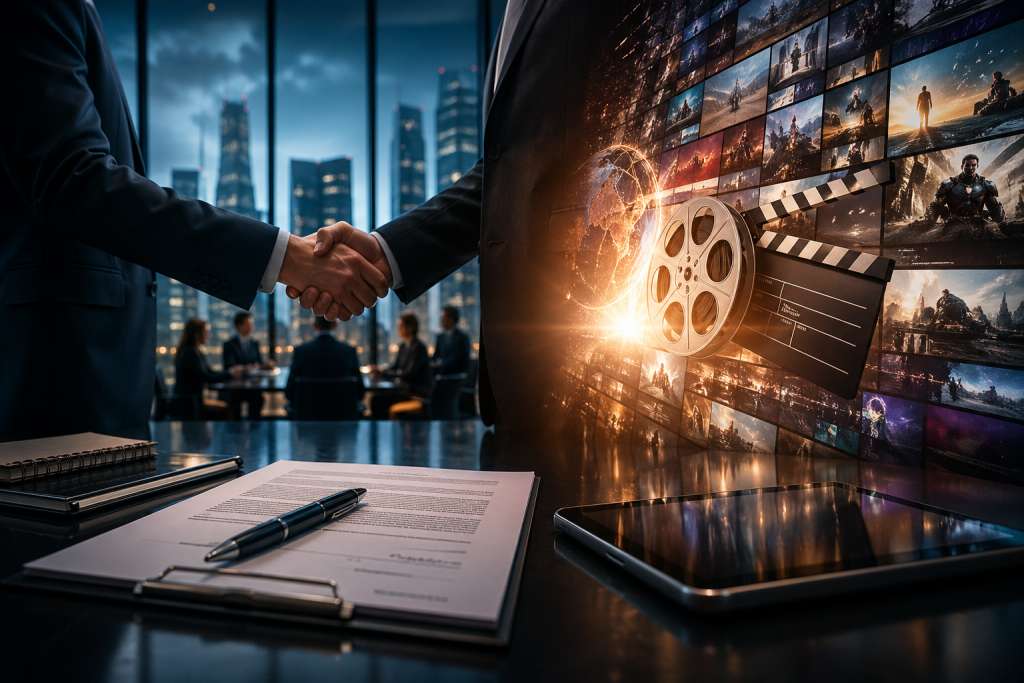
But rewind far enough, and it’s paperwork. Meetings. Contracts sliding across desks. Coffee going cold in boardrooms where decisions quietly reshape entire libraries of content.
A bit unglamorous. But that’s where the real story begins.
Why Companies Merge in the First Place
Studios merge for scale. Not exciting to say, but it drives everything.
-
Bigger libraries mean more content to recycle, reboot, or expand
-
Global distribution becomes smoother
-
Costs can be spread across more projects
When Disney acquired 21st Century Fox in 2019 for $71 billion, it wasn’t just buying studios or assets. It absorbed decades of storytelling history.
CNBC reported that the combined company controlled nearly 40% of the U.S. box office — a level of concentration that feels almost unreal when you say it out loud. That kind of power doesn’t sit quietly. It shifts priorities. It changes what gets funded next.
And behind that success, an M&A lawyer did all the legwork. They’re not on screen. Not in press releases either. But they’re there from the start.
M&A lawyers comb through contracts line by line, digging into rights ownership, hidden liabilities, and licensing gaps — the stuff that could derail billions if overlooked.
Then comes the structuring. They guide companies through structuring agreements, managing risk, and navigating regulatory approvals, especially when global markets are involved.
It’s slow work. But it decides what content ecosystems even exist afterward.
What You Gain — and What You Lose
There’s always a trade. Even when it doesn’t feel obvious at first.
The Upside: Bigger Budgets, Bigger Worlds
More money tends to follow mergers.
Netflix alone spent $17 billion on content in 2021. That kind of budget changes what’s possible — sweeping fantasy worlds, global shoots, production quality that hums with detail.
You can feel it in the texture of a show. The way a scene breathes.
The Downside: Less Risk, Fewer Surprises
Still… bigger stakes make companies cautious.
A 2022 Ampere Analysis report pointed out something that’s become hard to ignore — streaming platforms are increasingly leaning on existing intellectual property. Sequels, reboots, familiar intellectual property — safer bets when billions are on the line.
And those strange, offbeat ideas?
The ones that don’t quite fit a formula? They get harder to justify.
Streaming Wars and Algorithm Control
This is where things shift from subtle to… almost invisible.
How Platforms Shape What You See
Mergers often lead to platform consolidation — fewer services, each holding more exclusive content. A 2023 Nielsen report found streaming accounted for over 38% of total U.S. TV usage, overtaking both cable and broadcast.
That’s a huge shift. And it comes with consequences:
-
Platforms promote what they own
-
Algorithms surface what keeps you engaged
-
Smaller titles drift into the background
You’re still choosing, sure. But the menu? That’s curated.
So… How Does It All Shape What You Love?
It shows up in ways you don’t always notice at first.
A show you like gets a spin-off. Not surprising. It performed well, it fits the strategy, and it has an audience ready to follow. Another series disappears after one season. Not because it failed creatively — sometimes it just doesn’t fit the long-term structure of the platform anymore.
You don’t always notice the shift while it’s happening.
It just… accumulates.
The Takeaway
Here’s the strange thing — you rarely see the merger itself. No headlines when a show quietly disappears. No alert when a script gets shelved because it doesn’t fit a new strategy.
But you feel it.
Still, sometimes these mergers bring incredible things to life. Bigger worlds. Stories that wouldn’t exist otherwise. So it’s not all lost. Not really. It just makes you wonder — the next show you fall in love with… was it created for you, or for the algorithm?

Amanda Lancaster is a PR manager who works with 1resumewritingservice. She is also known as a content creator. Amanda has been providing resume writing services since 2014.