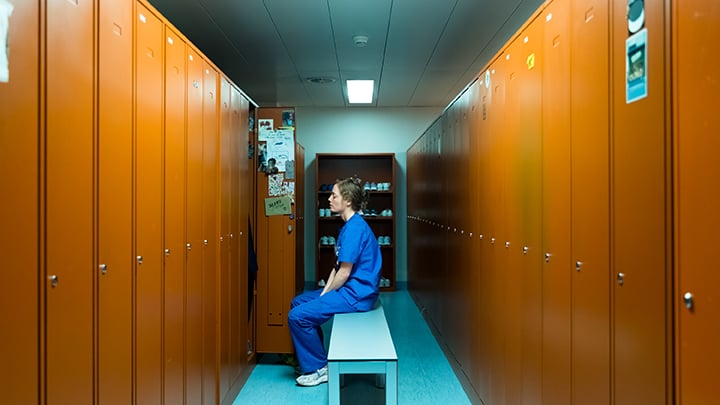
I have family members who work in health care as nurses. I know their passion for their work, but I also know about their workload. The events of Late Shift feel less like a drama and more like a day-in-the-life. The fluorescent bulbs burn bright overhead. Professionalism may be in short supply, but that is only because exhaustion is on demand. Over the course of a shift, two nurses and a trainee work overtime to pick up the slack, battling interruptions and attempting to deliver expert, timely care. The movie plays like a documentary and a clarion call to fix the holes in health care systems, before the ruptures become permanent.
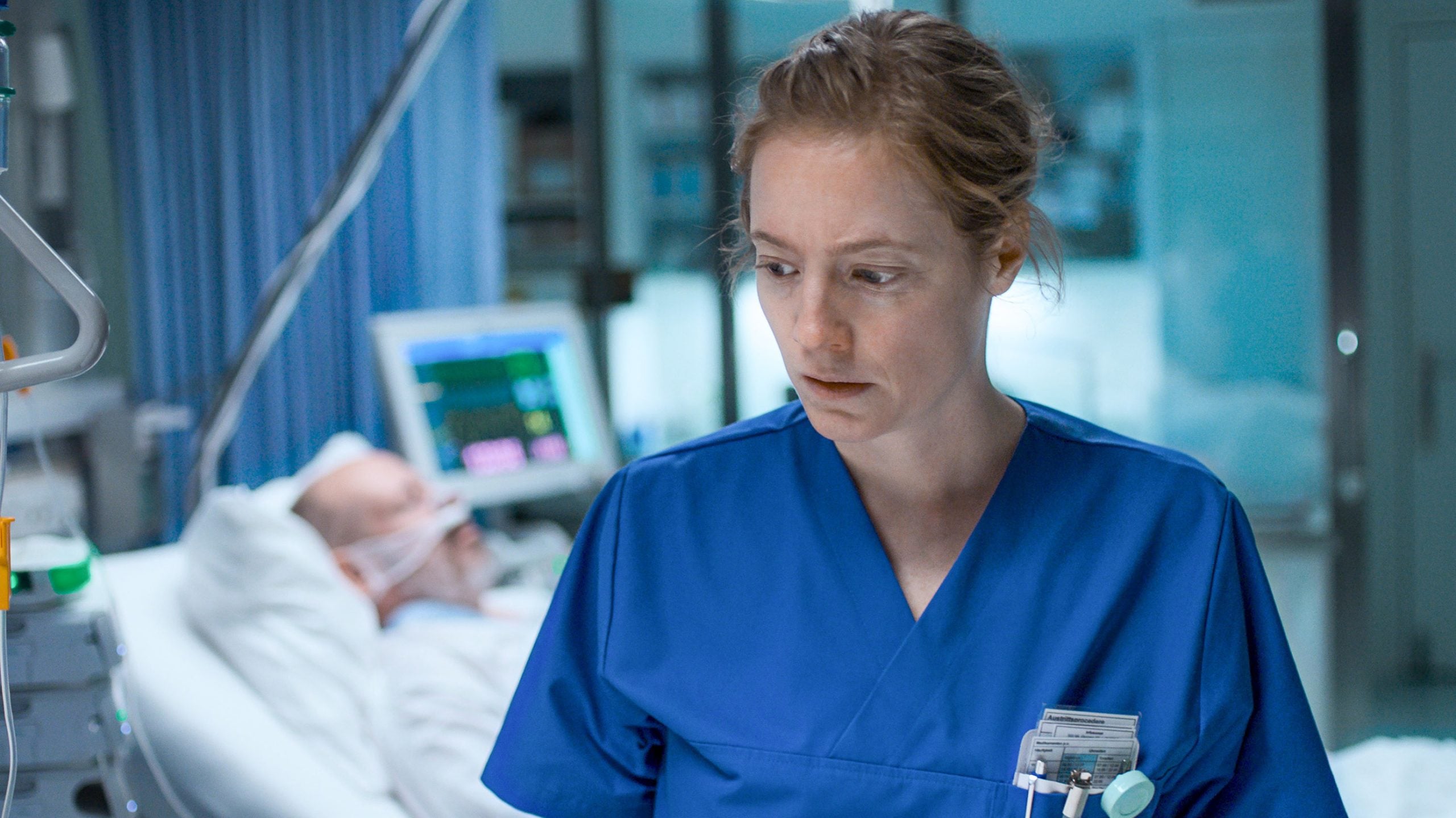
The story opens like any other day for nurse Floria (Leonie Benesch). Set to begin her night shift on the surgical ward, she arrives at work to find a crisis brewing. Understaffing is the first fire she must put out. One colleague is out sick, and there is no replacement. Two nurses and a trainee are the only ones now responsible for more than two dozen patients. And of course, it is no ordinary night on the floor. Repeated calls, medication administrations, soothing patients, and fielding complaints push Floria to the brink. No room for error, as one slip-up can mean the difference between life and death.
Despite being set in Sweden and reflecting the immediate challenges facing the nursing community there, the problem of staff shortages is global. Here is where the movie is smart. While a fictionalized account, the situation it tells is real. For example, by 2030, Switzerland will be short 30,000 trained nurses. In addition, 36% will leave their jobs after 4 years. Late Shift is a bullhorn, declaring an ongoing and forthcoming crisis in the medical community.
The film’s story is one of exhaustion and frustration, and that is by design. We watch as Floria is pushed to her breaking point and seemingly cracks up during her shift. There is a sequence near the end of the film in which, after dealing with an unruly patient, Floria seizes his expensive watch and hurls it out the window. The moment is earned in the context of the story and certainly provides some comic relief. However, it speaks to the film’s central premise. Nurses are working on overload.
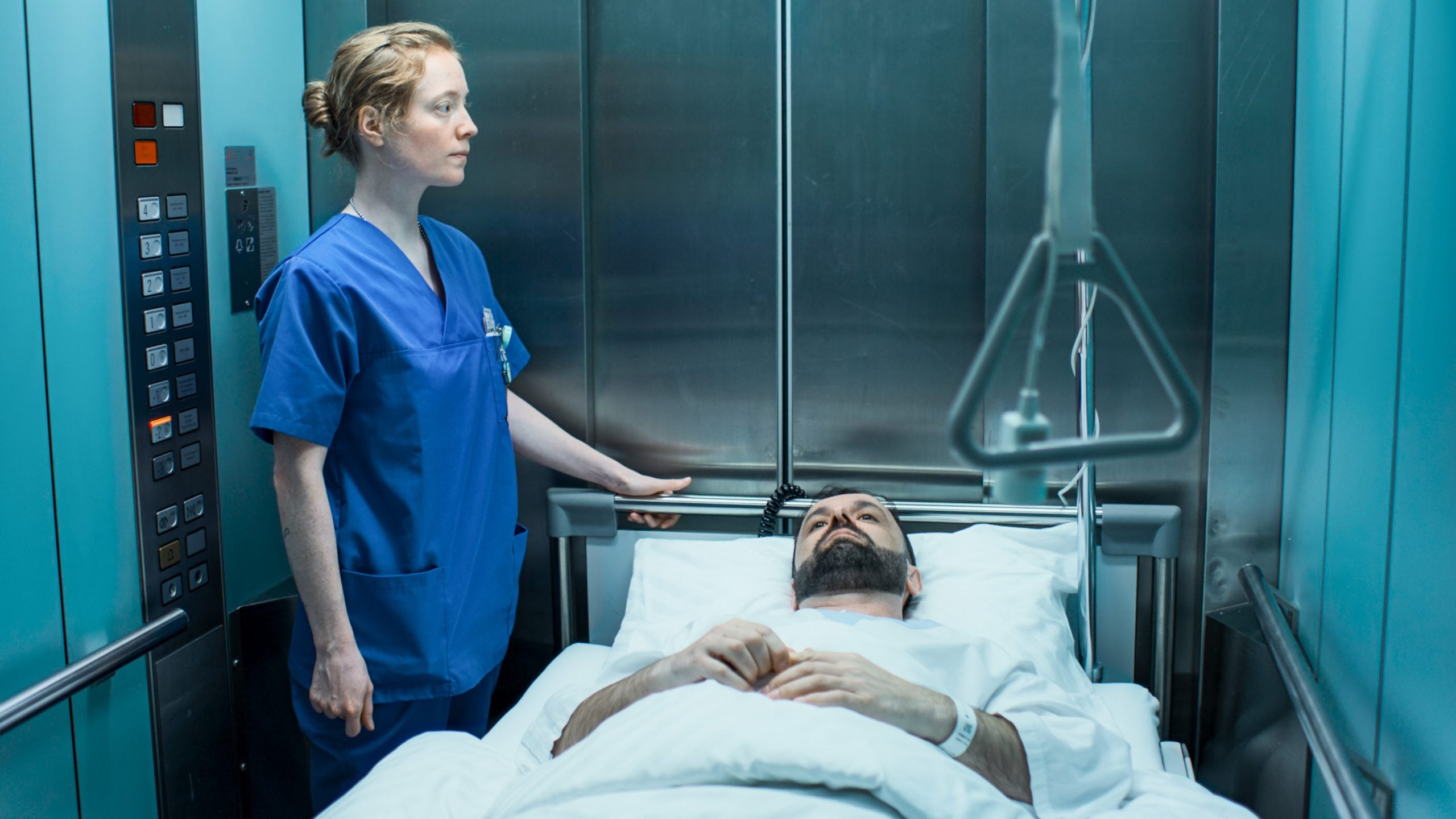
The lead performance by Leonie Benesch is what unifies this movie. We are with her from start to finish. It is worth noting that she completed an internship at a hospital before the film, thereby immersing herself in the day-to-day rigors of nursing. The story moves at a sharp pace, capturing the narrow window of time that goes into a split-second decision about health. We see the strain on Floria, and it reveals itself in moments, generally private ones, when she is off the floor. Still, she maintains professionalism and expert care.
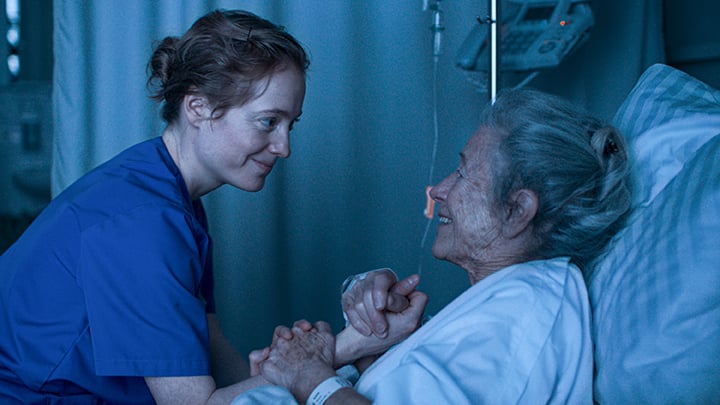
These are moments of personal care. We see Floria doing what nurses do best: caring. Here, Benesch channels the unspoken, yet paramount, role of a nurse. These private moments with patients of varying care needs underscore the importance of these jobs and why they need support, compensation, and relief.
One of the plot points involves the doctor, whom the nurses are supposed to defer to, being nowhere to be found. This development speaks to how nurses feel isolated and carry the weight of their jobs without any backup. Here again, the film spits out hard, cold facts about the state of the nursing industry. The World Health Organization projects a shortage of 13 million by 2030! Here are major props to writer/director Petra Volpe, who is tackling a relevant social and political issue that is not some minuscule matter but one of major importance to everyone.
Late Shift is a movie with a message that is not only timely but urgent. Playing out as a day-in-the-life with documentary precision, it should serve not only as a reminder of the underappreciated role of nurses but also of why they need support now.
Late Shift is now available on Digital platforms courtesy of Music Box Films.
Late Shift is a movie with a message that is not only timely but urgent. Playing out as a day-in-the-life with documentary precision, it should serve not only as a reminder of the underappreciated role of nurses but also of why they need support now.

Writing & podcasting, for the love of movies.
His Letterboxd Favorites: The Dark Knight, Halloween, Jaws & The Odyssey.