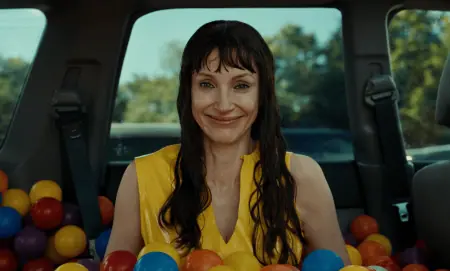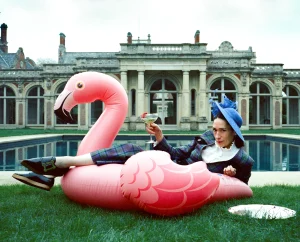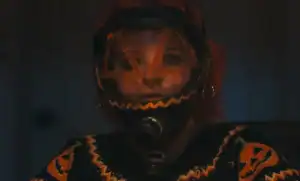
When I was a kid, I used to have a recurring nightmare in which Cher revealed herself to be a vampire and leaped from the 1999 VH1 Divas Live stage to reclaim her throne as the queen of the damned.
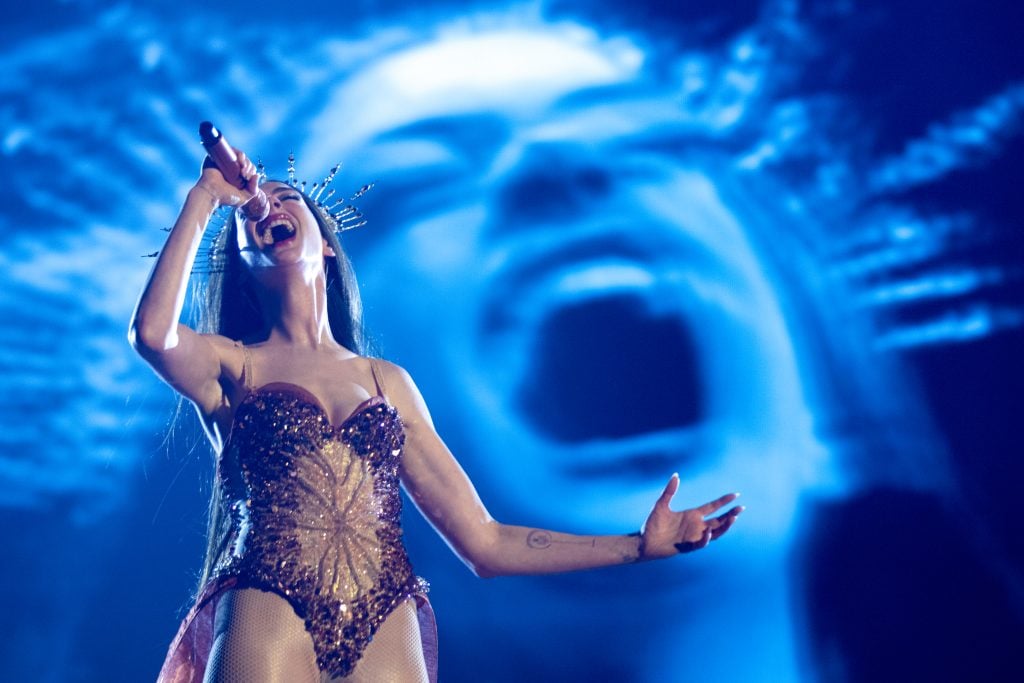
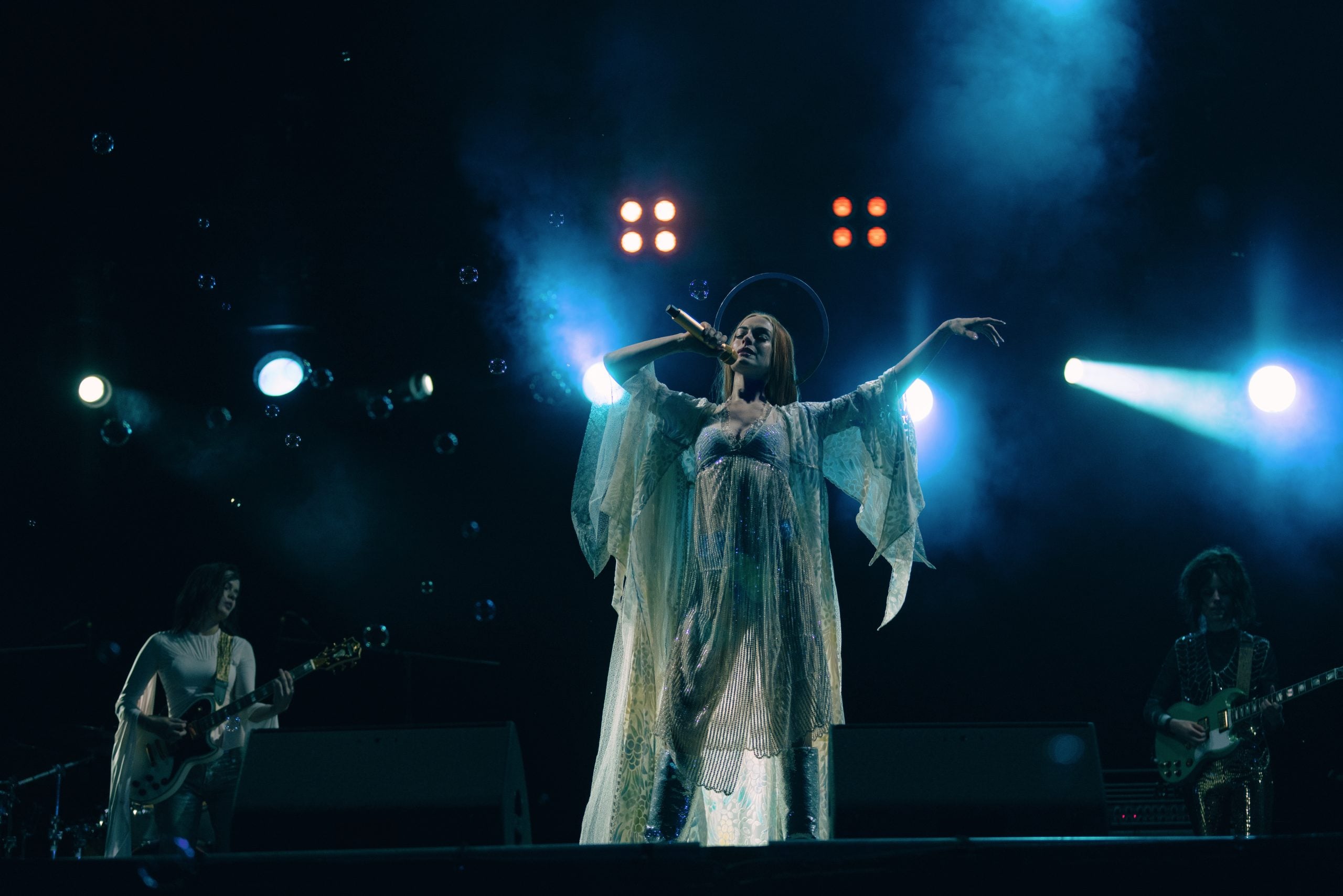
David Lowery essentially adapts that nightmare with Mother Mary. In place of Cher is the titular Mother Mary (Anne Hathaway), a glittering Lady Gaga-esque pop star, strutting across the stage in vaguely Catholic headpieces. Popular as she is, Mary is in a rut after a very public meltdown. She plans to make a spectacular return to the top of the pop charts, but she needs help.
That is where her Bob Mackie comes in. She rushes to London to seek the help of her best friend and costume designer, Sam Anselm (Michaela Coel), to design her comeback gown. However, there’s a reason why Mary had to fly out to see her. Despite their falling out, Sam agrees to work on the dress, using the design process to hash out their irreconcilable differences. What soon becomes clear to them both is that there are more ghosts they need to excise than a disagreement over creative direction.
My adolescent imagination, two decades worth of Illuminati accusations, and this film suggest there’s something to the idea of a pop star being haunted or influenced by demonic forces. Of the three, Lowery certainly has the most creative take. His film is awash in stunning images, beautifully capturing the hypnotic appeal of Mary’s performances and the unsettling aura creeping along the edges. He is at his most compelling in crafting images on the edge of the supernatural, especially the shots in which a long, flowing red stretch of fabric floats in the black abyss of Mary’s subconscious (or perhaps some other dark cosmic plane). They are undeniably, equally striking and disturbing sequences, enhanced by Daniel Hart’s tense score. They hold our attention, even when the story attached to them starts to drift.
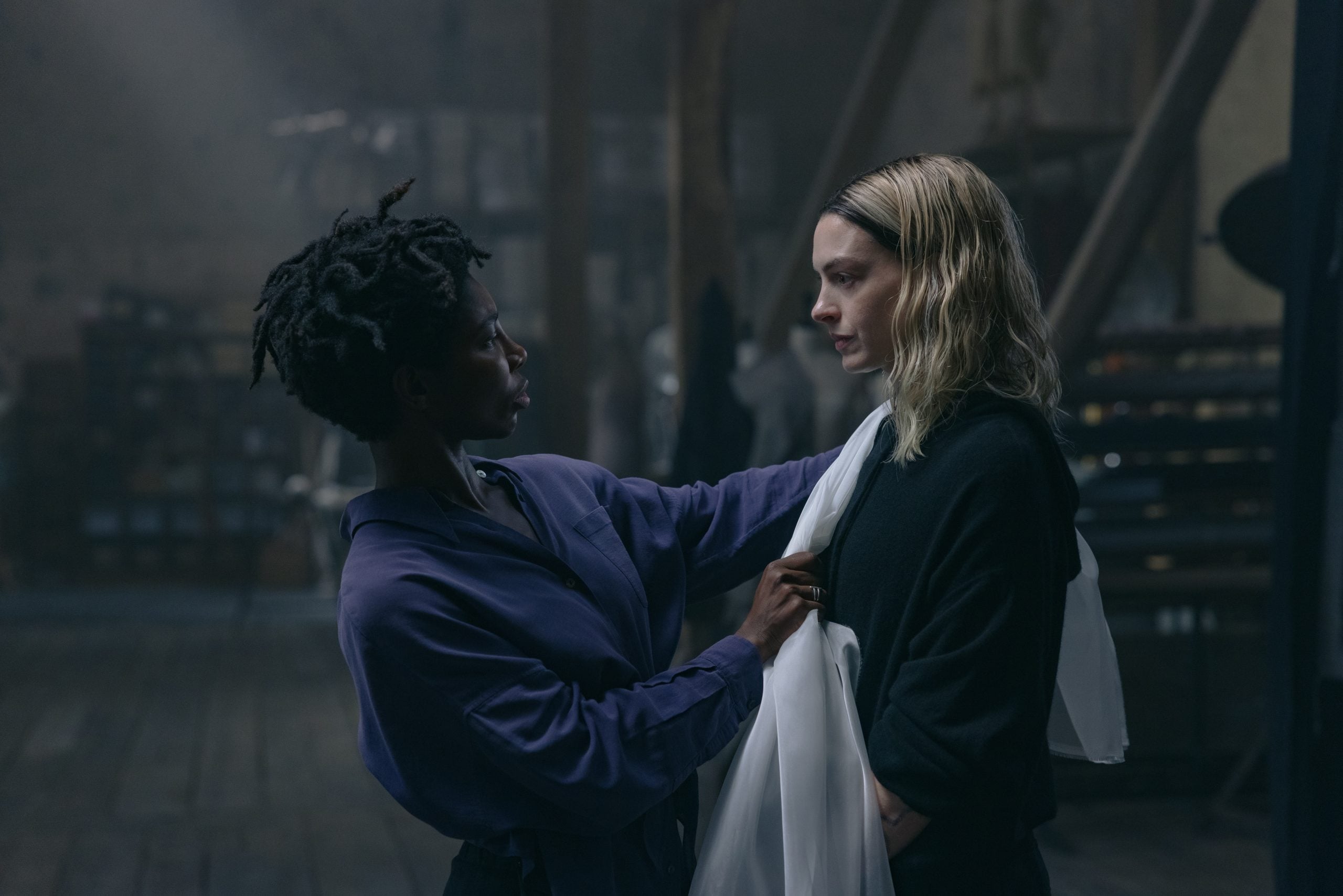
The drift or its cause isn’t immediately clear. Mother Mary begins primarily as a psychological chamber play, with Mary and Sam talking around their issues to test the waters. Lowery weaves a foreboding atmosphere around them with his camera, snipping and dripping between Sam’s testy, bemused quips and Mary’s marrow-deep exhaustion and acquiescence. The tension is almost unbearable in its intimacy. Sam’s deliberately off-putting questions about Mary’s creative rut, ostensibly to conceptualize Mary’s dress, feel like the evil version of Carolyn Bessette taking JFK Jr.’s measurements in the pilot episode of Love Story. Mary’s music-less dance showcase for Sam (Sam refuses to listen to Mary’s new song) is beautifully cringe and sad in its locked-in commitment.
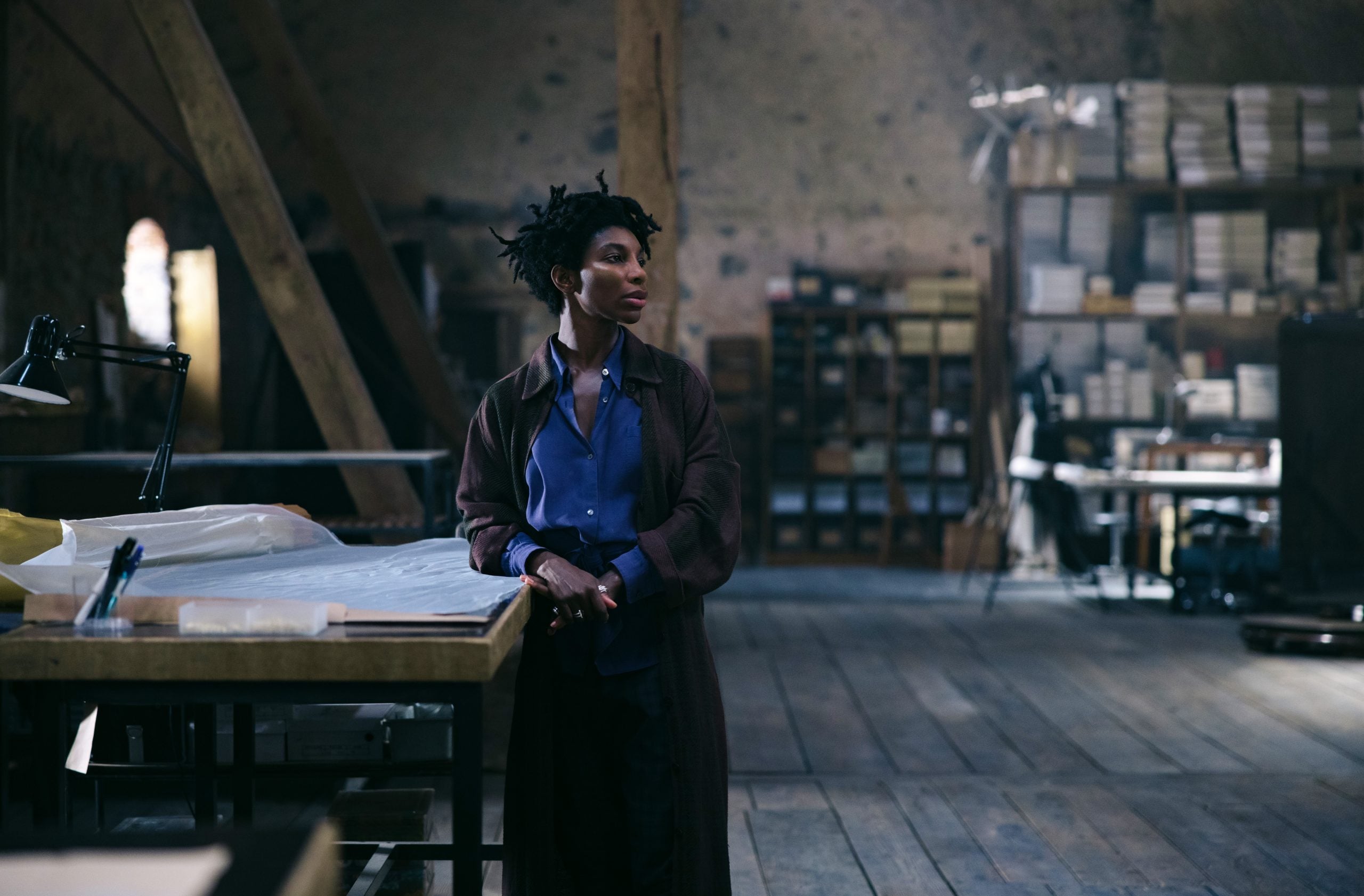
When they start cracking into the circumstances of their split, we get glimpses into the mess that can spew from the entanglements of professional and personal, and creator and muse. Lowery could’ve framed Sam and Mary within easy archetypes: Sam could be the betrayed partner or the spiteful, vengeful artist, while Mary plays either the tail-between-her-legs Svengali puppet or the prideful but desperate has-been. Lowery takes bits and pieces of all of them and melds them into murkier portraits of creativity, ambition, and love in the public eye. Every word between them – at first artificial, and then progressively more honest – is tinged with the ache they refuse to feel, lest they acknowledge just how badly they wounded each other.
Michaela Coel and Anne Hathaway expertly show us how those wounds can fester. Coel is excellent at playing Sam’s mind games; her stilted tone and wide eyes hint at a cruel mania that would unsettle a stone, never mind a former friend. (In hindsight, her performance is so compelling that it feels like a miss to not directly tether the film’s supernatural elements to Sam.) Hathaway is just as strong on the receiving end of Sam’s psychological needling. She’s mesmerizing on stage, hitting all her marks with an ethereal air that plays well even to the nosebleeds. She then flips that aura on its head, letting the pretense slip and allowing the weight of stardom to grind her movements and speech down to a crawl.
Unfortunately, Mother Mary’s shift from psychological celebrity drama to twisted spectral horror is a greater weight. Mary’s visible wear and tear is attributed to a dark spirit that Sam can also sense, leading to an extended origin flashback featuring pop art musician FKA Twigs. The scene is less unsettling than Sam and Mary’s protracted confrontation and zaps the film of its steadily building pressure-cooker momentum. The film drags in this stretch, relying heavily on the aforementioned stunning visuals to retain our flagging interest. A brief spark in the final act comes from re-grounding the supernatural elements in Mary and Sam, but the conclusion feels too neat to satisfy the corrosive nature of their relationship.
Mother Mary ultimately has little more to say about the state of celebrity or creative expression than either my Cher nightmare or Twitter and Reddit musings about the Illuminati. While certainly more artful, David Lowery’s attempt to blend pop and phantom presences lessens the impact of both. Pop divas make great haunted vessels in theory; in practice, the promise rings a bit hollow.
Mother Mary will debut in select theaters in New York and Los Angeles on April 17, 2026, courtesy of A24. The film will expand nationwide on April 24th.
While certainly more artful, David Lowery’s attempt to blend pop and phantom presences lessens the impact of both. Pop divas make great haunted vessels in theory; in practice, the promise rings a bit hollow.

A late-stage millennial lover of most things related to pop culture. Becomes irrationally irritated by Oscar predictions that don’t come true.