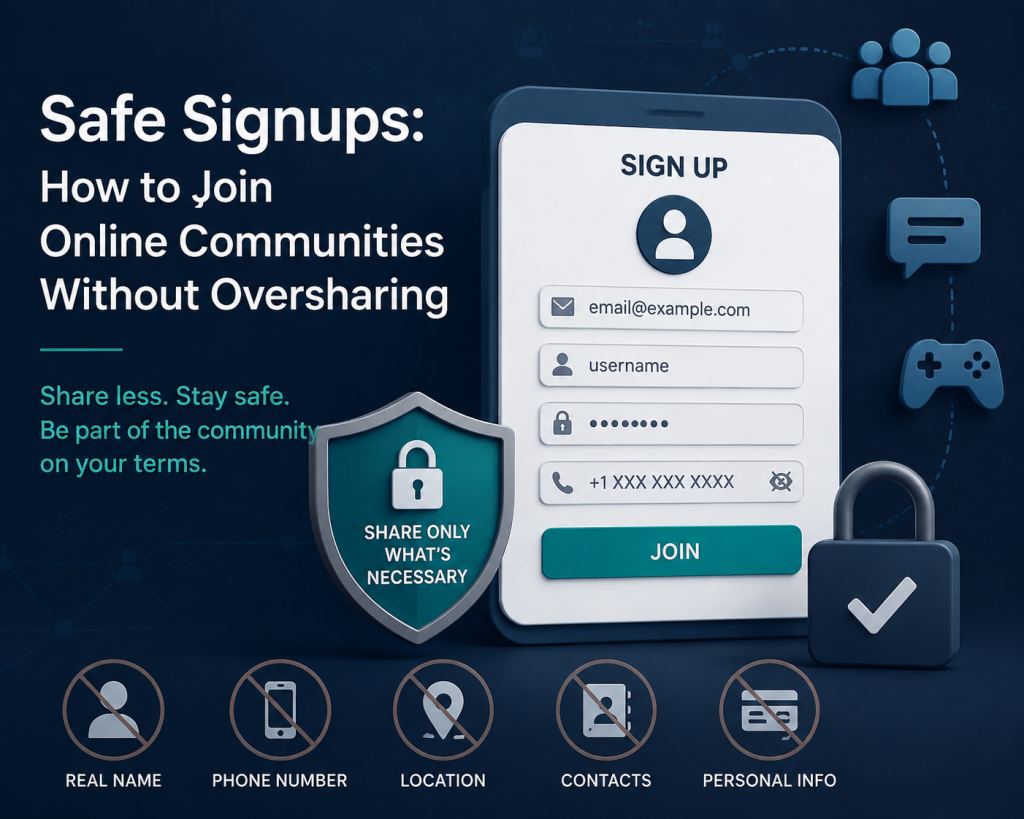
Most users do not overshare by accident. They respond to pressure.
A signup form asks for a phone number. The field sits there like a locked gate. People enter data just to move forward.
Three patterns drive this behavior.
First, speed pressure. Users want access fast. They treat forms like toll booths.
Second, habit. Many platforms now expect phone verification. Users stop questioning it.
Third, unclear value. Sites rarely explain why they need specific data.
A phone number feels small. But it connects accounts, identity trails, and device history. Once shared widely, it spreads across systems like ink in water.
Some users reduce exposure during signups by separating contact channels. For example, they use temporary numbers for verification steps where long-term contact is not required. Tools that allow users to receive sms through virtual numbers support this separation and help keep primary phone data out of low-trust or one-time registrations.
What Data Signups Really Collect
Most signup forms look simple. They are not.
A platform usually asks for three layers of data.
First, identity data. This includes email, phone number, and sometimes full name. These fields link your account to a real person.
Second, behavior data. This includes device type, IP address, and login time. The system uses it to track patterns.
Third, optional enrichment data. This includes profile photos, contacts, or social links. Platforms use it to build stronger user profiles.
The problem is not each field alone. The problem is connection. Each piece links to the next. Over time, a small profile becomes a full identity map.
This is why some users reduce direct exposure during phone verification. Instead of sharing a permanent number everywhere, they use services that let them receive sms smsfast.com through temporary numbers. This keeps the main phone line separate from low-trust or short-term signups.
When you split contact channels, you reduce the spread of your personal data across systems.
Common Signup Fields And What They Mean
Signup forms look simple, but each field has a purpose. Most of them fall into clear groups.
Core identity fields:
-
Email address -used for login and account recovery
-
Phone number -used for verification and security checks
-
Username -public label inside the platform
Security and access fields:
-
Password -protects account access
-
One-time codes -confirm identity during login or signup
-
Backup email or phone -recovery option if access is lost
Profile and personalization fields:
-
Display name -how other users see you
-
Profile photo -visual identity inside the community
-
Location (optional) -used for content or regional settings
System tracking fields (usually invisible):
-
IP address -identifies network source
-
Device data -browser and hardware information
-
Session logs -record of activity inside the platform
Each field adds a layer. Together they form a full digital profile. The more fields you fill, the more complete that profile becomes.
When You Should Limit What You Share
Not every signup needs full data. The level of sharing should match the situation.
A simple rule works: share less when trust is low, and share more only when value is clear.
Some platforms need full identity. Others only need access.
Here is a clear breakdown:
|
Situation |
What You Can Share |
What You Can Avoid |
|
Reading news or content sites |
Email only |
Phone number, full profile |
|
Fan communities or forums |
Email or username |
Real name, phone number |
|
Gaming platforms or betas |
Email + optional username |
Personal documents, social links |
|
Short-term signups or giveaways |
Temporary contact method |
Permanent phone number, main identity |
|
Trusted services (banking, payments) |
Full verified details |
Nothing critical should be skipped |
The goal is balance. You give enough to enter. You avoid giving data that travels beyond the platform without need.
The Principle Of Minimal Sharing
Most users overestimate how much data a platform truly needs.
A system does not need your full identity to let you read, watch, or join. It needs just enough to function.
The safest approach is simple: treat every field as a cost. If a field does not unlock a clear feature, it is optional by default.
This mindset reduces exposure without reducing access.
“You do not protect privacy by hiding everything. You protect it by sharing only what the task requires.”
This idea applies across all signups. Whether you join a forum, a game beta, or a streaming community, the same rule holds. The less you expose, the fewer places your data can travel, copy, or persist.
Conclusion
Safe signups are not about avoidance. They are about control.
Each registration is a small exchange. Access in return for data. The key question is always the same: what do I really need to give to get in?
When you separate identity from access, you reduce risk without losing functionality. When you treat each field as optional until proven necessary, you slow down data spread across platforms.
The result is simple. You still join communities, test games, read content, and participate in online spaces. But you do it with fewer permanent links to your core identity.

Sandra Larson is a writer with the personal blog at ElizabethanAuthor and an academic coach for students. Her main sphere of professional interest is the connection between AI and modern study techniques. Sandra believes that digital tools are a way to a better future in the education system.