Because what your audience sees and hears shapes everything they remember.
There is a moment at every great event when the room just clicks. The lighting hits the right note, the speaker’s voice carries clearly to every corner, the visuals on screen are sharp and commanding, and the audience leans in. That moment does not happen by accident. It is the result of careful planning, quality equipment, and people who know exactly what they are doing. On the flip side, most event planners have at least one horror story involving a microphone that would not cooperate, a projector that went dark mid-presentation, or a livestream that buffered its way into embarrassment. Whether you are organizing a corporate conference in a hotel ballroom or a product launch that needs to make headlines, professional audiovisual support is not a luxury. It is the foundation everything else is built on.
Companies and event planners searching for audio visual orlando quickly discover that the difference between a mediocre vendor and a seasoned AV partner shows up long before the event actually starts.
Sound Is Not Just Volume
Most people think of sound as something that either works or does not. But there is a world of nuance between those two points, and an experienced audio engineer lives in that space.
Room acoustics change depending on whether the space is empty or full, carpeted or tiled, intimate or cavernous. A system that sounds perfect during a quiet morning soundcheck can turn muddy or echo-heavy once three hundred people fill the room. Professional AV teams account for this. They use the right combination of speaker placement, mixing, and real-time adjustment to ensure every word from the podium lands clearly in the back row, not just the front five seats.
Beyond clarity, good sound design sets an emotional tone. The ambient music before a keynote, the crisp handoff between a panel moderator and a presenter, the clean fade when a video ends. These details feel small, but they signal professionalism to your audience without them even realizing it.
Visuals That Command Attention
A blurry projection on a wrinkled screen tells your audience something about how much you value their experience. So does a crisp, high-resolution LED wall that makes your brand look like it belongs on a global stage.
Modern LED wall technology has transformed what is possible at live events. Unlike traditional projectors, LED walls perform beautifully in bright environments, offer seamless scalability, and can display dynamic content without the washed-out look that projectors often produce under stage lighting. Whether it is a single large backdrop or a multi-panel video canvas that wraps around a stage, the visual impact is immediate and lasting.
For corporate meetings and conferences, clear presentation displays, confidence monitors, and well-positioned screens throughout the venue keep every attendee engaged, not just the ones lucky enough to sit near the front.
Lighting Changes Everything
Walk into a room with flat, institutional overhead lighting and compare it to a space where lighting has been thoughtfully designed around the event’s goals. The second room feels intentional. It draws your eye where it is supposed to go, it makes speakers look polished rather than washed out, and it creates atmosphere that reinforces your brand or message.
Good event lighting involves far more than pointing a spotlight at a podium. It includes stage wash lighting that flatters presenters without harsh shadows, gobo projections that display logos or patterns on walls or floors, intelligent moving fixtures for productions that need energy and motion, and uplighting that transforms a plain venue into something that feels purpose-built for the occasion.
Lighting also plays a critical safety role, guiding audiences through spaces and ensuring camera footage captures clean, usable content.
The Rise of Hybrid Events and Live Streaming
The way people attend events has changed permanently. Many organizations now expect to serve two audiences simultaneously: the people physically in the room and those watching remotely from offices, home offices, or even other countries. Getting this balance right is one of the trickier challenges in modern event production.
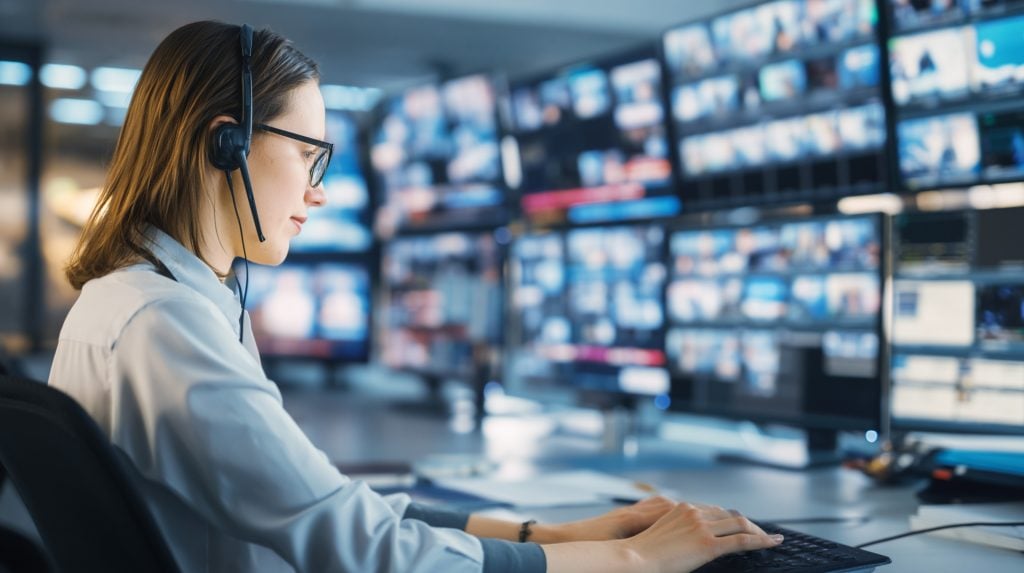
A quality hybrid event setup goes well beyond pointing a camera at a stage. It requires dedicated camera operators or robotic camera systems, a separate audio mix optimized for the online stream, graphics and lower thirds that translate clearly on a screen rather than in a room, and a reliable streaming infrastructure that can handle the expected load without dropping frames at the critical moment.
Interactive elements like live polling, Q and A tools, and digital collaboration platforms have also become expected features. They keep remote attendees from feeling like passive observers and turn a broadcast into a genuine two-way experience.
Mistakes That Cost Events Dearly
Event organizers make the same AV mistakes repeatedly, often because they are trying to cut costs or simply do not know what questions to ask.
Booking the cheapest available vendor without checking their experience with events of your scale is one of the most common. A company that handles small corporate luncheons may be completely unprepared for a 600-person conference with simultaneous breakout rooms, a main stage, and a live stream running in parallel.
Underestimating setup and rehearsal time is another. Professional AV production takes time to get right. Cutting into that window to save on labor costs almost always results in something going wrong during the actual event. A one-hour tech rehearsal saved on the front end often costs three hours of problem-solving during the program.
Relying on venue-supplied equipment without vetting it is a trap as well. Hotel AV systems are often dated, and the staff assigned to them may not have the depth of experience to troubleshoot on the fly. Bringing in your own trusted AV partner, even when the venue charges a patch fee, is almost always worth it.
What a Trusted AV Partner Actually Brings
Working with an experienced audiovisual company is not just about having good gear show up in a truck. It is about having a team that has seen every possible scenario and knows how to respond when something unexpected happens, because something unexpected almost always happens.
Reliability is part of it. Experienced companies maintain their equipment, carry backup gear for critical components, and have technicians on-site throughout the event rather than dropping off equipment and disappearing. Technical expertise means problems get solved quickly and quietly, without your audience ever knowing anything went sideways. And a company that has produced hundreds of events brings a level of operational efficiency that saves time, reduces stress, and leaves you free to focus on the content and the people in the room rather than the cables behind the scenes.
Good AV partners also contribute to the planning process. They will walk your venue in advance, flag potential challenges, recommend the right solutions for your specific goals, and work closely with your production timeline rather than simply executing a rental order.
Conclusion: Your Event Deserves to Be Heard and Seen
Every event represents an investment, in time, money, relationships, and reputation. The audiovisual experience is not a line item to minimize. It is the delivery mechanism for everything you have worked to prepare. A powerful speaker with a bad microphone is a speaker no one can hear. A stunning product reveal with a stuttering video feed is a reveal no one remembers for the right reasons.
Investing in professional AV support is investing in the outcome of your event. It protects your message, respects your audience, and reflects the standard of your organization. Whatever you are planning next, make sure the people behind the equipment are as prepared as you are.

Sandra Larson is a writer with the personal blog at ElizabethanAuthor and an academic coach for students. Her main sphere of professional interest is the connection between AI and modern study techniques. Sandra believes that digital tools are a way to a better future in the education system.