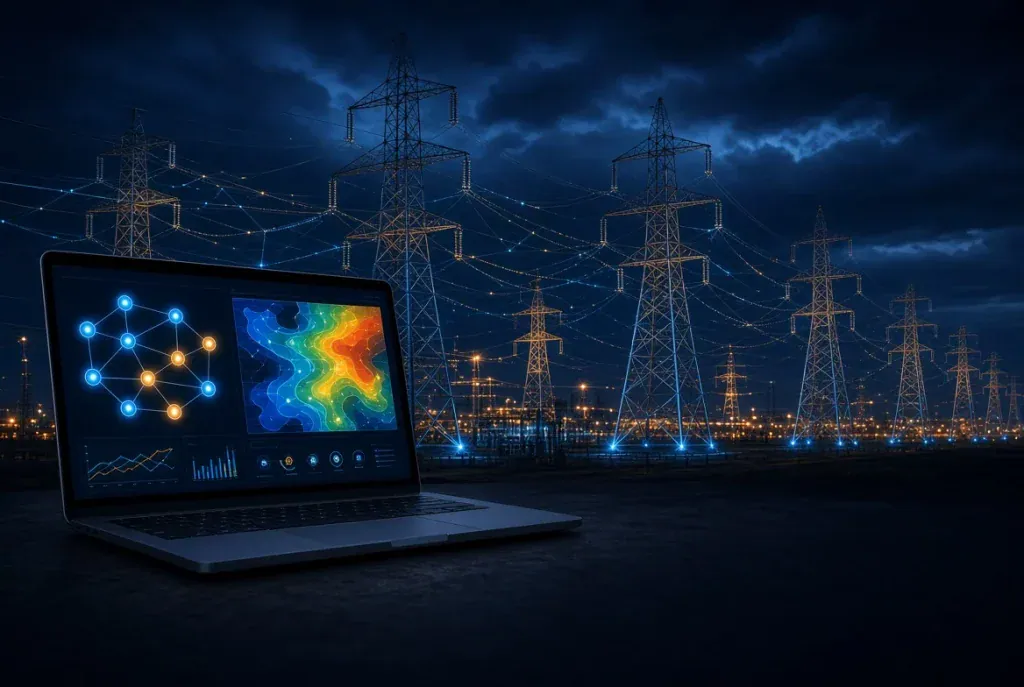
As electricity demand continues to increase and climate extremes become more frequent, electricity networks increasingly are under strain. Aging transformers and transmission lines also pose reliability problems. Conventional maintenance is generally based on prearranged inspection intervals or when the equipment malfunctions. These methods are still required, but they can cause an unplanned outage and costly emergency repairs. In contrast, artificial intelligence (AI) can be used to be more proactive – by analyzing operational data and detecting indicators that may manifest into major faults. This change is increasingly critical for grid modenization as utilities look to enhance reliability and leverage existing infrastructure more effectively. AI cannot completely prevent equipment failures. It can, however, assist engineers to detect risks at an earlier stage and make decisions about maintenance prior to disruption reaching the customer.
AI’s ability to predict equipment failures
Predictive maintenance involves the use of sensors and machine learning to forecast when machinery needs maintenance. Temperature and vibration monitoring, electrical load and insulation can be monitored with sensors installed in transformers and other critical assets. These readings are fed into AI systems for analysis with reference to past performance and defined operating thresholds. They can identify abnormal patterns that could mean overheating or deterioration of components.
Some context can be added from weather forecasts or past failure records. If a transformer is subjected to frequent temperature rise during heavy load, for instance, it may need to be inspected before it gets worse. This allows maintenance personnel to schedule equipment maintenance on risk based prioritization rather than just on a routine maintenance schedule. Additionally, it supports utilities with preemptive maintenance scheduling as opposed to repair after failure.
Connecting Predictive Insights With Maintenance Operations
No good use of predicting a failure without a utility responding effectively. That’s where electric utility task management can be handy. AI-generated alerts can be linked to maintenance workflows and work orders can be sent to maintenance teams based on the equipment condition and operational priority. A high risk transformer might need immediate attention, a less critical transformer might be scheduled for planned service.
The managers can also use integrated systems to allocate qualified technicians and schedule spare parts during maintenance periods. This helps to minimise the chance of fragmented information and slow response. Another way to enhance performance will be to monitor the time it takes to complete repairs and compare the time to the time it takes to actually fix it. This information is used to further fine-tune future maintenance plans and improve both the utilization of labor and equipment.
The obstacles to the adoption of AI in electricity grids.AI challenges on electricity grids
While AI offers many benefits, there are challenges in implementing it. Legacy equipment that was not built to communicate with today’s digital platforms are common in many utilities. The accuracy of prediction can be decreased by inconsistent sensor readings and incomplete maintenance records. Another factor of concern is cybersecurity given that connected operational systems provide extra chances to potential attacks. Communications and data integrity need to be protected and data integrity needs to be verified, with strict access controls within utilities. The high cost of investment and lack of skills in certain areas of technical expertise can also be a barrier to implementation. One good method is to start with a pilot project at key transformers or substations, and then roll it out to other locations. Model performance should be validated at various operating conditions and definite procedures for human intervention should be set up. AI should complement the professional judgement, not supplant it with existing safety measures.
Constructing a Grid that is More Reliable and Resilient
AI is poised to play a crucial role in grid maintenance, alongside the need for robust infrastructure and skilled engineering teams. Predictive systems can contribute to utilities reducing unplanned failures, outage response, while supporting the integration of renewable energy and increasing electricity demand. It takes more to be successful than to install advanced software. A reliable data system and secure digital infrastructure are essential for utilities as well as quantifiable performance metrics. Some of the indicators that can be useful are equipment downtime, unplanned maintenance costs, fault detection accuracy and mean time to repair.
Periodic assessments can determine if investments are providing substantive operational value. Digital technologies are developing to a point where utilities with predictive intelligence and disciplined maintenance will have the best chance to handle complex networks. The shift from reactive to predictive maintenance is not just a technological upgrade. It’s a key move toward a more secure, reliable power grid.

Matthew is a Sr. Content Writer working as a freelancer in Outreachmonks for the past 5 years. He has completed his education in Bachelor’s in Business Administration. With his articles he loves to impart information about the latest business trends and models.