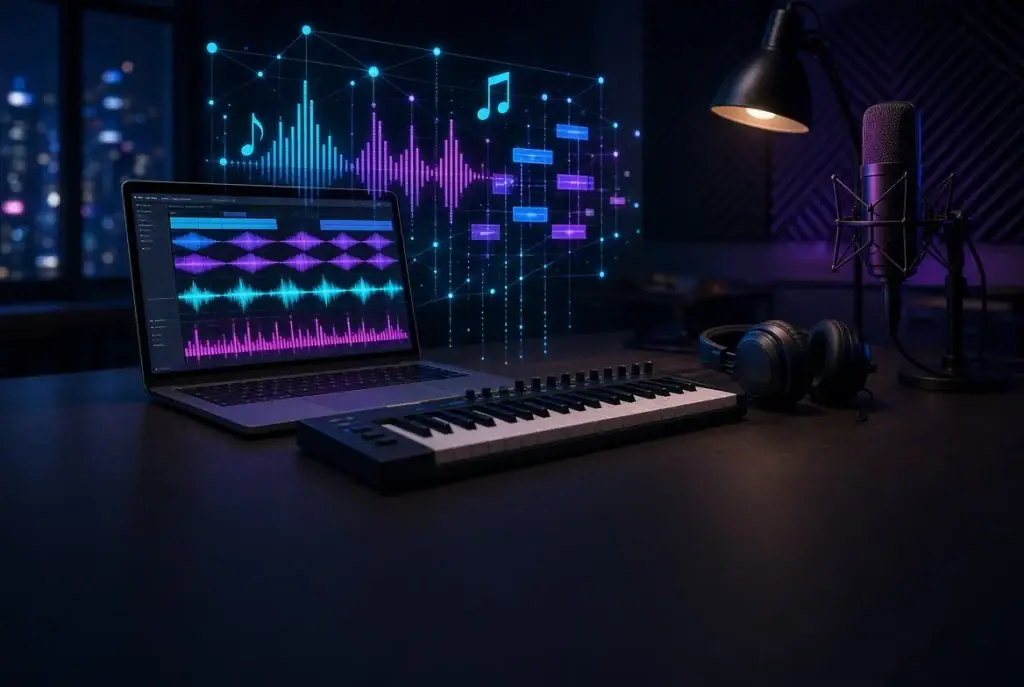
Music production used to begin with a blank session, a melody idea, a notebook full of lyrics, or a producer trying to shape a sound from scratch. That process still matters, but it is no longer the only way songs begin. AI is changing how creators move from an idea to an actual piece of music.
For songwriters, producers, video creators, and beginners, one of the biggest changes is speed. Instead of waiting until every lyric, chord, vocal idea, and arrangement is ready, creators can now use AI to generate music from text and hear a rough version of an idea much earlier in the process.
This does not make songwriting effortless, and it does not remove the need for taste. What AI really changes is the starting point. It gives creators more ways to test ideas, explore styles, break through creative blocks, and turn unfinished thoughts into something they can listen to, judge, and improve.
Why AI Is Becoming Part of the Music Workflow
The appeal of AI in music production is not hard to understand. Most creators have more ideas than time.
A songwriter may have a hook but no melody. A producer may want to test a mood before building a full track. A YouTube creator may need background music for a video by the end of the day.
In a traditional workflow, even a simple idea may need several steps before it becomes listenable. You might write lyrics, find chords, record a scratch vocal, choose instruments, arrange the song, and make a rough mix.
AI compresses part of that early process. It gives creators something to react to before the idea disappears or becomes overworked.
That draft does not have to be perfect. In many cases, its job is simply to answer a creative question: does this direction feel worth developing?
For an indie songwriter, that might mean hearing whether a chorus has enough emotion. For a content creator, it might mean checking whether a track fits the pacing of a video. For a producer, it might mean comparing whether a concept works better as pop, rap, EDM, acoustic, or cinematic music.
This is where AI becomes useful. It is not only a tool for finished songs. It is also a tool for early decisions.
How AI Changes Songwriting and Production
Songwriting often begins in an unfinished state. A lyric line, a phrase, a mood, or even a personal story can become the seed of a song. The hard part is turning that seed into structure.
AI songwriting tools can help by offering possible melodies, song sections, chord directions, or full demo ideas. A writer can enter a theme like “starting over after a breakup” or “driving through the city at night” and hear how that idea might sound as a pop ballad, R&B track, indie song, or electronic piece.
This is especially helpful for lyric writers who do not produce music. Many people can write strong words but struggle to imagine the melody or arrangement behind them. AI gives them a quick musical setting, which makes it easier to decide whether the lyrics have potential.
It can also help with revision. A line that looks good on the page may feel too long when sung. A chorus may seem strong in writing but lose energy when placed inside a full song. By hearing a generated draft, songwriters can make better editing decisions.
Production changes in a similar way. Producers make dozens of small choices: tempo, drums, instruments, vocal mood, arrangement, and mix direction. AI can help test those choices before the detailed work begins.
Instead of manually building every version, a producer can compare early drafts. One may reveal that the song needs a slower tempo. Another may show that the hook works better with brighter synths. A third may inspire a rhythm or texture that was not part of the original plan.
For beginners, this is even more important. Digital audio workstations are powerful, but they can be intimidating. AI tools give new creators a simpler entry point. They can describe what they want and hear a result without knowing how to program drums, build chords, or mix vocals.
That does not replace learning. It can actually support learning. By comparing prompts and results, beginners start to understand how genre, tempo, instruments, and mood affect a song.
Real Use Cases for Creators, Artists, and Brands
AI music is not used in only one way. Different creators use it for different reasons.
A songwriter might use AI to turn rough lyrics into a demo before sharing the idea with a collaborator. The result may not be the final version, but it communicates the feeling of the song more clearly than lyrics alone.
An independent artist might use AI to explore new genres. A singer who usually writes acoustic songs could test how a lyric sounds as synth-pop, trap, or cinematic pop before choosing a direction.
A video creator might use AI to create custom background music for YouTube, TikTok, podcasts, or short-form content. Instead of searching through stock music libraries, they can generate something closer to the mood of the project.
Small businesses can use AI for early brand audio concepts. A short jingle, product theme, or campaign soundtrack can be drafted quickly before deciding whether to invest in a professional version.
Game developers and indie studios may also find AI useful during early development. A team can test character themes, menu music, trailer ideas, or scene-based tracks before finalizing the full audio direction.
In all of these cases, AI is valuable because it makes music more flexible at the planning stage. Creators do not need to commit to one direction too early. They can listen, compare, and adjust.
Benefits and Limits of AI in Music Creation
The strongest benefit of AI in music production and songwriting is speed. It helps creators move from a vague idea to an audio draft quickly. That can be the difference between losing an idea and developing it.
Accessibility may be the bigger shift for newer creators. People who cannot sing, produce, or play instruments can still begin creating music. This matters because many good song ideas come from people who do not have formal music training.
AI also helps with creative momentum. When a creator feels stuck, generating a few versions can reveal new directions. Even a result that is not perfect can spark a better lyric, melody, rhythm, or arrangement.
Cost also changes the way people test ideas. Early music exploration can become expensive if every concept requires a vocalist, producer, or studio session. AI gives creators a lower-risk way to hear an idea before spending money on full production.
Still, the results need realistic expectations.
AI does not always understand very specific creative instructions. It may generate a strong chorus but a weaker verse. It may choose an instrument or vocal tone that does not quite match the creator’s intention. If the prompt is too broad, the output may also feel generic.
Human judgment remains essential. Someone still needs to decide whether the song feels honest, memorable, useful, or emotionally convincing.
There are also licensing and commercial-use questions. Different AI music platforms have different rules, especially for monetized videos, ads, public releases, and brand projects. Before using AI-generated music commercially, creators should check the platform’s terms.
The best way to think about AI is not as a complete replacement for human creativity. It is a tool that can help people reach better ideas faster.
How to Use AI Without Making Generic Music
The quality of AI-generated music often depends on the quality of the input. A weak prompt usually creates a weak result. A stronger prompt gives the AI more context.
Instead of writing:
“Make a love song.”
A better prompt might be:
“Create a slow R&B song with warm vocals, soft piano, subtle drums, and lyrics about missing someone after a late-night argument.”
That version gives the AI a genre, tempo, vocal direction, instruments, and emotional scene. The result is more likely to feel specific.
Creators should also avoid treating the first result as final. AI works better when used iteratively. Generate one version, listen carefully, then adjust the prompt. Change the mood. Add a genre. Remove an instrument. Make the lyrics simpler. Try a different tempo.
This process feels closer to creative editing than one-click music making.
For songwriting, structure matters too. Lyrics usually work better when divided into clear sections like verse, chorus, and bridge. Lines that are too long may sound awkward when sung. Reading lyrics aloud before generating music can help catch these problems early.
It also helps to bring human taste back into the process. Keep the strongest line. Rewrite the weak section. Use only the hook. Treat the AI version as a sketch, not a finished identity.
The most interesting results often come from collaboration between machine output and human judgment.
What to Look for as AI Music Tools Evolve
AI music tools are likely to become more common in creative workflows, not because every song will be fully AI-made, but because the process is useful.
Creators like tools that save time, reduce friction, and help them make decisions faster. As the technology develops, users may get more control over vocals, arrangement, stems, structure, and editing.
Producers may use AI to generate starting points, then refine individual parts. Songwriters may use AI to test several chorus ideas before choosing one. Video creators may generate custom soundtracks that match scene length, pacing, and emotion.
At the same time, human creativity will still matter. Listeners care about feeling, taste, story, and identity. AI can help produce sound, but creators still decide what the song means and why it should exist.
The biggest shift may be that more people can participate in music creation. Someone who has never opened a DAW can still test a song idea. A small creator can make custom music without a large budget. A songwriter can hear drafts before entering the studio.
That changes the creative process in a meaningful way.
Final Thoughts
AI is transforming music production and songwriting by making the early creative stage faster, more accessible, and more flexible. It helps creators turn rough ideas into listenable drafts, test different styles, and make better decisions before committing to full production.
The strongest use of AI is not replacing musicians or producers. It helps people get unstuck, hear possibilities, and build momentum.
For songwriters, producers, content creators, and small brands, AI can be a practical part of the workflow. The final result still depends on human judgment, but the path from idea to sound is becoming shorter.
That may be the real transformation: AI does not make creativity automatic. It makes it easier to begin.

Sharon is an avid writer who has a concentration on nonfiction content. She has been treading the writers’ field for more than ten years and hopes to broaden her experience by delving further into book publishing. In her spare time, she enjoys a good read or movie that takes her back in time.