For decades, producing a polished piece of entertainment required a team. A short film needed writers, storyboard artists, camera operators, editors, sound designers, and visual-effects specialists. A video game trailer demanded concept art, animation, music, and post-production. Even a well-made social media campaign could involve several creative departments.
That structure is beginning to change.
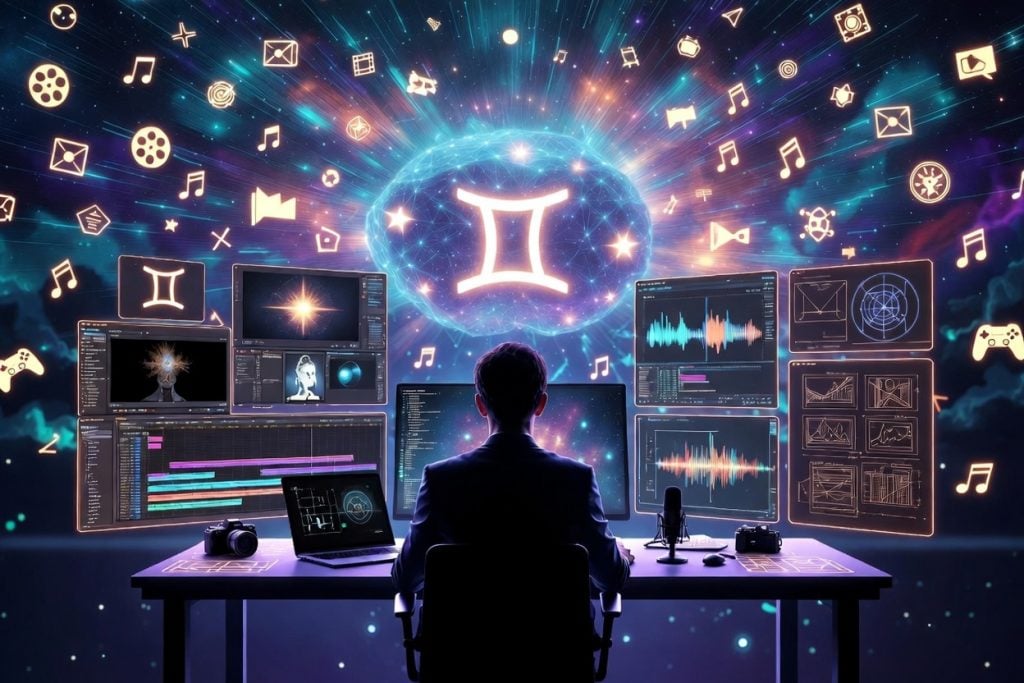
The latest generation of multimodal artificial intelligence is not simply automating isolated tasks. It is connecting writing, image creation, video production, audio, and editing into a more unified creative workflow. For independent filmmakers, YouTubers, game developers, podcasters, and digital artists, this shift may be the foundation of something much bigger: the one-person entertainment studio.
From a Collection of Tools to a Creative System
Most creators already use multiple digital tools. They may write a script in one application, create concept art in another, edit footage in a third, and search through stock libraries for music or visual assets. Each tool can be useful, but moving between them creates friction. Files need to be exported, formats must be converted, visual styles drift, and creative decisions can get lost between stages.
Multimodal AI offers a different model. Instead of treating text, images, audio, and video as separate categories, it can interpret them as connected parts of the same project.
A creator might begin with a written description of a cyberpunk detective story, generate visual references for the protagonist, explore several environments, and then turn selected ideas into promotional clips. The same project could later produce a thumbnail, character poster, voiceover draft, and several versions of a trailer for different platforms.
Platforms such as Gemini Omni AI reflect this movement toward a more integrated creative environment. The important development is not merely that AI can generate another image or short clip. It is that creators can move from an initial idea to multiple forms of media without rebuilding the project from scratch at every stage.
For creators working alone or in small teams, that difference can be enormous.
Why Entertainment Creators Benefit Most
Entertainment has always been multimedia by nature. A fictional universe can exist as a movie, comic, game, podcast, trailer, poster, soundtrack, or series of social posts. Large studios have departments dedicated to adapting one intellectual property across all of these formats. Independent creators usually do not.
That is why unified AI workflows can be especially valuable for smaller teams.
An indie filmmaker can visualize scenes before renting equipment. A tabletop game designer can develop character art and atmospheric videos for a crowdfunding campaign. A novelist can experiment with a cinematic book trailer. A game developer can create mood boards, environmental concepts, and early promotional materials before the final assets are complete.
These outputs do not necessarily have to replace the finished production. Their first purpose may be exploration.
AI makes it less expensive to test whether a scene should feel mysterious or energetic, whether a character design is memorable, or whether an idea works better as animation than live action. Creators can compare several interpretations of the same concept before committing to one direction.
In traditional production, experimentation can be costly. Every discarded storyboard, unused set concept, or alternate trailer consumes time and resources. In an AI-assisted workflow, creators can explore more possibilities before investing in the strongest one.
The Creator Becomes the Director
The rise of AI does not remove the need for creative skill. It changes where that skill matters.
When software can quickly produce multiple visual or narrative options, the creator becomes more like a director, editor, and curator. The most difficult questions remain human ones:
What is the story actually about? Which image communicates the right emotion? Does the pacing feel intentional? Is the character recognizable from one scene to the next? Does the finished work say anything worth remembering?
Generating material is only one part of making entertainment. Selection is just as important.
A one-person studio therefore does not mean pressing a button and accepting the first result. It means managing a creative pipeline that would previously have required several specialists. The creator defines the concept, supplies references, evaluates variations, corrects inconsistencies, combines the strongest elements, and shapes them into a coherent experience.
This approach rewards people with taste, patience, and a clear point of view. AI can increase output, but it cannot automatically give a project its identity.
From Fan Culture to Original Worlds
Geek culture has always been participatory. Fans write alternate stories, edit trailers, design costumes, create artwork, build mods, and imagine crossovers that official studios may never produce. Multimodal tools lower the technical barriers separating those ideas from visible, shareable media.
A fan who once wrote a short scene can now explore how it might look as a storyboard. A cosplayer can design a themed background for a character reveal. A role-playing group can produce an opening sequence for its campaign. An aspiring animator can test the tone of a series before developing a full episode.
More importantly, the same tools can help creators move beyond fan projects and build original worlds.
Someone with a compelling concept but limited production resources can begin establishing characters, locations, visual language, and promotional content. That does not guarantee success, but it gives more people the ability to present an idea in a form audiences can immediately understand.
A written pitch may describe an extraordinary fictional universe. A collection of coordinated images, character designs, voice samples, and cinematic clips can make that universe feel real.
The Challenge of Creative Consistency
The biggest obstacle for AI-driven entertainment is no longer generating a striking individual image. It is maintaining consistency across an entire project.
A memorable fictional world requires characters who remain recognizable, environments that follow a visual logic, and scenes that feel connected. If a hero’s clothing, age, facial features, or personality changes between shots, the illusion collapses. The same problem appears when lighting styles, camera language, or sound design shift without narrative purpose.
Creators should approach AI production with a simple style system. That may include:
- Reference images for major characters
- Written descriptions of clothing and physical features
- Recurring color and lighting choices
- Preferred camera angles and movements
- Standard aspect ratios
- Rules about what the fictional world should never contain
Treating these elements as a creative guide can make generated media feel like parts of one universe rather than unrelated experiments.
Human review is essential here. The more content a system produces, the more carefully someone must decide what belongs in the final project. Speed is helpful, but consistency is what convinces an audience to remain inside a fictional world.
Small Studios Can Think Bigger
AI-assisted workflows can also change how small creative teams allocate their budgets.
Instead of spending heavily on every early concept, a team can use AI to explore possibilities before hiring specialists for the final production. A director can test camera compositions before arriving on set. A game studio can compare visual directions before commissioning finished artwork. A marketing team can evaluate trailer concepts before producing the final campaign.
This does not make professional artists, editors, designers, or performers unnecessary. It can help teams communicate with them more clearly.
A detailed visual prototype gives collaborators something concrete to discuss. Rather than explaining an atmosphere with vague references, a creator can show the intended composition, rhythm, color palette, or emotional tone. Specialists can then refine, correct, or rebuild the idea at a professional level.
In this sense, AI can function as a bridge between imagination and production.
Responsible Creation Still Matters
Powerful creative tools also introduce questions about ownership, imitation, disclosure, and consent.
Creators should avoid using protected characters, recognizable performers, private individuals, or another artist’s distinctive work in misleading ways. They should also review the usage rights attached to the platforms and assets involved in commercial projects.
Transparency will become increasingly important. Audiences may accept AI-assisted entertainment while still wanting to understand how it was made. Clear labeling, responsible reference use, and respect for human collaborators can help creators build trust rather than treating AI as a shortcut around creative ethics.
The goal should not be to imitate existing entertainment as closely as possible. The greater opportunity is to make original ideas easier to develop and communicate.
A Bigger Stage for Smaller Creators
The most interesting future for multimodal AI is not a world filled with automatic, identical content. It is a world in which more people can attempt ambitious creative projects.
A filmmaker with no visual-effects budget can communicate the scale of a science-fiction idea. A game designer can introduce a world before every level is built. A writer can present a story through images, voices, and motion. A small creator can produce enough material to test an audience, attract collaborators, or demonstrate a concept to potential investors.
Hollywood studios will continue to possess resources that individuals cannot match. However, the distance between imagining an entertainment project and showing it to the world is becoming shorter.
The one-person studio will not replace every production company, artist, or technical specialist. It will create a new starting point. Instead of waiting for permission, funding, or a large team, creators can build a convincing first version of their vision themselves.
That may be the real promise of Gemini Omni and the wider multimodal AI movement: not replacing creativity, but giving more creators a stage on which their ideas can become visible.